Keep our news free from ads and paywalls by making a donation to support our work!

Notes from Poland is run by a small editorial team and is published by an independent, non-profit foundation that is funded through donations from our readers. We cannot do what we do without your support.
Poland’s government has approved legislation that would allow local communities to ban short-term rentals – the type of privately owned accommodation offered through services such as Airbnb and Booking.com.
Such services have boomed in Poland in recent years, like in other parts of the world. But that has prompted a backlash from many communities, which argue that short-term rentals can cause disruption, reduce the availability of housing, and drive up prices.
However, the proposed measures have already caused divisions within the ruling coalition and must still be approved by parliament, where the government has a majority, and by President Karol Nawrocki, who is aligned with the right-wing opposition and has vetoed a record number of bills.
❗ Rada Ministrów przyjęła autopoprawkę do projektu ustawy dotyczącego najmu krótkoterminowego.
Nowe rozwiązania dadzą mieszkańcom i samorządom konkretne narzędzia do reagowania tam, gdzie najem krótkoterminowy powoduje problemy z bezpieczeństwem i porządkiem publicznym.
➡️… pic.twitter.com/7KvW2O4AKW
— Ministerstwo Sportu i Turystyki (@SPORT_GOV_PL) September 2, 2026
Speaking ahead of a cabinet meeting on Wednesday, Prime Minister Donald Tusk confirmed that, following a “difficult process” of discussion, his coalition, which ranges from left to centre right, had agreed on the measures.
They would grant “greater rights for residents, communities, housing cooperatives and local authorities regarding the situation in the short-term rental market”, said Tusk. “Wherever order, safety and basic comfort of life are threatened, decisions can be made to exclude these types of businesses.”
The new rules would allow homeowner associations (wspólnoty mieszkaniowe) and housing cooperatives (spółdzielnie mieszkaniowe) to prohibit short-term rentals. If a majority of members voted to adopt such a ban, operators of short-term rental properties would have six months to end operations.
Municipal councils (rady gmin), at the request of the mayor, would also be given the power to designate specific areas within their territory in which short-term rentals would be banned or restricted (for example, to a certain number of days a year).
There would also be greater powers for residents and housing groups to initiate official inspections of properties if they believe there are violations of public safety and order rules. If a property violated such regulations three times within six months, it would be banned from operating for a year.
Tusk noted that, if the bill becomes law, it would not fully go into force until 2028, in order to give enough time for businesses and communities to adapt to the new rules.
If Poland does introduce the new measures, its cities could follow the example of many of their European counterparts, such as Barcelona, Paris and London, which have introduced various restrictions on short-term rentals. The European Union has also moved to more tightly regulate the sector.
EU to help tourism hotspots crack down on Airbnb-style holiday rentals https://t.co/0Y5nzfZZYF
— Financial Times (@FT) August 30, 2026
The measures have been subject to intense debate within the ruling coalition. When the legislation was first submitted to parliament in July, some parts that had previously been included, such as provisions allowing municipalities to ban short-term rentals in certain areas, were removed.
That prompted a backlash from two junior coalition partners in particular, The Left (Lewica) and the centrist Poland 2050 (Polska 2050), prompting further discussions over the summer, resulting in the bill now being toughened again.
The Left celebrated the government’s decision to restore tougher elements of the bill, saying it would help avoid “situations where short-term rentals turn into a nightmare, stripping residents of their peace”.
The leader of Poland 2050, Katarzyna Pełczyńska-Nałęcz, declared that they had “scored another goal against the lobbyists” by toughening the legislation. Previously, her party had accused the government of watering down the original bill due to industry lobbying.
Znowu wbiliśmy lobbystom gola. Właśnie spłynęła nowa wersja rządowej ustawy o Airbnb. Jest decyzyjność wspólnot, spółdzielni i samorządów.
Patohotele strzeżcie się – idziemy po was.
Czasem warto być „kłótnicą” rządu 😉@PL_2050
— Katarzyna Pełczyńska (@Kpelczynska) August 31, 2026
It also appears that the bill could obtain support from the opposition.
In July, after the government initially removed parts of the legislation, the largest opposition party, the national-conservative Law and Justice (PiS), called for them to be restored, saying that power should be put in the hands of local communities.
If the bill is approved by parliament, it also requires the signature of Nawrocki, who was elected last year with the support of PiS, before becoming law. He has vetoed a record number of government bills, but has signed an even larger number. It remains unclear what his position on short-term rentals is.
‼️ To mieszkańcy najlepiej wiedzą, co służy ich wspólnocie. Dlatego wspólnota powinna mieć prawo powiedzieć NIE, jeśli chodzi o najem krótkoterminowy.
👉 Udostępnij! pic.twitter.com/dWURZ9awAY— Prawo i Sprawiedliwość (@pisorgpl) July 27, 2026
Poland has seen a boom in tourism in recent years. Last year, the country recorded the European Union’s second-largest growth in the number of nights spent in tourist accommodation. Its increase of 7% was behind only the Mediterranean island state of Malta (9.9%).
However, the growth in tourism has also prompted tensions. In 2024, Kraków, which is Poland’s second-largest city and its main tourist destination, appointed a new “night mayor”, who is responsible for reconciling the needs of the city’s residents, business owners and tourists.
Previously, in 2020, the city formed a partnership with Airbnb to promote responsible and sustainable tourism. The following year, it launched a “tourist patrol scheme” to inform visitors of the “rules and norms they should follow”.
In 2024, Kraków also appealed to the government to allow it to introduce a new tax on tourists. It warned that “overtourism has led to tensions and social discontent in many places in Europe…because residents increasingly feel like tourists in their own city”.
Poland saw the EU's second-fastest growth in tourism in 2025, behind only the Mediterranean island state of Malta https://t.co/WVkRbHtU7o
— Notes from Poland 🇵🇱 (@notesfrompoland) January 19, 2026
Notes from Poland is run by a small editorial team and published by an independent, non-profit foundation that is funded through donations from our readers. We cannot do what we do without your support.
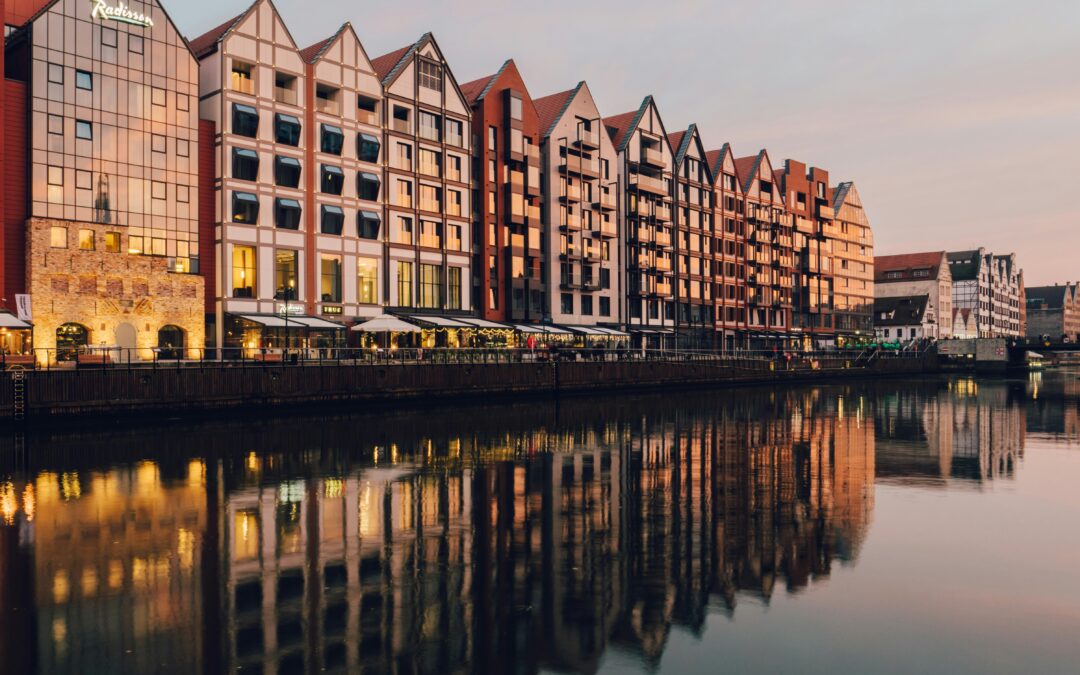
Main image credit: Krzysztof Kowalik/Unsplash

Daniel Tilles is editor-in-chief of Notes from Poland. He has written on Polish affairs for a wide range of publications, including Foreign Policy, POLITICO Europe, EUobserver and Dziennik Gazeta Prawna.