Keep our news free from ads and paywalls by making a donation to support our work!

Notes from Poland is run by a small editorial team and is published by an independent, non-profit foundation that is funded through donations from our readers. We cannot do what we do without your support.
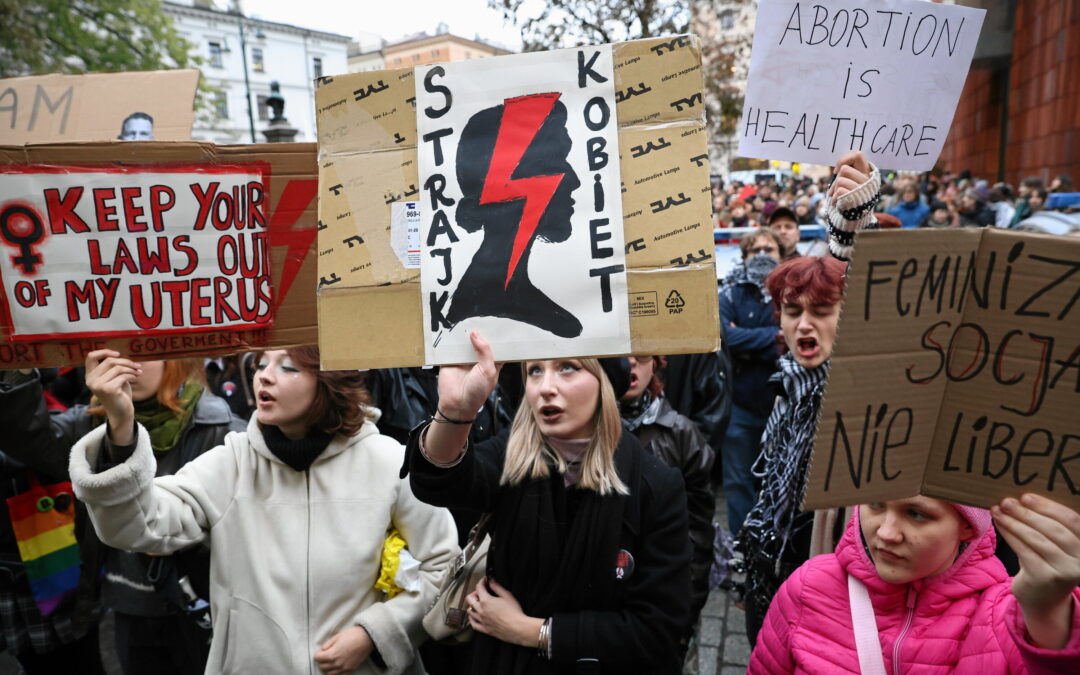
Just over two thirds of Poles support liberalising the country’s abortion law, which is among the strictest in Europe, according to a new poll. However, most do not favour introducing abortion on demand, as protesters called for during demonstrations last week.
The findings come shortly after parliament approved legislation intended to ease access to abortion. But the measures face a potential veto from right-wing, opposition-aligned President Karol Nawrocki.
🔴 Sondaż dla @rzeczpospolita: Niemal 7 na 10 Polaków chce liberalizacji przepisów ws. aborcjihttps://t.co/f7mxwygIxz
— Rzeczpospolita (@rzeczpospolita) October 25, 2026
In 2020, Poland’s Constitutional Tribunal (TK) outlawed abortions in cases where a severe defect is diagnosed in the foetus. That means pregnancies can now only be legally terminated in two cases: where they result from a crime (such as rape or incest) or if they threaten the mother’s life or health.
In a new poll by SW Research for Rzeczpospolita, a leading newspaper, a total of 67.2% of respondents said that they want to liberalise that law. However, only 37.7% favoured introducing abortion on demand up to the 12th week of pregnancy.
Meanwhile, 29.5% preferred the softer option of returning to the situation from before the 2020 TK ruling – often referred to the “abortion compromise” in Poland – in which terminations were only available in three cases.
A further 16.2% supported maintaining the current abortion law; 6.0% wanted to make the rules even tougher (which would involve removing one or both justifications for abortion that currently exist); and 10.6% said they had no opinion.
The poll found that support for liberalisation of abortion was stronger among women (73.8%) than men (60.3%).
The latest findings are consistent with previous polling, which tends to show that a significant majority supports liberalising the abortion law but that there is not a majority in favour of abortion on demand (although some individual polls have narrowly found such a majority).
One member of Poland's likely new ruling coalition, The Left, says polls show a majority in favour of abortion on demand.
In fact, they do not. And this issue is likely to be one of the hardest for the incoming government to resolve, writes @danieltilles1 https://t.co/4Nze9wwEC3
— Notes from Poland 🇵🇱 (@notesfrompoland) November 20, 2023
The issue has caused significant political disputes in Poland, not only between the right-wing opposition and the more liberal ruling coalition, but also within the coalition itself.
Prime Minister Donald Tusk’s centrist Civic Coalition (KO) and one of its partners, The Left (Lewica), favour introducing abortion on demand. However, more conservative elements of the government, especially the centre-right Polish People’s Party (PSL), prefer a return to the pre-2020 “compromise”.
Much of the right-wing opposition, meanwhile, favours maintaining the current status quo. However, some more moderate elements of the opposition have suggested it would be best to reverse the TK ruling and return to the “compromise”.
Protests took place in towns and cities around Poland on Thursday evening, demanding that the government fulfil its promise to liberalise the country’s strict abortion laws https://t.co/q7eK7mV9zr
— Notes from Poland 🇵🇱 (@notesfrompoland) October 23, 2026
In 2024, due to disputes within his coalition, Tusk declared that it was unlikely there would be any abortion reform during the current parliamentary term due to differences within his coalition.
However, last week the issue was revived, with the government’s majority in the Sejm, the lower house of parliament, approving a bill that would reverse the 2020 TK ruling (but not introduce abortion on demand). It also passed another bill decriminalising providing help to women in obtaining unlawful abortions.
After both bills go through the upper-house Senate, which can suggest amendments but not block them, they will pass to President Nawrocki, who can sign them, veto them, or send them to the TK for assessment.
Given that Nawrocki is aligned with the right-wing opposition, has declared his opposition to abortion, and has vetoed a record number of government bills, it is widely expected that he will seek to block efforts to liberalise the abortion law.
Notes from Poland is run by a small editorial team and published by an independent, non-profit foundation that is funded through donations from our readers. We cannot do what we do without your support.
Main image credit: Jakub Wlodek / Agencja Wyborcza.pl

Daniel Tilles is editor-in-chief of Notes from Poland. He has written on Polish affairs for a wide range of publications, including Foreign Policy, POLITICO Europe, EUobserver and Dziennik Gazeta Prawna.