Keep our news free from ads and paywalls by making a donation to support our work!

Notes from Poland is run by a small editorial team and is published by an independent, non-profit foundation that is funded through donations from our readers. We cannot do what we do without your support.
Poland’s government has approved a package of bills aimed at strengthening protections for children against digital threats, including a ban on the use of mobile phones in primary schools and stricter age-verification requirements for access to online pornography.
“Our sole goal is to protect our children from addiction…[and] harmful content that wreaks havoc on their minds and emotions,” said Prime Minister Donald Tusk ahead of a cabinet meeting.
The measures still require the approval of parliament, where the government has a majority, and opposition-aligned President Karol Nawrocki before they can become law.
💬 Premier @donaldtusk:
Proponujemy zakaz używania telefonów komórkowych w trakcie zajęć i przerw w szkołach podstawowych. To nie jest rozwiązanie idealne, nie mamy żadnych iluzji, ale musimy rozwiązać ten poważny problem, jakim jest uzależnienie od telefonu i internetu. pic.twitter.com/KJ4atWi51i— Kancelaria Premiera (@PremierRP) June 2, 2026
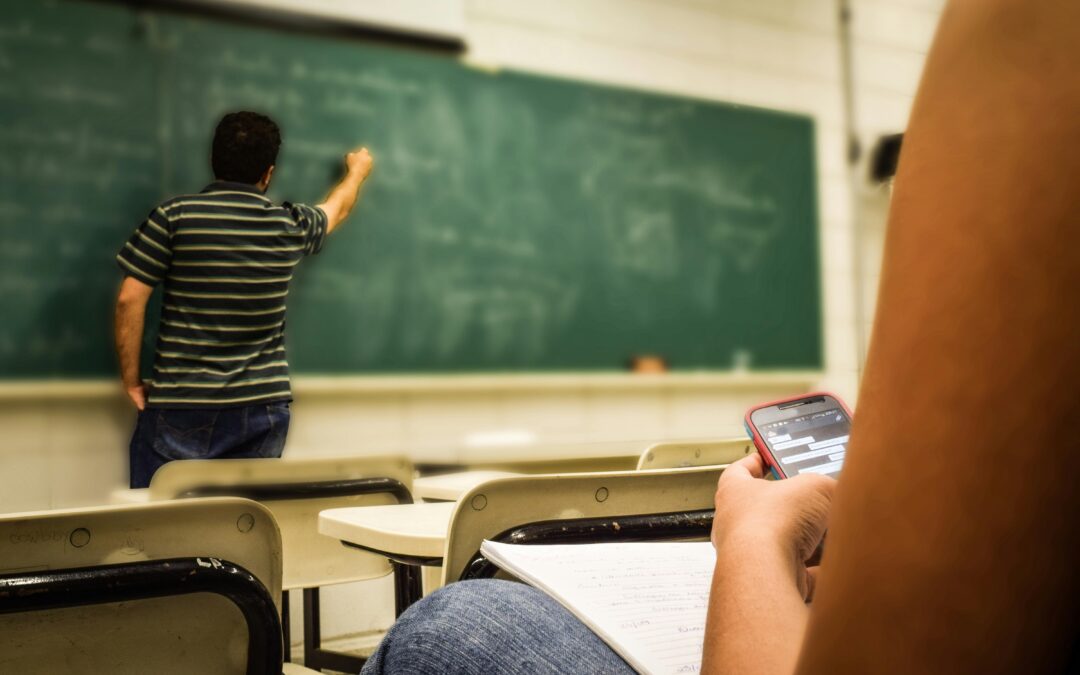
One of the measures greenlighted by the cabinet would prohibit primary school pupils from using mobile phones and smartwatches during the entire school day, including at breaks and after-school activities. The ban would come into force at the start of the next school year on 1 September.
Pupils would still be allowed to bring devices to school, but each school would be required to provide a designated place where phones and smartwatches can be stored safely during the day.
School staff would be exempt from the ban, as would pupils who need a device because of illness, disability or other special needs, such as monitoring blood glucose levels. Phones could also be used in emergencies where there is a direct threat to life, health or property.
Speaking after the cabinet meeting, education minister Barbara Nowacka noted that more than half of Polish schools already operate limits on phone use, ranging from full bans to lighter restrictions. But she said that teachers had often asked her for “a law they can cite when implementing these bans”.
“Addiction exists, it affects every age and every generation, but a strong state acts to prevent it wherever possible,” she said. “We hope that [this law] will improve teachers’ power, autonomy and agency, as well as order and digital wellbeing in schools.”
According to UNESCO, 114 education systems worldwide have introduced national bans on mobile phones in schools, representing 58% of countries globally. The figure has risen sharply since June 2023, when roughly one in four countries had such restrictions.
According to a survey conducted in April by the Polish state research institute CBOS for the Polish Press Agency (PAP), 85% of Poles support a ban on the use of smartphones in primary schools.
📵 More than half of countries now ban phones in schools.
A new @UNESCO analysis shows that 114 education systems (58%) have national measures, up from just 24% in 2023.
The challenge? Reducing distraction while building digital skills.
On #DigitalLearning Day, UNESCO… pic.twitter.com/kXAKaNPo0M
— UNESCO 🏛️ #Education #Sciences #Culture 🇺🇳 (@UNESCO) March 19, 2026
On Tuesday, the government also approved a separate draft law requiring providers of pornographic content to verify users’ ages using methods more robust than the current self-declaration system.
The legislation does not prescribe a specific verification method but requires systems that are effective and respect privacy rights. Solutions used in other countries include verification through banks, mobile network operators, credit cards or digital identity wallets.
Providers that fail to implement effective age verification could face fines ranging from 10,000 to 1 million zloty (€2,362 to €236,121), and could ultimately have their websites blocked.
“The current regulations do not address the reality we live in,” said digital affairs minister Krzysztof Gawkowski, pointing to research showing that children as young as 11 are accessing pornography. “We are calling for age verification, which the platform must carry out effectively.”
Poland hopes this year to introduce measures preventing children from accessing social media, says the country's digital affairs ministry.
It is working on tools that would require platforms to verify the age of users https://t.co/G7qeEl2q9x
— Notes from Poland 🇵🇱 (@notesfrompoland) January 5, 2026
The government also adopted legislation aimed at accelerating the removal of illegal online content and aligning Polish regulations with the European Union’s Digital Services Act (DSA). A previous version of the bill was vetoed by President Nawrocki, who described it as “Orwellian”.
Poland remains one of the few EU member states that have yet to fully align their national legislation with the DSA. The digital affairs ministry warned that further delays could expose the country to substantial financial penalties from the EU.
Gawkowski noted that the bill would allow “paedophile material, child grooming attempts, fraud and identity theft” to be blocked more quickly “and under full judicial oversight”, ensuring that “the internet will no longer be a space of impunity for criminals”.
President @NawrockiKn has vetoed a bill allowing the blocking of online content, arguing that it would have introduced "Orwellian censorship".
But the government says the veto is “not a defence of free speech” but protection for “paedophiles and scammers" https://t.co/OShO07U7SM
— Notes from Poland 🇵🇱 (@notesfrompoland) January 10, 2026
Notes from Poland is run by a small editorial team and published by an independent, non-profit foundation that is funded through donations from our readers. We cannot do what we do without your support.

Alicja Ptak is deputy editor-in-chief of Notes from Poland and a multimedia journalist. She has written for Clean Energy Wire and The Times, and she hosts her own podcast, The Warsaw Wire, on Poland’s economy and energy sector. She previously worked for Reuters.