
Keep our news free from ads and paywalls by making a donation to support our work!

Notes from Poland is run by a small editorial team and is published by an independent, non-profit foundation that is funded through donations from our readers. We cannot do what we do without your support.
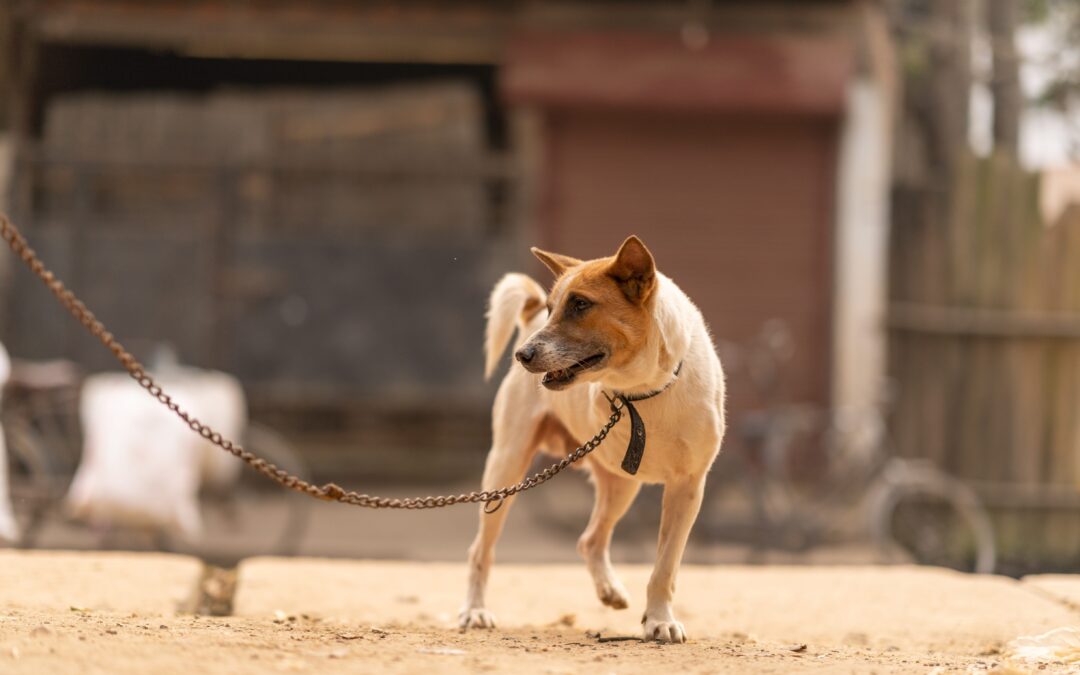
Keeping dogs and cats chained up at home will be banned in Poland from next year, after President Karol Nawrocki signed into law a bill prohibiting the practice.
His decision ends a long-running dispute over the issue, after Nawrocki last year vetoed a previous proposal to ban chaining because it also included what he argued were excessive and unrealistic additional measures on minimum kennel sizes for dogs.
Zawetowana w listopadzie 2025 r. ustawa łańcuchowa była źle przygotowana i przeregulowana, ponieważ nakładała na obywateli obowiązki, których wielu nie byłoby w stanie spełnić.
Dzisiaj otrzymujemy ustawę lepszą, z pozytywnym głosem takich podmiotów jak rolniczy samorząd.… pic.twitter.com/h7kIAI77KR
— Kancelaria Prezydenta RP (@prezydentpl) July 24, 2026
The new law bans owners from tethering dogs and cats at home. Animals must be kept either inside the house, in a fenced garden or, if that is not possible, in a kennel “large enough for the animal to move freely and satisfy its natural needs”. Dogs kept in kennels must be provided with daily exercise outside of it.
Dogs and cats can still be put on leashes in certain situations, such as when they are being walked, but also during transport, while participating in shows, performances or training, if they are at vets or groomers, or if they represent a danger to humans or other animals.
Those who are found to have violated the new law can be fined between 1,000 and 100,000 zloty (€232-23,166). If they are deemed to have acted with “extreme cruelty”, they can also face a prison sentence of up to five years, reports the Forsal news service.
Now that the bill has been signed by Nawrocki, it will be published in the official Journal of Laws (Dziennik Ustaw), after which it goes into force 12 months later.
The new measures represent a successful second attempt to introduce a leashing ban. A previous bill was approved by parliament last September. However, in December, Nawrocki, who is aligned with the right-wing opposition, announced that he was vetoing it.
The president argued that, “although the intention – protecting animals – is just and noble, the law itself was poorly drafted”. In particular, he said that elements introducing minimum sizes for dog kennels were unrealistic and would “harm farmers, breeders and ordinary rural households”.
After an attempt by parliament to overturn the veto failed, legislators went back to the drawing board and, following discussions with the president’s chancellery and animal rights groups, drafted a compromise bill that was approved by parliament earlier this month.
The bill received support from the current ruling coalition, which ranges from left to centre right, as well as most MPs from the national-conservative Law and Justice (PiS), the main opposition party. The far-right Confederation (Konfederacja) and Confederation of the Polish Crown (KKP) voted against it.
Thousands of people have protested in Warsaw against President @NawrockiKn's veto of a law that would have banned the chaining up of dogs
Parliament will vote on Wednesday on whether to overturn Nawrocki's veto, which would require a three-fifths majority https://t.co/0GRup2sppb
— Notes from Poland 🇵🇱 (@notesfrompoland) December 15, 2025
“We now have a better law, with positive feedback from entities such as the agricultural chamber,” said Nawrocki today. “It demonstrates that the pressure of the presidential veto makes sense. My previous decision to refuse to sign this bill forced the government and parliament to work harder.”
However, although Nawrocki said the new law would no longer entail “rigid and costly requirements” for kennels, his office noted in a separate statement that the legislation requires the agriculture minister to issue a regulation establishing “minimum kennel area, taking into account the dog’s size”.
It remains unclear if and how that would differ from the requirements Nawrocki previously vetoed.
The presidential chancellery also noted that the law itself already outlines that kennels must be made of “wood or wood-like material with thermal insulation”, must be insulated from the ground, and must have openings on at least two sides to allow light and air to enter.
A dog who throws a ball to passers-by from a balcony above one of Poland’s most famous streets and waits for them to throw it back has become a star.
Videos of her game have been viewed millions of times and people visit in the hope of playing with her https://t.co/A9p9t0hWSD
— Notes from Poland 🇵🇱 (@notesfrompoland) August 9, 2024
Notes from Poland is run by a small editorial team and published by an independent, non-profit foundation that is funded through donations from our readers. We cannot do what we do without your support.

Daniel Tilles is editor-in-chief of Notes from Poland. He has written on Polish affairs for a wide range of publications, including Foreign Policy, POLITICO Europe, EUobserver and Dziennik Gazeta Prawna.