
Keep our news free from ads and paywalls by making a donation to support our work!

Notes from Poland is run by a small editorial team and is published by an independent, non-profit foundation that is funded through donations from our readers. We cannot do what we do without your support.
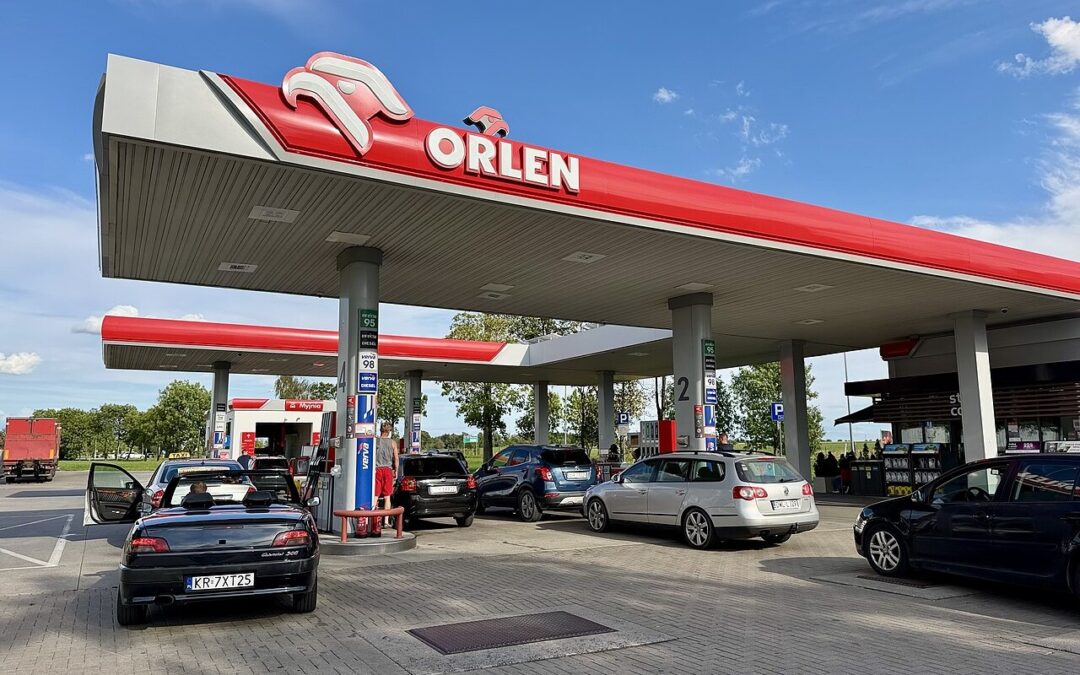
President Karol Nawrocki has reversed course and signed into law a windfall tax on fuel companies’ excess profits that he had previously blocked. The government had been pushing the president to approve the measures amid soaring fuel prices.
In announcing his decision on Thursday, Nawrocki, who is aligned with the opposition, insisted that he now expected the government to move to lower fuel prices for consumers. A few hours later, the government confirmed that it would do so, and on Friday morning it announced cuts in VAT and excise duty on fuels.
Nie pozwolę rządowi dłużej odsuwać od siebie odpowiedzialności za tę trudną sytuację. Podpisałem ustawę dotyczącą nadmiarowych zysków koncernów paliwowych i zakończę proces ustawiania Polaków w roli politycznych zakładników. To rząd ponosi pełną odpowiedzialność za ceny paliw -… pic.twitter.com/7AX8v4a9Q0
— Kancelaria Prezydenta RP (@prezydentpl) October 1, 2026
The windfall tax will levy a one-off charge of 60% of excess profits from liquid fuel sales, calculated as the amount that would have been generated using a company’s average 2025 fuel sales margin, increased by 20%. It is expected to raise around 4 billion zloty (€914 million).
When announcing the plans, the finance ministry said the levy was justified by this year’s “exceptional economic and geopolitical conditions that have led to above-average financial results in a specific segment of the fuel sector, not resulting from improved operational efficiency…but from a supply shock”.
The tax was intended to offset some of the roughly 4.7 billion zloty the government spent on keeping fuel prices lower for consumers amid the crisis in the Middle East by cutting VAT and excise duty and introducing a maximum daily price. Those measures were initially in place from March to June.
However, in July, Nawrocki announced that he would not sign the windfall tax into law. He instead sent it to the Constitutional Tribunal (TK) for assessment. That process can take years, effectively killing off the bill.
The president argued that the proposed measures “raised serious constitutional concerns”. In particular, he criticised the fact that the tax would be retroactive, applying to revenue earned from the beginning of March.
Since then, he and the government have been locked in a dispute over the issue, with Prime Minister Donald Tusk arguing that measures to reduce fuel prices, which were briefly reintroduced in the last two weeks of August, can only be restored if Nawrocki signs the windfall tax.
Nawrocki’s office, however, has argued that fuel companies would pass the costs of the tax onto consumers, therefore actually increasing prices.
President @NawrockiKn has obstructed a planned windfall tax on fuel companies by sending it to the constitutional court, where it could stay for years
The tax aimed to offset fuel price protection costs after the Iran war surgehttps://t.co/UojVuYhvdV
— Notes from Poland 🇵🇱 (@notesfrompoland) July 27, 2026
In September, the government’s majority in parliament passed the windfall tax bill a second time. And Nawrocki has now backed down, announcing in a recorded speech on Thursday evening that he would sign the bill into law. However, he has still asked the TK to assess its constitutionality.
Nawrocki declared that he was seeking to call the government’s bluff. He claimed that they were actually hoping the windfall tax would fail so that the treasury could continue obtaining normal tax revenue from high fuel prices, as well as dividends from state oil giant Orlen.
By signing the bill, the president said he was “ending the process of holding Poles hostage”. He now expected the government to “immediately” reintroduce measures to bring down prices at petrol stations, as well as the cost of fuel for farmers.
To nie ja wygrałem. Wygrali Polacy, którzy już w weekend zapłacą mniej za paliwa.
— Donald Tusk (@donaldtusk) October 1, 2026
In response, government spokesman Adam Szłapka told broadcaster TVN that they were ready to make the necessary decisions to reduced prices on Friday and that the measures could be in force already by the weekend. “It’s good that the president has stopped blocking this,” he said.
On Friday morning, the government announced that it would reduce VAT on fuels from 23% to 8% and cut excise duty – both measures it also used earlier this year. The new policies will be in place until 31 December. Energy minister Miłosz Motyka told Polskie Radio that maximum daily prices would also be reintroduced.
Earlier, on Thursday evening, finance minister Andrzej Domański announced on social media that he estimated fuel costs would be reduced by 1.2-1.3 zloty per litre once the subsidies were reintroduced.
According to price monitoring service ePetrol, diesel prices are currently averaging around 9.14 zloty per litre while PB95 petrol is at 8.19 zloty. Those are both record highs.
Ustawa o podatku od nadmiarowych zysków koncernów paliwowych właśnie wpłynęła do RCL. Jeszcze dziś będzie ogłoszona. Oznacza to, że już w weekend ceny na stacjach paliwowych będą niższe. Szacunkowo o około 1,2-1,3 zł na litrze. I po co były te gierki, Panie Prezydencie?
— Andrzej Domański (@Domanski_Andrz) October 1, 2026
The dispute over financing fuel price cuts comes at a time of growing concern over Poland’s public finances, something Nawrocki referred to in his address on Thursday.
Poland has been running one of the EU’s highest deficits, despite the government committing to bringing it down after being placed under the EU’s excessive deficit procedure. Public debt passed the EU’s limit of 60% of GDP for the first time this year.
Last month, Moody’s, one of the big three global credit rating agencies, lowered Poland’s rating from A2 to A3, pointing to a “deteriorating” fiscal situation and the “limited willingness or ability” of the authorities to take necessary action. The last time the country was at A3 level was in 2002.

Notes from Poland is run by a small editorial team and published by an independent, non-profit foundation that is funded through donations from our readers. We cannot do what we do without your support.
,Main image credit: Olgierd Rudak/Wikimedia Commons (under CC BY-SA 4.0)

Daniel Tilles is editor-in-chief of Notes from Poland. He has written on Polish affairs for a wide range of publications, including Foreign Policy, POLITICO Europe, EUobserver and Dziennik Gazeta Prawna.














.jpg)