Keep our news free from ads and paywalls by making a donation to support our work!

Notes from Poland is run by a small editorial team and is published by an independent, non-profit foundation that is funded through donations from our readers. We cannot do what we do without your support.
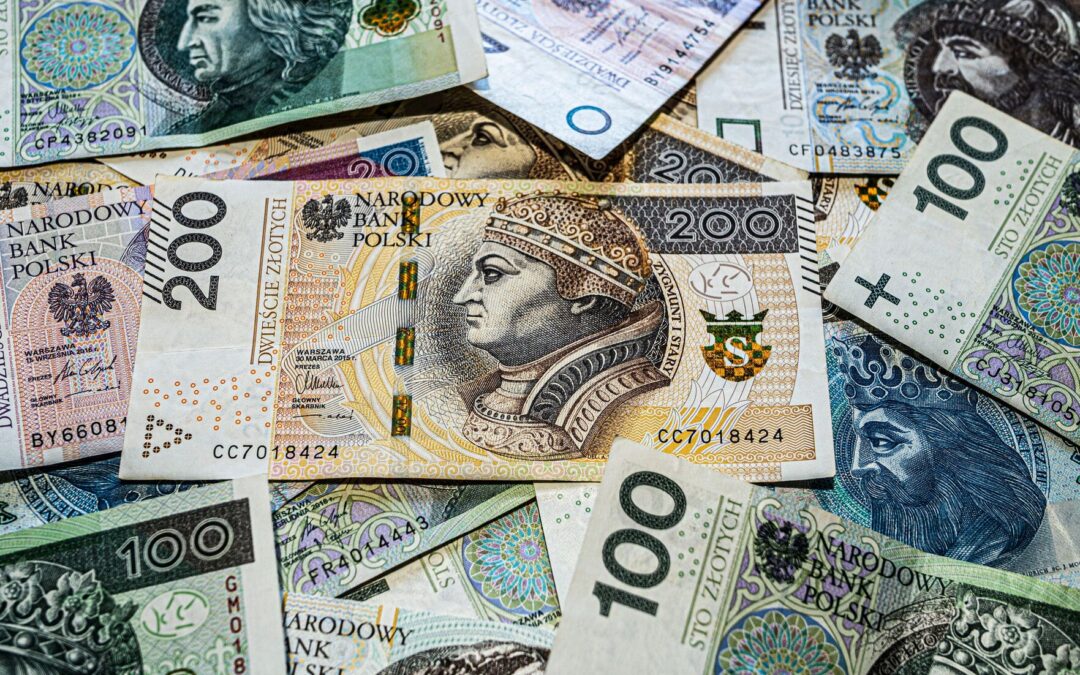
Moody’s, one of the big three global credit rating agencies, has lowered Poland’s rating from A2 to A3, pointing to a “deteriorating” fiscal situation and the “limited willingness or ability” of the authorities to take necessary action. The decision is likely to push up borrowing costs for Poland and reduce investor confidence.
The last time the agency had Poland at such a low level of creditworthiness was in 2002. It is also the first time any of the big three agencies has downgraded Poland’s rating since 2016, when Standard & Poor’s shifted it from A- to BBB+ on its scale. However, it restored Poland to A- two years later.
Moody’s obniżył dziś rating Polski z A2 do A3. To pierwsza obniżka ratingu Polski przez Moody’s od 2002 r. Przez lata agencja utrzymywała A2, nawet gdy zmieniała perspektywę na negatywną. Trwałe wysokie deficyty i rosnące koszty obsługi oznaczają pogorszenie perspektyw dla Polski pic.twitter.com/iGeuBb5hih
— Piotr Arak (@piotrarak) September 18, 2026
“The downgrade of Poland’s ratings to A3 reflects our expectations of a sustained deterioration in Poland’s fiscal strength,” said Moody’s in an announcement late on Friday.
“Large fiscal deficits persist, leading to a material increase in public debt and, together with rising interest costs, weaken debt affordability metrics,” added the agency.
It also warned that “fiscal policy effectiveness has weakened”, including a “limited willingness or ability on the part of the Polish authorities to rebuild fiscal buffers during favourable economic conditions”.
“Political constraints, including the continued standoff between the government and the president and the proximity of the November 2027 parliamentary elections, also limit the scope for meaningful fiscal consolidation,” concluded Moody’s, pointing to Poland’s high social and defence spending.
In response to the announcement, Poland’s finance minister, Andrzej Domański, noted that Moody’s had previously “had the highest rating for Poland among the three major agencies”. After the downgrade, it is now aligned with Standard & Poor’s and Fitch, the other two agencies, he added.
“We take this decision seriously, but calmly,” continued Domański. “The Polish economy is growing rapidly, and its fundamentals remain strong. We will consistently strengthen public finances, but this requires cooperation from all state institutions, including the president.”
The latter comment was directed at President Karol Nawrocki, who is aligned with the right-wing opposition and has blocked many of the government’s initiatives, including some of its fiscal policies.
However, the head of Nawrocki’s cabinet, Paweł Szefernaker, blamed the situation on the government. “They steal, they lie and they burden our homeland with debt,” he wrote on social media. “Unfortunately, we Poles will have to pay for it all.”
Dziś agencja ratingowa Moody’s obniżyła rating Polski do poziomu A3, jednocześnie podnosząc perspektywę ratingu z negatywnej do stabilnej. Dotąd Moody’s miała najwyższą ocenę Polski spośród trzech głównych agencji – po obniżce dostosowała ją do poziomu agencji Fitch i S&P.…
— Andrzej Domański (@Domanski_Andrz) September 18, 2026
Poland’s worsening fiscal situation has been drawing the attention of the rating agencies for some time. The government’s budget deficit has ballooned, reaching 7.3% of GDP in 2025, the second-highest figure in the European Union.
That was despite Poland being placed under the EU’s excessive deficit procedure in 2024, at which time it set out a plan to reduce the deficit. Instead, the deficit has risen. The draft budget for 2027 puts the deficit at 7.1%, almost double the 3.7% the government had previously committed to reach by that year.
As a result, Poland’s level of debt has risen rapidly. In the first quarter of this year, it went above 60% of GDP for the first time on record, thereby exceeding the limit enshrined in EU law.
Poland's government has approved a draft budget for 2027 that keeps defence and healthcare as spending priorities, while continuing heavy borrowing
The deficit, at 7.1% of GDP, remains well above the EU limit of 3% that the government has pledged to reach https://t.co/gxLdsHjYPz
— Notes from Poland 🇵🇱 (@notesfrompoland) August 28, 2026
Meanwhile, the ability to introduce measures to better balance the budget has been hindered by hostility between the government – a coalition ranging from left to centre right – and Nawrocki.
Since coming to power just over a year ago, Nawrocki has vetoed a record number of bills, including a proposed tax increase on alcoholic and sweet drinks. He also recently blocked a windfall tax on fuel companies.
The situation led both Fitch and Moody’s to shift their outlook for Poland from stable to negative last year, indicating that they may lower the country’s score.
Moody’s has now done so, although in Friday’s downgrade announcement it also shifted Poland’s outlook back to stable, saying that it forecasts strong economic growth in the coming years and government debt stabilising around 70-75% of GDP by the late 2020s.
Ratings agency Fitch has again warned that the "political gridlock" between Poland's government president – such as the current clash over EU defence loans – is hindering efforts to tackle "large fiscal deficits and rapidly rising debt" https://t.co/JSqwwayTdm
— Notes from Poland 🇵🇱 (@notesfrompoland) March 18, 2026
Fitch has so far maintained its credit rating for Poland at A-, where it has been since 2007. However, in March this year, the agency warned that the “political gridlock” between the government and president is hindering efforts to tackle Poland’s “large fiscal deficits and rapidly rising debt”.
Standard & Poor’s, meanwhile, has so far maintained both Poland’s credit rating at A-, where it has been since 2018, and its outlook at neutral.
In a comment on the Moody’s decision on Friday, Ignacy Morawski, editor-in-chief of Polish business daily Puls Biznesu, wrote that the downgrade had “happened faster than most market participants had predicted”.
He cited “uncontrolled political inertia” in tackling public finances as the primary reason behind the downgrade, which he said should provide “even more reason for the government and president to start seeking agreement”.
Agencja Moody's ścięła Polsce rating. To było oczekiwane co do kierunku, choć nastąpiło szybciej niż przewidywała większość uczestników rynku. Powodem jest plan budżetu bez żadnej przewidywanej redukcji deficytu fiskalnego państwa w relacji do PKB. I totalna blokada decyzji przez…
— Ignacy Morawski (@iggnacy) September 18, 2026
Notes from Poland is run by a small editorial team and published by an independent, non-profit foundation that is funded through donations from our readers. We cannot do what we do without your support.

Daniel Tilles is editor-in-chief of Notes from Poland. He has written on Polish affairs for a wide range of publications, including Foreign Policy, POLITICO Europe, EUobserver and Dziennik Gazeta Prawna.