Keep our news free from ads and paywalls by making a donation to support our work!

Notes from Poland is run by a small editorial team and is published by an independent, non-profit foundation that is funded through donations from our readers. We cannot do what we do without your support.
Poland’s education minister, Barbara Nowacka, has again clashed with the country’s Catholic church over the introduction of a new subject, health education, in Polish schools.
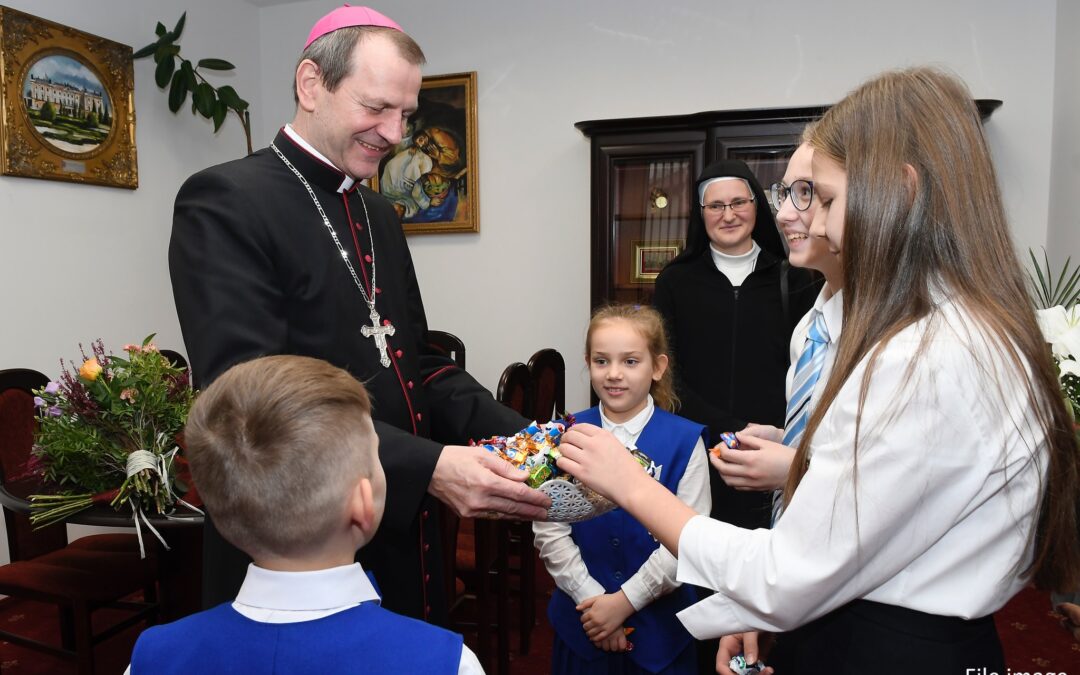
On Sunday, the head of the Polish episcopate, Archbishop Tadeusz Wojda, criticised plans to make the classes compulsory from the start of the school year in September. He said that the course contains “very problematic content” regarding issues such as marriage and family.
In response, Nowacka accused the church of “not understanding” the curriculum as well as of inconsistency, because it has continued to oppose the subject despite the government making sex education elements, which had previously been criticised by the church, optional.
.@barbaraanowacka: Episkopatowi ws. edukacji zdrowotnej chodzi tylko o polityczną awanturę. Cały czas mszczą się za to, że jest tylko jedna lekcja religii, na pierwszej lub ostatniej godzinie, niewliczana do średniej.@marcinfijolek pic.twitter.com/YRIjxrTgkG
— Graffiti_PN (@Graffiti_PN) May 4, 2026
After a more liberal government took power from the national-conservative Law and Justice (PiS) party at the end of 2023, it moved to introduce the new subject of health education, which replaced the former non-compulsory education for family life (WDŻ) classes.
Nowacka had hoped to make health education mandatory, saying it would help students “make informed health decisions” and would “promote a healthy lifestyle”. However, concerns from more conservative elements of the ruling coalition resulted in it being made optional. It is taught from grade four upwards.
Ahead of the subject’s introduction in September 2025, the Catholic church appealed to parents not to allow their children to attend the classes, which it said are “anti-family”, “gender destabilising”, and will “morally corrupt children”. In the end, around 70% of parents opted their children out of the subject.
Last month, Nowacka announced that, from the start of the new school year in September 2026, health education would become compulsory. But, in a nod to conservative critics, she said that elements relating to sex education would be separated and remain optional.
However, that did not satisfy the church, which quickly issued a statement saying that “removing the sexual education component does not solve the problem, as other thematic areas contain content that does not adequately respect the values of marriage and family”.
It therefore expressed opposition to making the subject compulsory, saying that doing so violated parents’ constitutional right to raise children in accordance with their beliefs.
Health education, a subject introduced in Polish schools this year but made optional following conservative criticism, will become compulsory from September.
However, elements relating to sex education will be separated and remain optional https://t.co/nDYdRf9PHK
— Notes from Poland 🇵🇱 (@notesfrompoland) April 10, 2026
That criticism was reiterated on Saturday by Wojda, the president of the Polish Episcopal Conference (KEP), in a homily delivered at Jasna Góra Monastery, Poland’s holiest Catholic shrine.
He said that, even without sex education elements, the curriculum for health education “contains some very problematic content…that fails to adequately respect the values of marriage and family, as defined and guaranteed by the constitution”.
However, neither Wojda nor the episcopate have specified in their statements which elements of the core curriculum they find problematic.
Komisja Wychowania Katolickiego KEP apeluje do instytucji państwowych, a także rodziców dzieci i młodzieży, o rozważne i roztropne decyzje wobec obowiązkowej Edukacji zdrowotnej wprowadzanej do polskich szkół.https://t.co/ibfjDerDt7 pic.twitter.com/2Zbff1gxV3
— EpiskopatNews (@EpiskopatNews) April 14, 2026
“The state should respect and support this right [of parents to decide on their child’s upbringing], rather than restrict it by imposing a uniform, mandatory educational vision in such a sensitive area,” said Wojda.
He appealed to state institutions to engage in “broad and substantive dialogue” with the Catholic church and other religious denominations about how health education should be taught.
Wojda also noted that, while only 30% of parents opted their children into health education classes this year, around 70% signed them up for optional Catholic catechism classes in public schools. Yet the former is being made mandatory while the latter remains optional, he pointed out.
"Jako przedmiot nieobowiązkowy edukacja zdrowotna cieszyła się zaledwie 30-procentową frekwencją, ale to nie przeszkodziło, aby został wprowadzony jako obowiązkowy, podczas gdy na religię chodzi dzisiaj mniej więcej 70 proc. uczniów i nie jest obowiązkowa" – powiedział w…
— ks. Daniel Wachowiak (@DanielWachowiak) May 3, 2026
Speaking to broadcaster Polsat on Monday, Nowacka hit back, saying that the church’s “criticism shows once again that they do not know what is in the core curriculum”. She noted that “yet another bishop does not specify what he means” when criticising the curriculum.
“Last year, [they] criticised the section on sexual health as inappropriate. They had no objections to the rest. They called it a necessary subject,” said Nowacka. But now, even with the sexual health elements removed, they remain opposed.
“It turns out that it was not about sexual health issues, but about [causing] a political row,” claimed the minister.
Since being appointed in December 2023, Nowacka has regularly clashed with the church hierarchy over changes she has made to the school programme, including halving the number of hours that Catholic catechism classes are taught and removing the subject from end-of-year grade averages.
The church has criticised the government's decision to remove Catholic catechism classes from school grade averages.
The church argues it is "unfair" for pupils who take the subject. But the education ministry says it ensures "equality" for all students https://t.co/VBx6CvO0FO
— Notes from Poland 🇵🇱 (@notesfrompoland) April 11, 2024
Notes from Poland is run by a small editorial team and published by an independent, non-profit foundation that is funded through donations from our readers. We cannot do what we do without your support.
Main image credit: EpiskopatNews/Flickr (under CC BY-NC-SA 2.0)

Olivier Sorgho is senior editor at Notes from Poland, covering politics, business and society. He previously worked for Reuters.