Keep our news free from ads and paywalls by making a donation to support our work!

Notes from Poland is run by a small editorial team and is published by an independent, non-profit foundation that is funded through donations from our readers. We cannot do what we do without your support.
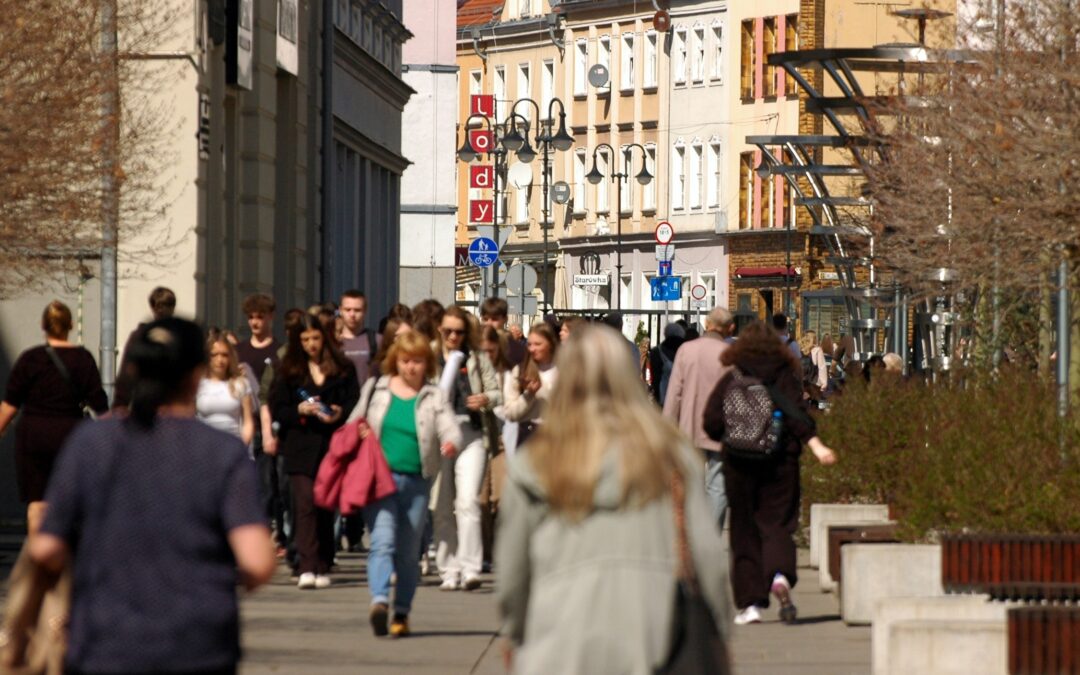
The number of foreigners with residence permits in Poland has reached two million, making up just over 5% of the country’s population, new government data show. The largest national group by far are Ukrainians, followed by Belarusians and Indians.
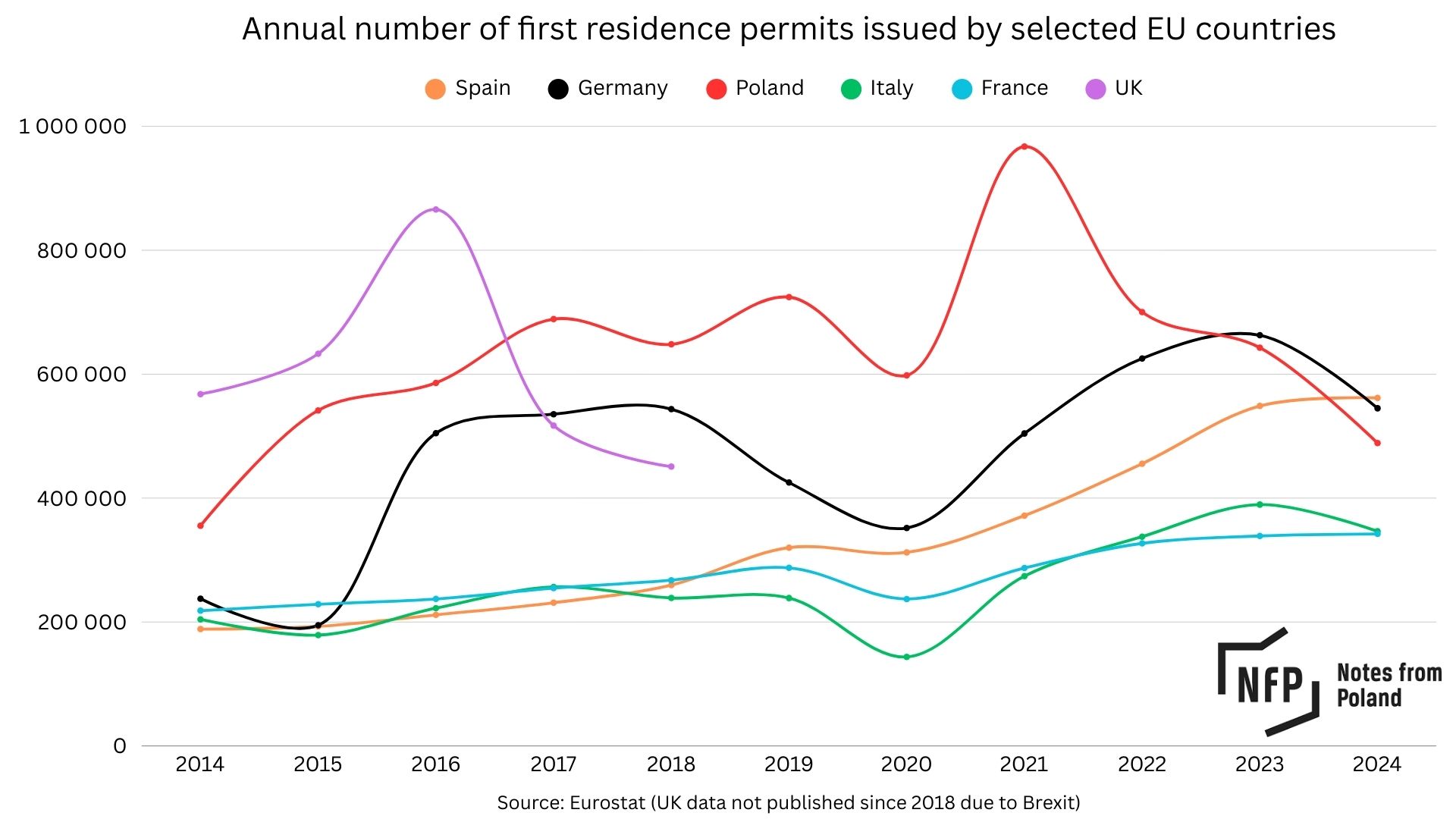
Poland has experienced unprecedented levels of immigration over the last decade. For six years running, between 2017 and 2022, it issued more first residence permits to immigrants from outside the European Union than did any other member state.
Those numbers were bolstered further by the mass arrival of refugees from neighbouring Ukraine after Russia’s full-scale invasion in 2022.
On Friday, a spokeswoman for the government’s Office for Foreigners (UdSC) told the Polish Press Agency (PAP) that there are now around two million foreigners with valid residence permits in Poland, a country with a total population of around 37.5 million.
Over three quarters of those are Ukrainians (1.55 million), with the next largest groups being Belarusians (139,300), Indians (26,100), Georgians (22,200), Russians (19,500), Vietnamese (15,100) and Turks (14,500).
Among the Ukrainians, around 960,000 had so-called temporary protection, a special status given to those who fled the war (but which is now being phased out). Among those who had temporary protection, 83% are women and children, says the UdSC.
A further 758,000 foreigners have temporary residence permits (which are issued for up to three years), while 191,000 have either permanent residence or long-term EU resident status (which is issued on an indefinite basis), reports the Forsal news service.
Siwak told PAP that foreigners were most likely to be found in large urban centres, with the highest concentrations in the provinces of Masovia (where Warsaw is located), Lower Silesia (Wrocław), Wielkopolska (Poznań) and Małopolska (Kraków).
The office notes that its figures do not include people who are in Poland on the basis of visas or visa-free travel.
Meanwhile, separate data released this week by the state Social Insurance Institution (ZUS) show that the number of foreigners registered in the social insurance system rose by just over 95,000 in 2025 to reach almost 1.3 million by the end of the year, representing 7.9% of the total.
Ukrainian immigrants pay more in taxes than they receive in benefits, a report by Poland's National Development Bank has concluded.
The research also indicated that Ukrainians contribute between 0.5% and 2.4% to Poland's annual GDP growth https://t.co/KhXxLtif5W
— Notes from Poland 🇵🇱 (@notesfrompoland) March 15, 2025
A report published last year by Poland’s National Development Bank (BGK) found that Ukrainians alone contribute between 0.5% and 2.4% to Poland’s annual GDP growth, while also paying more into the state budget than they receive in benefits.
However, Poland’s current government, a coalition led by Prime Minister Donald Tusk, has sought to reduce the number of immigrants arriving. It accused the former Law and Justice (PiS) administration of allowing uncontrolled migration, without proper checks on who was coming in.
Under Tusk’s government, in 2024, Poland issued the lowest number of residence permits to non-EU immigrants in a decade. In 2025, the government introduced tougher entry requirements for foreign workers and students.
It has also significantly increased the number of deportations of foreigners who are in Poland illegally or who have broken the law while in the country.
Poland has introduced tougher new rules regulating the entry of foreign students and immigrant workers.
“This is another step towards regaining control over migration and increasing the safety of Poles," says the government https://t.co/gYdikpc6pL
— Notes from Poland 🇵🇱 (@notesfrompoland) June 2, 2025
Notes from Poland is run by a small editorial team and published by an independent, non-profit foundation that is funded through donations from our readers. We cannot do what we do without your support.
Main image credit: Radosław Drożdżewski/Wikimedia Commons (under CC BY-SA 4.0)

Daniel Tilles is editor-in-chief of Notes from Poland. He has written on Polish affairs for a wide range of publications, including Foreign Policy, POLITICO Europe, EUobserver and Dziennik Gazeta Prawna.