Keep our news free from ads and paywalls by making a donation to support our work!

Notes from Poland is run by a small editorial team and is published by an independent, non-profit foundation that is funded through donations from our readers. We cannot do what we do without your support.
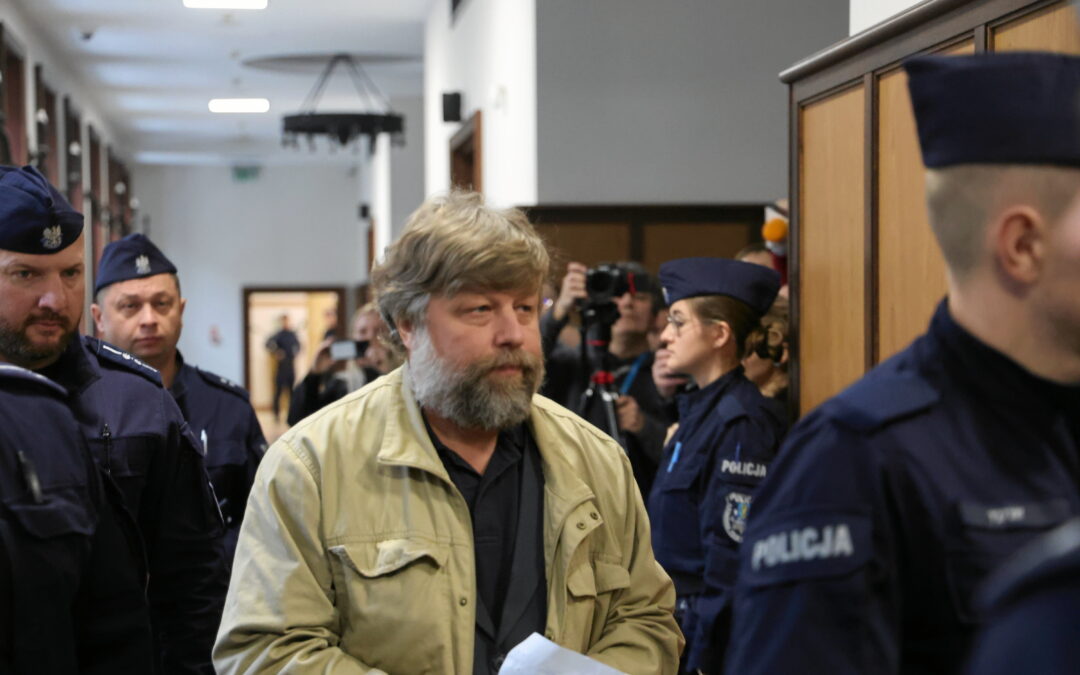
A Polish court has approved the extradition of a Russian archaeologist who was detained in Warsaw last year at the request of Ukraine, which accuses him of carrying out illegal excavations in Russian-occupied Crimea.
Today’s decision does not, however, automatically mean that Alexander Butyagin, who is a senior official at the renowned Hermitage Museum in St Petersburg, will be extradited to Ukraine. His lawyer has already announced an appeal, and any final decision on extradition rests with the Polish justice minister.
⚡️Sąd Okręgowy w Warszawie zgodził się na ekstradycję rosyjskiego archeologa Aleksandra Butiagina do Ukrainy.
Butiagin wychodząc z sali sądu skomentował decyzję: "Spodziewałem się tego".
Naukowiec w Ukrainie jest oskarżany o prowadzenie badań naukowych na terenie okupowanego… pic.twitter.com/3XPnQ9UPz8
— Vot Tak Pl (@vottak_pl) March 18, 2026
Butyagin was detained in December by Poland’s Internal Security Agency (ABW) at a hotel in Warsaw while travelling from the Netherlands to the Balkans, where he was due to give a series of lectures.
Ukraine alleges that he led unauthorised excavations in Crimea at the Ancient City of Myrmekion. Ukrainian investigators say the work caused partial destruction of the cultural heritage site, with losses valued at over 200 million hryvnia (€4 million, 16.9 million zloty). If convicted, he faces up to five years in prison.
In response, Russia summoned Poland’s ambassador to lodge a protest against Butyagin’s detention and demand his release, saying that the archaeologist is the victim of “politicised and speculative persecution” by Ukraine.
However, Polish prosecutors said in January that “the Ukrainian side has provided all the required assurances and documents” and “the extradition documentation raises no objections”.
On Wednesday, Warsaw’s district court, which is responsible for hearing extradition cases, considered Butyagin’s case and “found it legally permissible to extradite [him] to Ukraine”, the Russian’s lawyer, Adam Domański, told the Polish Press Agency (PAP).
Domański confirmed that they planned to appeal, but said they were first waiting to receive the judge’s written justification for his decision translated into Russian. Only if the appeal is rejected can the justice minister make a decision on whether to extradite Butyagin.
A court spokeswoman, Anna Ptaszek, later confirmed to the Gazeta Wyborcza daily that “the court ruled that there are no legal obstacles to extraditing the suspect to Ukraine”.
Russia has summoned the Polish ambassador to demand the release of a Russian archaeologist who was detained in Poland last month at the request of Ukraine.
A Warsaw court is due this week to rule on whether he should be extradited to face trial in Ukraine https://t.co/nJ8esVz2pi
— Notes from Poland 🇵🇱 (@notesfrompoland) January 13, 2026
Domański told PAP that their arguments against extradition were based upon threats to Butyagin’s life, health, rights and freedoms if he were sent to Ukraine. They have also tried, unsuccessfully, to have the judge in the case, Dariusz Łubowski, removed, arguing there are doubts over his impartiality.
Last year, the same judge rejected a request from Germany to extradite a Ukrainian man accused of being part of the team that sabotaged the Nord Stream pipelines bringing Russian gas to Germany. That decision was criticised by Russia, which said Poland was protecting a “terrorist”.
Moscow likewise condemned today’s ruling, with foreign ministry spokeswoman Maria Zakharova calling the case “a political trial that has no legal basis whatsoever”, reports the Moscow Times. She said Moscow would continue to seek Butyagin’s “swift return” to Russia.
Meanwhile, a spokesman for Ukraine’s foreign ministry, Heorhii Tykhyi, said that they view today’s decision “positively”.
A Polish court has refused to extradite the Ukrainian man wanted by Germany for his alleged involvement in the sabotage of Russia's Nord Stream gas pipelines.
The judge's decision was praised by Polish Prime Minister @donaldtusk https://t.co/7i6GaRw82f
— Notes from Poland 🇵🇱 (@notesfrompoland) October 17, 2025
Notes from Poland is run by a small editorial team and published by an independent, non-profit foundation that is funded through donations from our readers. We cannot do what we do without your support.
Main image credit: Robert Kowalewski / Agencja Wyborcza.pl

Daniel Tilles is editor-in-chief of Notes from Poland. He has written on Polish affairs for a wide range of publications, including Foreign Policy, POLITICO Europe, EUobserver and Dziennik Gazeta Prawna.