Keep our news free from ads and paywalls by making a donation to support our work!

Notes from Poland is run by a small editorial team and is published by an independent, non-profit foundation that is funded through donations from our readers. We cannot do what we do without your support.
Almost 80% of Poles say that they would want their country to come to the aid of the Baltic states – Estonia, Latvia and Lithuania – if they were attacked by Russia.
The new poll follows a controversy over comments by a senior opposition figure, former defence minister Mariusz Błaszczak, in which he refused to confirm his support for Poland fulfilling its NATO obligations by coming to the aid of the Baltic states if they were invaded.
🔴Czy w razie ewentualnej agresji ze strony Rosji, Polska powinna pomóc Litwie, Łotwie i Estonii?
➡️tak – 77,8%
➡️nie – 16,1% #sondaż @IBRiS_PL dla @RadioZET_NEWS pic.twitter.com/6jiBgOW5v3— IBRiS (@IBRiS_PL) September 9, 2026
In a survey for broadcaster Radio Zet, the IBRiS agency asked: “In the event of Russian aggression, should Poland help Lithuania, Latvia and Estonia?” In response, 77.8% of those polled said that it should, while only 16.1% were opposed.
Among respondents who identified as politically centrist, 92% were in favour. The figures were lower for those with left-wing (75%) or right-wing (73%) views, though in both cases a large majority still supported coming to the Baltic states’ aid.
Commenting on the findings, Radio Zet wrote that “the survey shows that Poles feel responsible for the military security of their NATO allies – contrary to what some politicians have said”.
That was a reference to remarks last week by Błaszczak, who is the head of the parliamentary caucus of the national-conservative Law and Justice (PiS), Poland’s largest opposition group. Between 2018 and 2023, Błaszczak served as defence minister in the former PiS-led government.
In an interview with Radio Zet, Błaszczak was asked if, in the event of a Russian attack on the Baltic states, Poland should come to their aid. “Polish soldiers should defend Poland,” he responded. “We need to be strong in our alliances…We should prioritise cooperation with the United States.”
The interviewer pointed out that Article 5 of the NATO treaty requires members of the alliance to come to the assistance of another member that is attacked, and again asked if Poland should help the Baltic states if such an attack occurred.
“We border Russia directly, and we border a Russia that has effectively taken over Belarusian territory. So we’re also on the front line,” replied Błaszczak. “This article, of course, speaks of solidarity, but the point is that the government that governs Poland should establish the best possible relations with the United States.”
With the interviewer continuing to press the question, Błaszczak simply said that “it all depends on the circumstances” and “it’s not a straightforward issue”.
🇵🇱🇺🇸🇪🇪🇱🇹🇱🇻@mblaszczak @pisorgpl o zobowiązaniach sojuszniczych wynikających z artykułu 5 @NATO 👇
Źródło: @BogRymanowski @Radio_ZET pic.twitter.com/gfQz4QyD1D
— WarNewsPL (@WarNewsPL1) September 1, 2026
Błaszczak’s comments were criticised by figures from Poland’s ruling coalition, which ranges from left to centre right. They accused him of calling into question the validity of Article 5, on which Poland would rely if it were attacked.
“A former defence minister who undermines the sanctity of Polish security, i.e. NATO’s Article 5, is a moron,” wrote deputy defence minister Cezary Tomczyk. Interior minister Marcin Kiewiński said that Błaszczak had “undermined the very purpose of NATO’s existence”.
In response to the criticism, Błaszczak wrote on social media that, during the PiS government’s time in power, it had significantly enhanced security ties with the Baltic states, including stationing Polish forces in Latvia and contributing Polish F-16s to NATO’s air policing mission.
“NATO’s Article 5 is activated collectively, and alliance commitments are binding, but every [Polish] defence minister’s priority should be the defence of Poland and ensuring the safety of Poles,” he added.
Błaszczak to stan umysłu. Mało im było niszczenia SAFE, to dziś były szef MON podważył sens istnienia NATO wskazując, że Wojsko Polskie nie powinno bronić Litwy, Łotwy czy Estonii.
Przyjaźń tego skompromitowanego środowiska z Orbanem to nie był przypadek…— Marcin Kierwiński (@MKierwinski) September 1, 2026
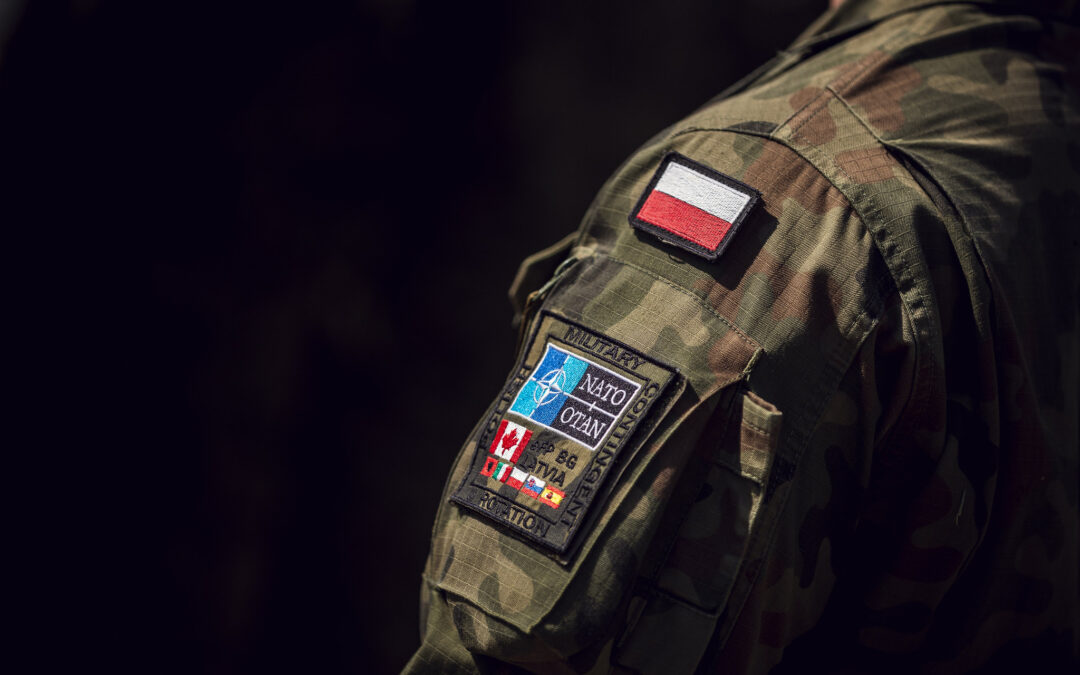
On Wednesday, Poland’s foreign minister, Radosław Sikorski, visited Latvia, including the base in Ādaži where a Polish military contingent has been based since 2017 as part of a multinational NATO brigade.
“Poland and Latvia face similar threats in the security domain,” said Sikorski. “We must speak with one voice and take our security seriously. Only such actions can guarantee effective protection against the threat from Russia.”
“We do not want an escalation of the conflict, but Putin must know that we are not going to sit idly by and wait for his next step,” he continued. “We understand that the defence of our allies also contributes to Polish security. We stand ready to share the burden of defending the eastern flank.”
📍 Ādaži 🇱🇻
Continuing visit to Latvia, Deputy Prime Minister and Minister of Foreign Affairs @sikorskiradek visited the base of the Polish Military Contingent.
The Polish contingent in Latvia serves as part of NATO’s allied presence, strengthening deterrence and defence… pic.twitter.com/tKMIix2h9L
— Ministry of Foreign Affairs 🇵🇱 (@PolandMFA) September 9, 2026
Notes from Poland is run by a small editorial team and published by an independent, non-profit foundation that is funded through donations from our readers. We cannot do what we do without your support.
Main image credit: Latvijas armija/Flickr (under CC BY-NC-ND 2.0)

Daniel Tilles is editor-in-chief of Notes from Poland. He has written on Polish affairs for a wide range of publications, including Foreign Policy, POLITICO Europe, EUobserver and Dziennik Gazeta Prawna.