Keep our news free from ads and paywalls by making a donation to support our work!

Notes from Poland is run by a small editorial team and is published by an independent, non-profit foundation that is funded through donations from our readers. We cannot do what we do without your support.
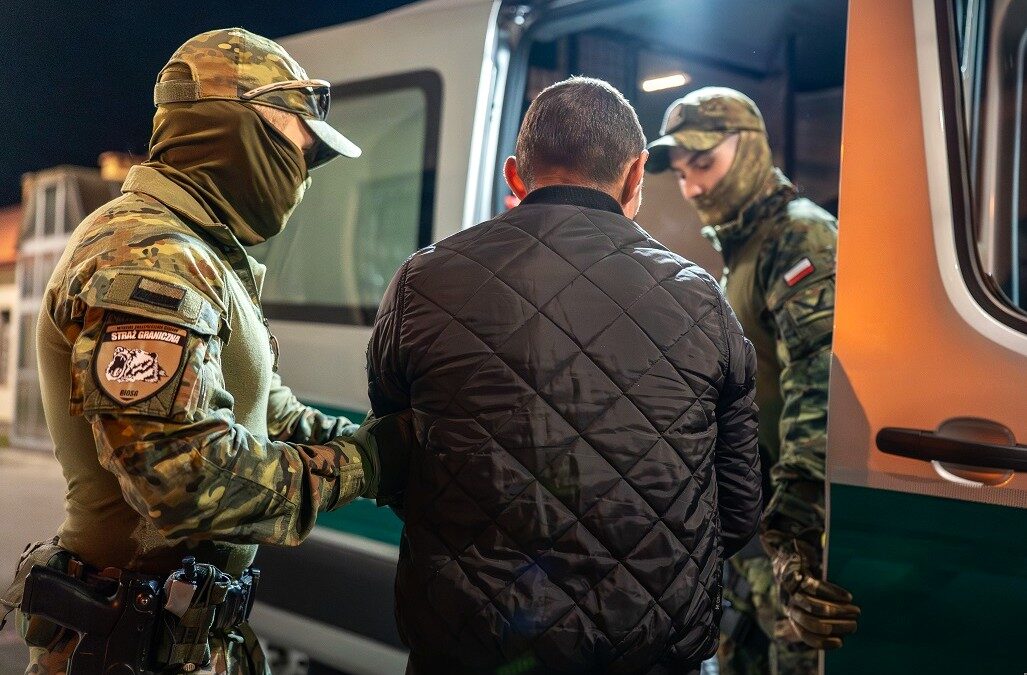
Poland has forcibly removed over 2,100 foreigners from the country this year, around twice as many as in 2024. In total, over 9,000 immigrants were ordered to leave the country, with most complying voluntarily.
The figures come after the government introduced a tougher new migration policy at the end of last year, which has included efforts to step up deportations of those who are in Poland illegally or who broke the law while in the country.
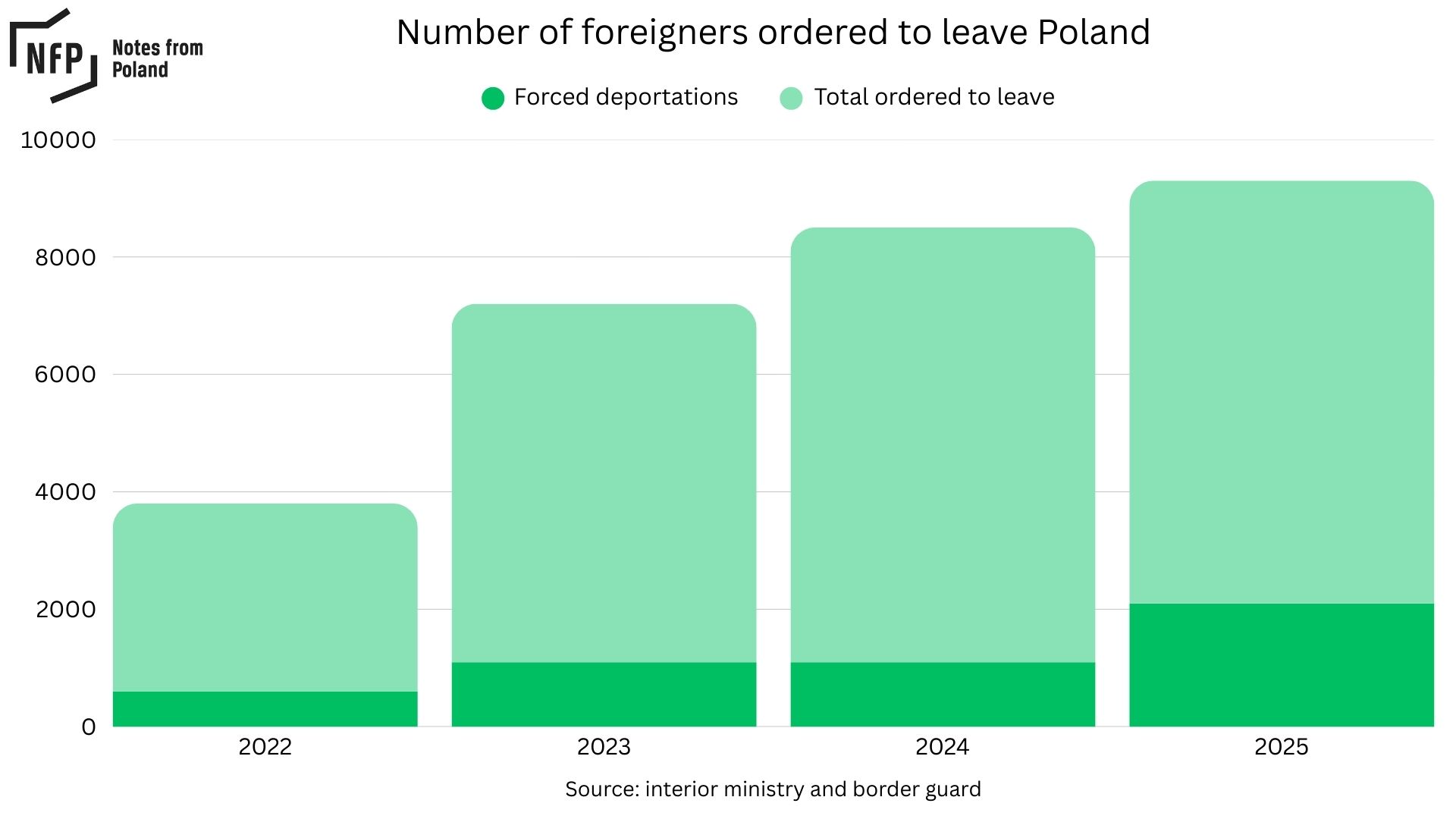
On Tuesday, Poland’s border guard announced that just over 2,100 foreigners had been forcibly removed from Poland in 2025. That was up from figures of around 1,100 in both 2024 and 2023, and 600 in 2022.
The nationalities most often subject to forcible deportations were Ukrainians (1,150), who are by far Poland’s largest immigrant group, followed by Georgians (350), who earlier this year the government blamed for a wave of “imported crime”.
In total, just over 9,300 foreigners left Poland this year after being ordered to do so. That figure includes both forcible deportations and those who complied voluntarily. It was up from 8,700 in 2024, 7,200 in 2023, and 3,800 in 2022.
Under Polish immigration law, the border guard can issue a decision requiring a foreigner to leave the country if they are found to be residing there illegally, if they are working without permission or have violated any other laws and regulations, or are deemed to pose a threat.
In most cases, they are given a deadline ranging from eight to 30 days to voluntarily depart the country. But in some cases – for example, if the person is deemed a threat to security or public safety – they can be removed immediately.
Those ordered to leave Poland are also issued with a ban on re-entering the country, which can range from six months to 10 years, depending on the reasons for their deportation.
Poland wants to deport 57 Ukrainians and six Belarusians involved in criminal behaviour at a concert in Warsaw on Saturday.
Meanwhile, a Ukrainian seen at the event holding a nationalist flag associated with the massacre of Poles during WW2 has apologisedhttps://t.co/aVKmaearVG
— Notes from Poland 🇵🇱 (@notesfrompoland) August 12, 2025
Over the last decade, Poland has experienced levels of immigration unprecedented in its history and also among the highest anywhere in Europe. Each year between 2017 and 2022, Poland issued more first residence permits to immigrants from outside the EU than did any other member state.
When the current government came to power in December 2023, it accused the former Law and Justice (PiS) administration of allowing uncontrolled migration and promised a clampdown.
That has so far included a ban on asylum claims for those who illegally cross the border from Belarus, the reintroduction of controls on Poland’s borders with Germany and Lithuania, and the toughening of requirements to obtain a visa or work permit
In early 2025, the government also pledged to step up the deportation of migrants who commit crimes in Poland. In one case, 63 Ukrainians and Belarusians were expelled from the country in August after being involved in criminal behaviour at a concert by a Belarusian rapper in Warsaw.
The government says that Poland is experiencing a growing wave of crime committed by immigrants and has taken tough action in response, including mass arrests and deportations.
But official data show that the story is not so simple, writes @Gosia_Tomczak https://t.co/smHyp6lkyG
— Notes from Poland 🇵🇱 (@notesfrompoland) April 16, 2025
Notes from Poland is run by a small editorial team and published by an independent, non-profit foundation that is funded through donations from our readers. We cannot do what we do without your support.
Main image credit: Straż Graniczna (under CC BY-SA 4.0)

Daniel Tilles is editor-in-chief of Notes from Poland. He has written on Polish affairs for a wide range of publications, including Foreign Policy, POLITICO Europe, EUobserver and Dziennik Gazeta Prawna.