Keep our news free from ads and paywalls by making a donation to support our work!

Notes from Poland is run by a small editorial team and is published by an independent, non-profit foundation that is funded through donations from our readers. We cannot do what we do without your support.
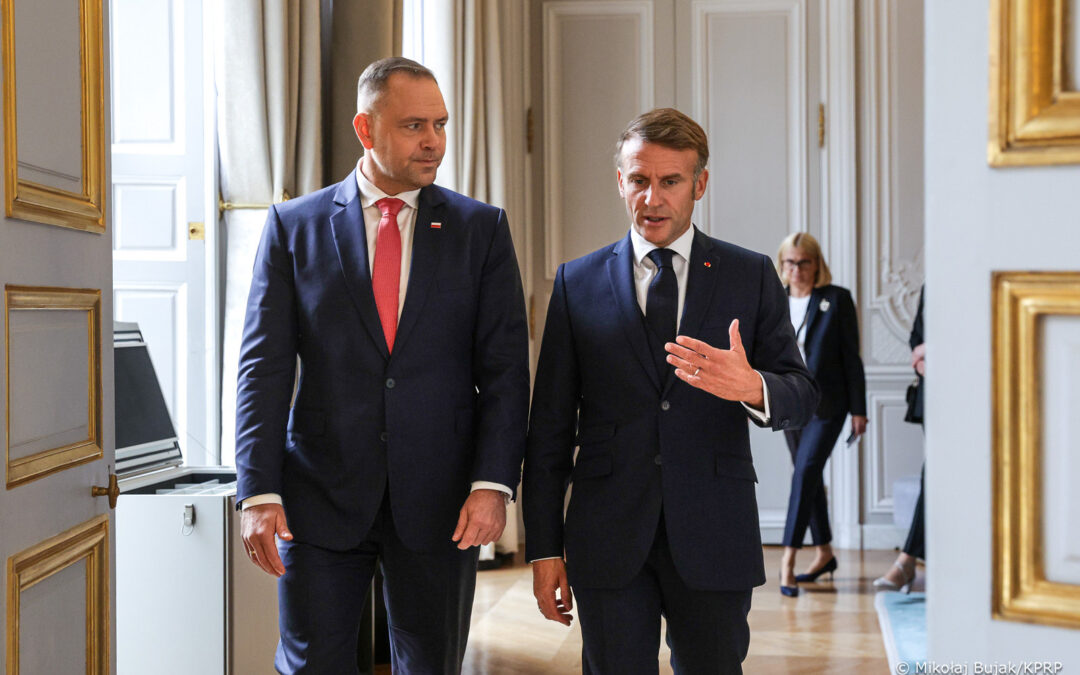
Opposition-aligned President Karol Nawrocki’s chief foreign policy aide has cast doubt on the idea of Poland joining France’s new nuclear deterrent programme.
On Monday, Prime Minister Donald Tusk announced that Warsaw was in talks with Paris over the issue. However, Marcin Przydacz, who leads Nawrocki’s International Policy Office (BPM), said that the president had not been informed about the discussions.
He also suggested that it would be better for Poland to seek a nuclear sharing arrangement with the United States.
– Prezydent @NawrockiKn nie był informowany o rozmowach, jakie rząd prowadzi z Francją w sprawie odstraszania nuklearnego poinformował w poniedziałek szef prezydenckiego Biura Polityki Międzynarodowej @marcin_przydacz https://t.co/HqXIJcRorI
— PolsatNews.pl (@PolsatNewsPL) March 2, 2026
French President Emmanuel Macron yesterday announced that he had ordered an expansion of France’s nuclear arsenal and was in talks with eight European allies, including Poland, over cooperation, which could also involve them hosting French nuclear assets.
Shortly afterwards, Tusk confirmed that Poland was holding discussions over joining the programme. The other countries potentially participating are the UK, Germany, the Netherlands, Belgium, Greece, Sweden and Denmark.
However, speaking in Washington later on Monday after attending an event at the White House, Przydacz told Polish media outlets that Nawrocki, who is a close ally of Donald Trump, had not been informed about the talks with France.
He expressed doubt as to whether “the French side has an adequate nuclear arsenal to actually provide a protective umbrella” and said that it is the United States which possesses real nuclear deterrence capabilities, reports Polsat News.
Poland’s “first priority” should therefore be negotiations with the Americans about joining NATO’s nuclear sharing programme, said Przydacz. “If, in addition, there is to be a discussion on European capabilities, we must first and foremost be convinced that Europeans have the capabilities.”
“We will expect detailed information from the government on this matter, as the commander-in-chief of the armed forces should be fully informed,” he added, quoted by the Wprost weekly.
While the government is primarily responsible for leading Poland’s defence policy, the president serves as commander-in-chief of the armed forces, meaning that he also plays a role.
Nawrocki has regularly clashed with the government on a variety of issues, though they have tried to present a more united front on national security.
Poland has confirmed that it is in talks with France over joining its new nuclear deterrence programme, which would see Paris increase the size of its nuclear arsenal and cooperate with European allies, who would be able to host French nuclear assets https://t.co/iDXCfjE79r
— Notes from Poland 🇵🇱 (@notesfrompoland) March 2, 2026
Leading figures from the national-conservative Law and Justice (PiS) party, which is Poland’s main opposition, echoed Przydacz’s views in their response to Tusk’s announcement.
“The NATO nuclear sharing programme has been in operation for years, and Poland should be part of it,” wrote former PiS defence minister Mariusz Błaszczak, who now serves as head of PiS’s parliamentary caucus.
“I expect the government to present details of the programme proposed by the French side,” he added. “However, it should not lead to pushing the US out of Europe or be an attempt to build strategic autonomy within the EU.”
Another former PiS government minister, Michał Wójcik, told Radio Zet that the United States would be a “better” choice for nuclear sharing given that it is Poland’s “most important ally”.
Polska powinna uczestniczyć w programie udostępniania broni jądrowej. Prawo i Sprawiedliwość mówiło o tym również wtedy kiedy ówczesna opozycja, a dziś władza twierdziła, że to niepotrzebna eskalacja.
W Sojuszu Północnoatlantyckim od lat funkcjonuje program NATO Nuclear…
— Mariusz Błaszczak (@mblaszczak) March 2, 2026
Meanwhile, a poll by the IBRiS agency for Radio Zet, published on Tuesday but conducted before Macron and Tusk’s announcements, showed that around half of Poles support their country obtaining a nuclear deterrent.
Asked “Should Poland acquire a nuclear weapon?”, 50.9% of respondents answered yes, while 38.6% said no. The remaining 10.5% were unsure.
Poland has increasingly discussed the idea of a nuclear deterrent since Russia’s full-scale invasion of Ukraine in 2022. In that year, then-President Andrzej Duda said that Poland was open to hosting nuclear weapons and had discussed the idea with the United States.
Two years later, Duda reiterated that Poland was willing to host nuclear weapons from its NATO allies and, in 2025, he said that he welcomed Macron’s idea of extending France’s “nuclear umbrella” to cover European allies.
Last month, Nawrocki, likewise said that he was “a huge advocate” of Poland seeking a nuclear deterrent, saying that it is necessary in the face of an “aggressive, imperial Russia”.
President @NawrockiKn has called for Poland to seek a nuclear deterrent, saying that it is necessary in the face of an “aggressive, imperial Russia” https://t.co/L9oAshZUEb
— Notes from Poland 🇵🇱 (@notesfrompoland) February 15, 2026
Notes from Poland is run by a small editorial team and published by an independent, non-profit foundation that is funded through donations from our readers. We cannot do what we do without your support.
Main image credit: Mikołaj Bujak/KPRP

Daniel Tilles is editor-in-chief of Notes from Poland. He has written on Polish affairs for a wide range of publications, including Foreign Policy, POLITICO Europe, EUobserver and Dziennik Gazeta Prawna.