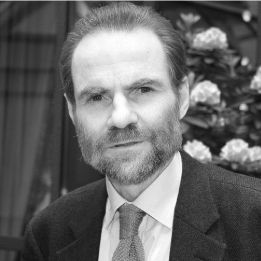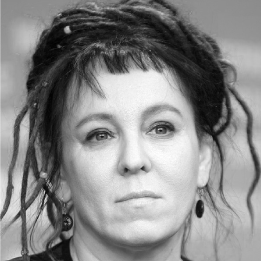
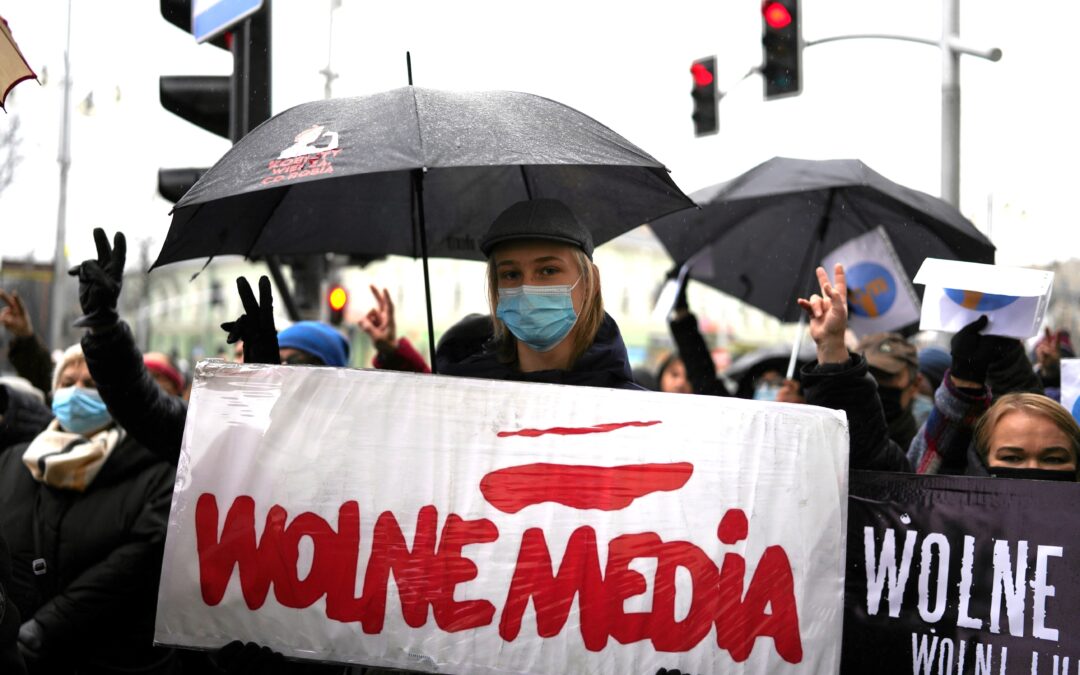
The editors of most of Poland’s main private media outlets have issued a joint statement in defence of independent journalism. Their intervention comes after claims that the government has sought to gain influence over the country’s two largest news websites, Wirtualna Polska and Onet.
“These are further attempts to limit the independence of Polish media,” wrote the 47 editors. “Together, we will fight to keep the media free and independent as the foundation of a democratic society, protecting the right of citizens to access reliable information.”
Deklaracja redaktorek i redaktorów naczelnych w sprawie niezależności mediów.
Zobacz treść deklaracji: https://t.co/aKTlh3uRtr pic.twitter.com/Eo73URYJgJ
— tvn24 (@tvn24) June 28, 2023
Earlier this month, Bartosz Węglarczyk, editor-in-chief of Onet, revealed a recent conversation he said he had had with an unnamed “important person connected to the government”.
He reportedly told Węglarczyk that, if Onet wanted “to be truly independent, you would appoint a person as deputy editor-in-chief who would be responsible for ensuring that the government’s point of view is represented…This person should not report to you, but directly to the management of the company.”
Węglarczyk said that such a suggestion shows “a complete misunderstanding of the role of the media in democracy”, which is “not to ensure that the government’s point of view is well represented”. He likened the idea of a deputy editor reporting to the company’s management to how the media works in China.
Media publiczne. Nekrolog https://t.co/nEVoetycy1 via @OnetWiadomosci
— Węglarczyk 🇵🇱🇪🇺🇮🇱🇺🇸💙💛 (@bweglarczyk) June 14, 2023
That was followed last week by a column written by Paweł Kapusta, editor-in-chief of Wirtualna Polska, in which he described attempts to “attack journalists and strangle free media”.
He revealed that, when his website began publishing investigations that revealed inconvenient information for the government, an offer was made by a state-owned company to buy Wirtualna Polska. When that was rejected, it was followed by “further attempts to influence our editorial office”.
That included, claims Kapusta, “a message from the president of a state institution to a member of the board of Wirtulna Polska with a hint as to which journalists should be fired and which should be hired”.
“The people who are now near the helm of this state have tendencies worthy of authoritarian countries,” wrote Kapusta. “Let’s not be afraid to say it out loud: in this respect we are not much different (or maybe not at all?) from banana republics.”
"Przez chwilę zastanawiałem się, czy w ogóle publikować ten tekst, bo wszystkiego tego doświadczają niezależne, wolne media w Polsce. Trzeba jednak o tym mówić, do takich spraw nie można przywyknąć". https://t.co/HZztMWJnOw
— Paweł Kapusta (@pawel_kapusta) June 23, 2023
Węglarczyk and Kapusta’s revelations prompted today’s joint statement, which was signed, among others, by the editors of Fakt, Poland’s best-selling newspaper; TVN24, the largest news channel; RMF and Radio Zet, the two largest radio stations; and Poityka and Newsweek, the two best-selling news weeklies.
Their statement noted that recent years have seen a number of efforts by the authorities “to restrict the independence of Polish media”, including a failed attempt to force the sale of TVN by its US owner, lawsuits brought en masse by state entities against certain outlets, and actions by the state broadcasting regulator.
“We declare that we will defend the independence of Polish journalism, and the editorial offices managed by us will consistently and in solidarity inform the public about any attempt by the authorities to influence the media,” wrote the editors.
At the time of writing, there has been no comment on their letter by government figures. But a senior MP from the ruling Law and Justice (PiS) party, Radosław Fogiel, told Wirtualna Polska: “We respect all media. We know they have different editorial lines. When they’re wrong, we straighten it out.”
Poland's largest private media outlets have republished an investigation by one of their rivals, TVN, in a show of solidarity after the broadcasting regulator launched proceedings against the station over the report, which was critical of the government. https://t.co/0ggAvJyfzO
— Notes from Poland 🇵🇱 (@notesfrompoland) January 5, 2023
After the national-conservative PiS came to power in 2015, Poland fell from its highest ever position of 18th in the World Press Freedom Index that year to its lowest ever ranking of 66th in 2022. This year it rose back to 57th.
PiS has brought public media under its influence, turning state broadcaster TVP into a government mouthpiece. It also supported a move in 2020 by state energy giant Orlen to buy hundreds of local media outlets, many of which then installed more PiS-friendly editors.
The ruling party, however, claims that its policies have brought greater balance to a media landscape that was previously dominated by opposition-friendly outlets. It also argues that it is in the national interest for foreign-owned media, such as TVN and Onet, to be brought under Polish control.
State broadcaster TVP remains Poland's least trusted major news source, finds an annual study by @risj_oxford, which notes that the station provides "skewed, pro-government coverage".
The most trusted outlets are RMF FM, Polsat, Radio Zet and TVN https://t.co/nhxEaj9lS0
— Notes from Poland 🇵🇱 (@notesfrompoland) June 15, 2023
Main image credit: Grzegorz Skowronek / Agencja Wyborcza.pl

Daniel Tilles is editor-in-chief of Notes from Poland. He has written on Polish affairs for a wide range of publications, including Foreign Policy, POLITICO Europe, EUobserver and Dziennik Gazeta Prawna.