Keep our news free from ads and paywalls by making a donation to support our work!

Notes from Poland is run by a small editorial team and is published by an independent, non-profit foundation that is funded through donations from our readers. We cannot do what we do without your support.
Poland had the second-highest household electricity prices in the European Union in the first half of 2026 after adjusting for differences in the cost of living, new Eurostat data show. Prices in Poland were also among the fastest-rising in the bloc.
Poland’s relatively high electricity costs reflect the country’s continued reliance on coal, which results in EU charges for carbon emissions, and its taxes and levies, which make up the largest share of household electricity bills anywhere in the EU.
In nominal terms, Polish households paid €29.99 per 100 kilowatt-hours (kWh) for electricity in the first half of 2026. This was the seventh-highest price among the EU’s 27 member states and above the bloc-wide average of €28.32.
Ireland (€38.71 per 100 kWh) had the highest prices, followed by Germany (€36.18) and Belgium (€35.75). The lowest costs were recorded in Hungary (€11.39), Malta (€12.68) and Bulgaria (€13.41).
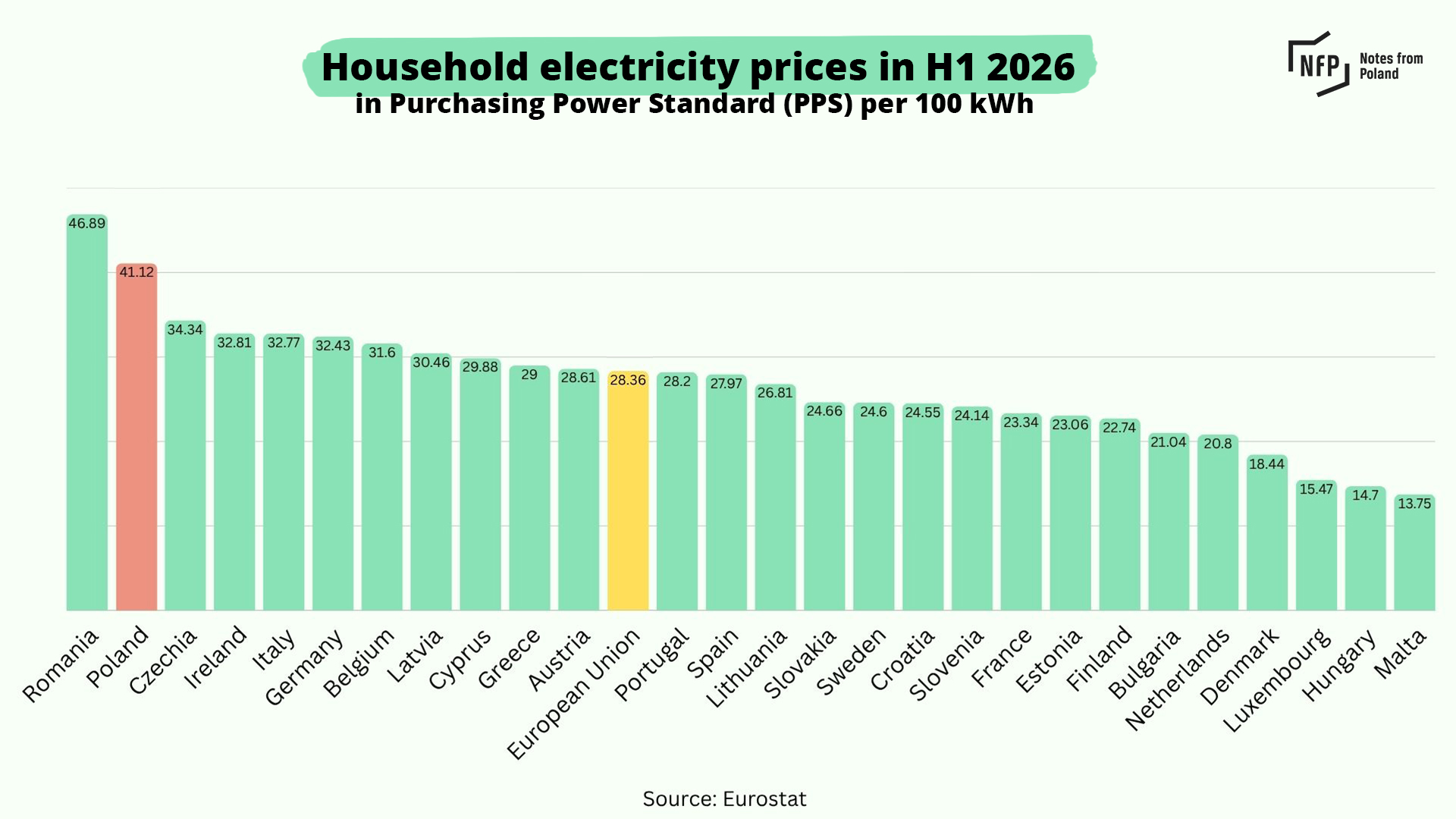
However, when adjusted for purchasing power standards (PPS), which account for differences in the cost of living, Poland ranked second in the EU, at 41.12 PPS per 100 kWh.
Only Romania had higher prices, at 46.89 PPS. The lowest prices when measured in PPS were recorded in Malta (13.75), Hungary (14.7) and Luxembourg (15.47).
Poland’s electricity prices, in PPS terms, rose by 10.7% compared with the second half of 2025, which was the second-biggest increase in the EU after Finland. They were also up 17.6% compared to the first half of 2025, the fourth-largest rise in the bloc.
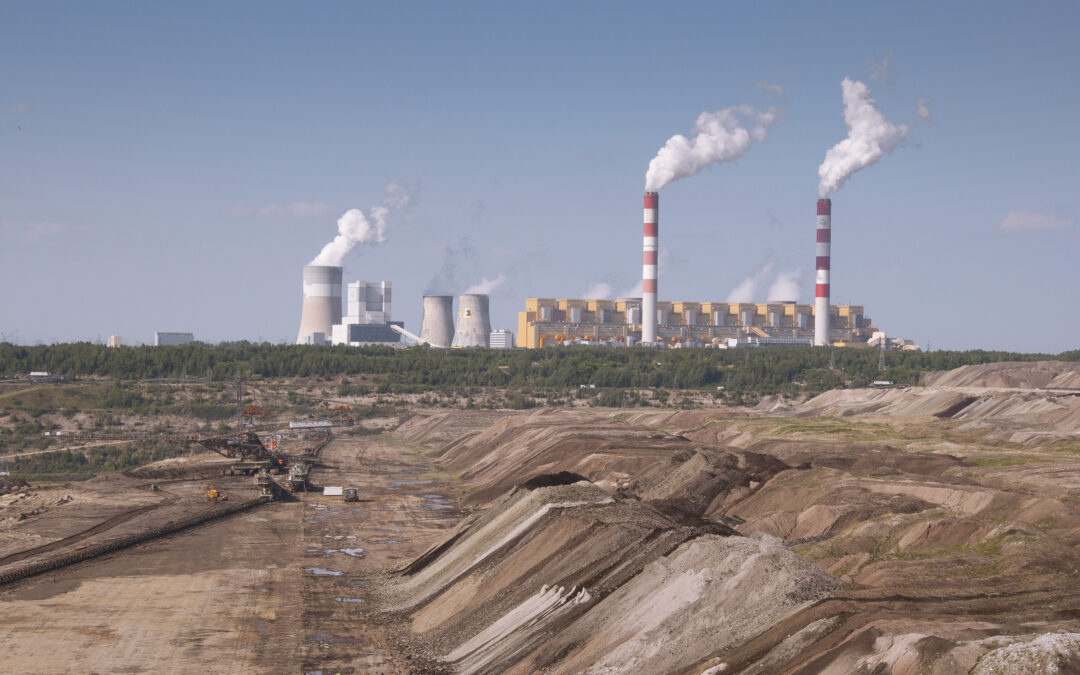
One reason why electricity prices in Poland remain high is the country’s continued reliance on coal, which last year generated just over half of power, by far the highest proportion in the EU.
Almost all coal used in Polish power plants is mined domestically and is among the most expensive in the world to extract. Additionally, burning it also produces high carbon emissions, which power generators must pay for under the EU Emissions Trading System (ETS).
These costs contribute to the high taxes and levies included in household electricity bills, which accounted for 39% of the final price in Poland in the first half of 2026. This was the highest share in the EU, ahead of Germany (23.6%) and well above the bloc-wide average of 18.6%.
“In Poland, only one-third of our electricity generation is carbon-free. We have to pay for the rest – often dearly,” noted Polish energy journalist Jakub Wiech, commenting on the data.
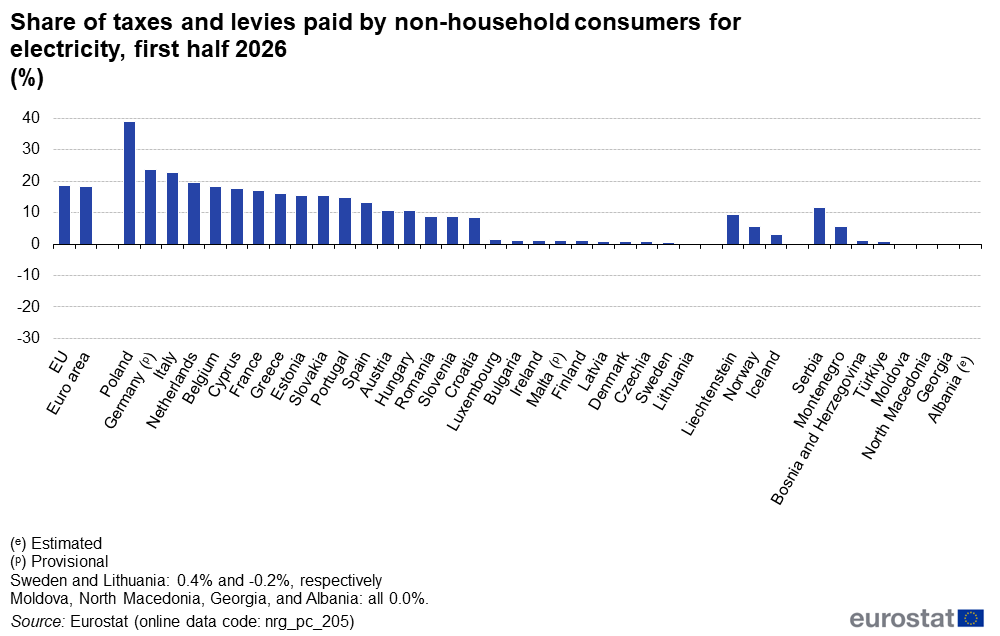
Without taxes and levies, the nominal price of electricity in Poland would have been just under €16 per 100 kWh, below the EU average of €20.27.
However, Bartłomiej Orzeł of the Project Tempo think tank notes that electricity prices in Poland would, in fact, be even higher were it not for the huge state subsidies paid to support the unprofitable coal mining sector, which amount to billions of zloty a year but also shield end consumers from the full cost of extracting coal.
He told news website Interia that mines actually sell coal to power stations at a price below the cost of extraction.
Poland will from next month be the last remaining EU country still mining hard coal, after the Czech Republic – the only other producer – announced the closure of its last mine https://t.co/0sfMDQb19N
— Notes from Poland 🇵🇱 (@notesfrompoland) January 30, 2026
According to Wiech, the high tax burden also reflects the costs of transforming Poland’s energy sector while continuing to support coal-fired power stations and the state budget.
He says Poland needs “on the one hand, to fund the accelerated but delayed transformation and modernisation of the electricity sector; on the other hand, to maintain the fleet of coal-fired power stations; and thirdly, to contribute to the state budget”, which is struggling with persistently high deficits.
Wiech expects, however, that politicians will come under pressure to reduce electricity bills ahead of next year’s parliamentary election. He says they may be tempted to “interfere with electricity bills” and that “it is therefore quite likely that certain charges (e.g. the distribution charge) will be reduced in 2027”.
Komisja Europejska wrzuciła dane o cenach prądu za I półrocze 2026 roku i – boy, oh, boy – niesamowita jest to lektura.
Na początek mocne uderzenie: w ujęciu standardu siły nabywczej polskie gospodarstwa domowe mają drugie najwyższe ceny prądu w całej Unii Europejskiej.… pic.twitter.com/yKvt5251i7
— Jakub Wiech (@jakubwiech) November 1, 2026
Energy prices and the wider energy transition have already become increasingly politicised this year, with the right-wing opposition criticising EU climate policies.
The national-conservative Law and Justice (PiS), the largest opposition party, recently called for Poland to unilaterally withdraw from ETS, claiming that it treats “Poles as a cash machine for the absurd leftist climate policy of the EU”.
Opposition-aligned President Karol Nawrocki has twice attempted to call national referendums on rejecting EU climate policy, but in both cases his proposals were rejected by the more pro-EU government’s majority in parliament.
Poland's right-wing opposition wants to withdraw from the EU Emissions Trading System, saying it makes Poles "a cash machine for absurd leftist climate policies"@PStrzalkowski explains what costs ETS really brings, and what prospects there are for reform https://t.co/UxpMWpG1pE
— Notes from Poland 🇵🇱 (@notesfrompoland) May 4, 2026
However, when PiS was in power from 2015 to 2023, it recognised the need to move Poland away from coal and towards a mix of renewables and nuclear.
Solar energy installations boomed under the PiS government, and the overall share of renewables in the energy mix rose from around 9% in 2015 to a record 29% in 2024.
The current government has continued with PiS’s plans to shift towards nuclear and renwables. This year, Poland’s first offshore wind farm in the Baltic Sea began generating electricity, with a number of other offshore projects set to follow.
Poland’s national energy and climate plan, approved in June, envisages coal accounting for 0-5% of the energy mix by 2040. Around 15-16% will come from nuclear, 7-8% from gas, with most of the rest from renewables: onshore wind (22-27%), offshore wind (18-21%) and solar (14-18%).
Notes from Poland is run by a small editorial team and published by an independent, non-profit foundation that is funded through donations from our readers. We cannot do what we do without your support.

Alicja Ptak is deputy editor-in-chief of Notes from Poland and a multimedia journalist. She has written for Clean Energy Wire and The Times, and she hosts her own podcast, The Warsaw Wire, on Poland’s economy and energy sector. She previously worked for Reuters.