Keep our news free from ads and paywalls by making a donation to support our work!

Notes from Poland is run by a small editorial team and is published by an independent, non-profit foundation that is funded through donations from our readers. We cannot do what we do without your support.
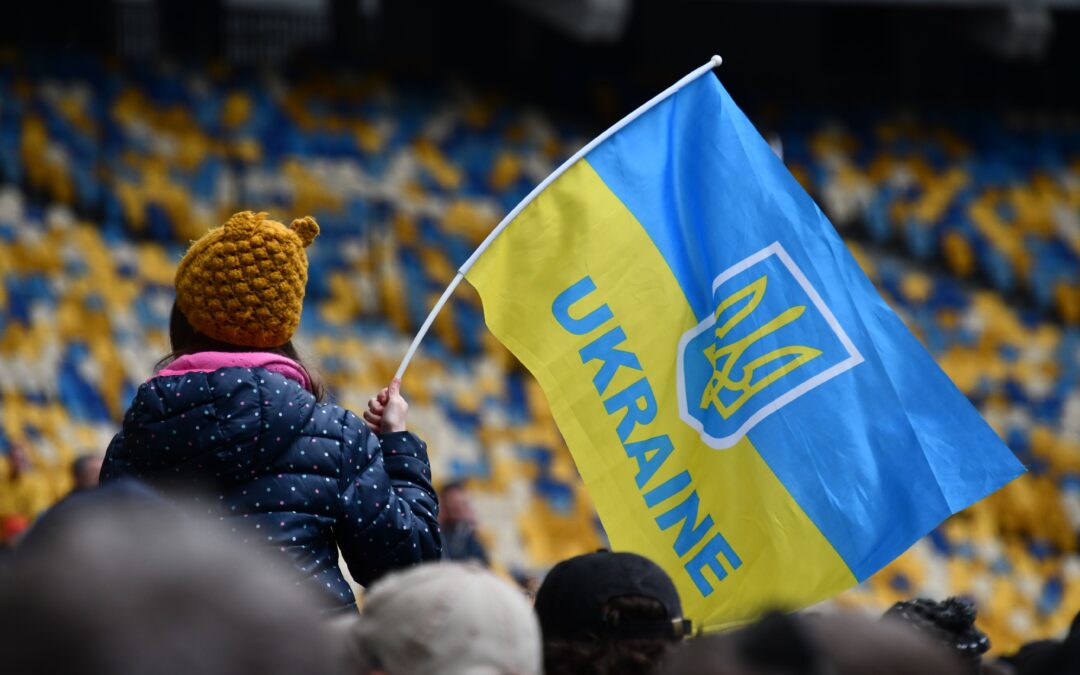
Ukrainian refugees boosted the size of Poland’s economy by 2.4% last year, the equivalent of 94 billion zloty (€21.5 billion), according to a new report by the UN refugee agency (UNHCR) and accounting firm Deloitte.
The refugees’ level of employment has now also surpassed that of Polish citizens, but their growing presence in the labour market has had no negative impact on employment or wages for other workers, finds the study.
“Refugees from Ukraine in Poland have entered a new phase characterised by deeper economic integration, increasing labour market participation, and a gradual transition from emergency support mechanisms towards long-term integration into public institutions,” wrote the UNHCR and Deloitte.
📉Facts matter.
Refugees from Ukraine contributed 2.4% of Poland’s GDP in 2025, says new analysis by UNHCR and Deloitte.
This is what happens when people forced to flee are given the opportunity to rebuild their lives with dignity.
The full report: https://t.co/egUp8jjCwc pic.twitter.com/CSNONqdKGU
— UNHCR Polska (@UNHCRPoland) October 1, 2026
The findings come in the latest edition of an annual report analysing the economic impact of Ukrainian refugees, almost one million of whom were living in Poland in 2025.
Modelling carried out by Deloitte showed that their presence is having an increasingly positive effect: in 2025, Ukrainian refugees raised Poland’s GDP by 2.4%, compared to 2.3% in 2024, 2.0% in 2022 and 1.5% in 2022. Deloitte forecasts that the figure will rise to 2.8% by 2035 as Ukrainians integrate further.
The company’s latest figures for 2023 and 2024 differ from those published in last year’s report, with Deloitte saying that it now uses a modelling strategy that is “similar to” but “improved” from before.
The report also notes that the figure for 2025 likely understates the economic impact of Ukrainians who arrived in Poland as refugees, given that many – especially the most economically integrated – have shifted from refugee status to other forms of residency, meaning they do not count towards Deloitte’s data.
The employment rate among Ukrainian refugees in Poland rose from 61% in 2023 to 76% in 2025. The latter figure was slightly higher than the rate among Polish citizens.
However, the report notes that Ukrainian refugees are far more likely to be employed on a more precarious basis than native workers: only 42% have standard employment contracts, compared to 80% among Polish citizens.
Ukrainian refugees also much more often work in positions they are overqualified for, while their median wage is only around 85% of the figure among all workers in Poland.
Meanwhile, the report finds that, “contrary to concerns that a large increase in labour supply would negatively affect Polish workers, there is no evidence of deterioration in employment outcomes or wages”. In fact, employment among Polish citizens has continued to rise.
The number of foreign workers in Poland rose 7.2% last year to reach 1.14 million.
Immigrants now make up almost 7% of all workers. While Ukrainians remain by far the largest group, the fastest-growing nationalities last year were Colombians and Indians https://t.co/E0LNJXyyTx
— Notes from Poland 🇵🇱 (@notesfrompoland) June 9, 2026
Through their high levels of employment, Ukrainian refugees also contribute to Poland’s public finances via taxes and social security contributions. The report estimates that general government revenues are 2.6% higher because of refugee-related economic activity.
Meanwhile, although “the arrival of refugees from Ukraine represented a major stress test for the Polish healthcare system…healthcare expenditures on refugees remain substantially lower on a per-capita basis than expenditures on Polish residents”.
At the same time, Poland’s understaffed hospitals have been boosted by the arrival of thousands of Ukrainian doctors, dentists, nurses and midwives.
Ukrainians do have access to Polish social benefits, such as grants for children, but these account for only 10% of income in Ukrainian refugee households. The vast majority, 87%, is earned through work.
Ukrainian immigrants pay more in taxes than they receive in benefits, a report by Poland's National Development Bank has concluded.
The research also indicated that Ukrainians contribute between 0.5% and 2.4% to Poland's annual GDP growth https://t.co/KhXxLtif5W
— Notes from Poland 🇵🇱 (@notesfrompoland) March 15, 2025
The report notes that the status of Ukrainian refugees in Poland is becoming increasingly normalised, pointing to changes in Polish government policy introduced earlier this year that meant they no longer had special status.
Meanwhile, surveys show a weakening of refugees’ intentions to eventually return to Ukraine. Research by the National Bank of Poland (NBP) found that the proportion who plan to settle permanently in Poland rose from 21% to 25% between 2024 and 2025.
However, UNHRC’s report also highlights the negative shift in attitudes towards Ukrainian refugees in recent months, with a July poll showing for the first time that a majority of Poles are opposed to accepting refugees from Ukraine.
Notes from Poland is run by a small editorial team and published by an independent, non-profit foundation that is funded through donations from our readers. We cannot do what we do without your support.

Daniel Tilles is editor-in-chief of Notes from Poland. He has written on Polish affairs for a wide range of publications, including Foreign Policy, POLITICO Europe, EUobserver and Dziennik Gazeta Prawna.