Keep our news free from paywalls by making a donation to support our work!

Notes from Poland is run by a small editorial team and is published by an independent, non-profit foundation that is funded through donations from our readers. We cannot do what we do without your support.
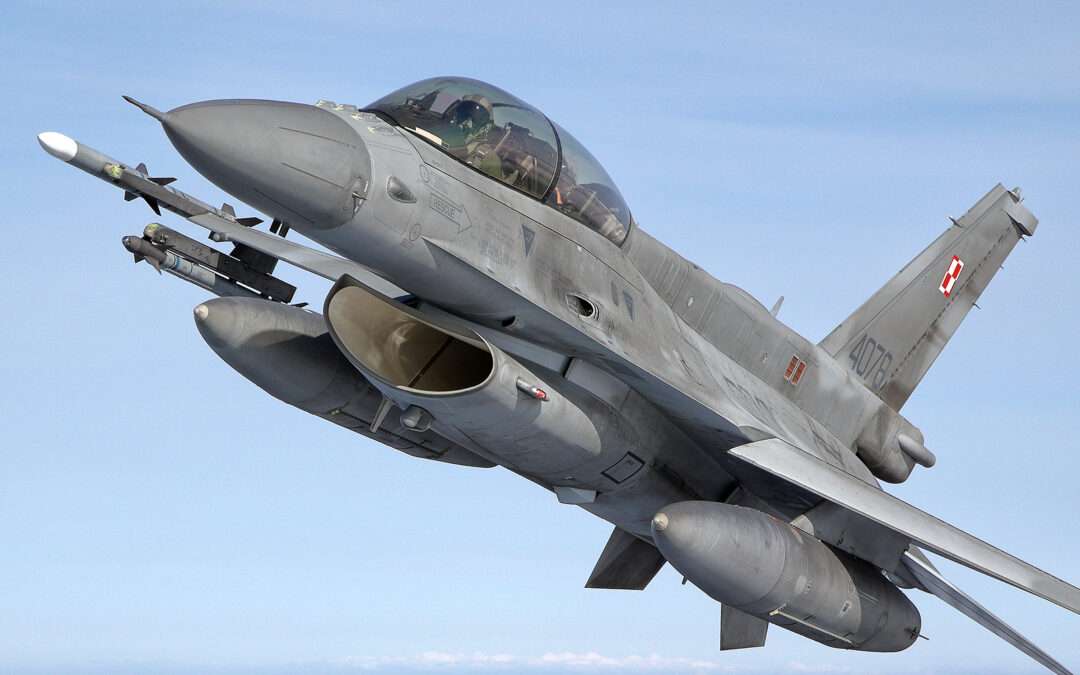
Poland’s defence ministry has announced plans to establish a no-fly zone along the country’s eastern border with the aim of making it easier to shoot down Russian missiles and drones that violate Polish airspace.
Meanwhile, foreign minister Radosław Sikorski has again suggested that Poland should be allowed to shoot down Russian missiles that are over Ukraine but heading towards the Polish border. However, the defence ministry acknowledged today that NATO is so far opposed to the idea.
Wiceminister obrony Cezary Tomczyk zapowiedział wprowadzenie strefy zakazu lotów przy wschodniej granicy Polski.
Jak poinformował minister Tomczyk, rozporządzenie trafiło do rządowego zespołu, strefa ma obejmować od kilkunastu do 50 kilometrów przy granicy wschodniej Polski i ma… pic.twitter.com/3xF68uNNRU
— Dariusz Wiewiorka (@darekwiewiorka) November 25, 2026
Speaking on Wednesday at the opening of a new military satellite imaging centre, deputy defence minister Cezary Tomczyk announced that his department “will request the government to establish a no-fly zone on the country’s eastern border, to ensure Poland’s security”.
Tomczyk acknowledged that, after three Russian missiles struck southeastearn Poland last Friday, NATO had offered support, including the deployment of an Airborne Warning and Control System (AWACS) to Poland.
“But at the same time, the Polish military must do everything possible to protect our interests here and now,” he added.
The defence ministry recently took one such step by allowing easier identification of objects that can be shot down, said Tomczyk. “The no-fly zone at the state border will be an additional factor supporting the operations of the Polish Air Force.”
At a subsequent press briefing, Tomczyk provided more details of the plan. The proposed no-fly zone would stretch for a distance of between “a dozen or a few dozen kilometres from the border”, he said.
“When a Polish fighter pilot knows that an aircraft is entering Polish airspace from Ukraine, is flying at a certain altitude and speed, is entering the no-fly zone and is detected on radar, this constitutes grounds for shooting down such an object…We will also urge NATO as a whole to establish such a rule on the eastern flank.”
The deputy minister said that a relevant regulation had already been submitted and “will be processed in the coming weeks”. He expressed hope that the measures could be in place by the end of December or in early January.
As well as last Friday’s missile strikes, on Monday this week a Russian drone entered Poland from Ukraine and spent a few minutes in Polish airspace. The Polish military had been authorised to fire upon it, but eventually did not do so after it turned back towards the border.
Poland is changing the procedures under which its military can fire upon foreign aircraft, citing the "growing threat from Russia".
Visual identification of targets will no longer be required, with other forms of data to be used instead https://t.co/foCWsBDazH
— Notes from Poland 🇵🇱 (@notesfrompoland) September 29, 2026
The government’s plans for a no-fly zone were, however, questioned by Mariusz Błaszczak, a former defence minister and now head of the parliamentary caucus of Law and Justice (PiS), the main opposition party.
Błaszczak noted that current regulations already allow the introduction of a temporary no-fly zone. He suggested that what the government had announced was simply a “cosmetic measure” and asked what “real operational capabilities” it would provide to the military.
Earlier on Wednesday, Bloomberg reported, based on unnamed sources, that Poland had, at a NATO meeting called on Monday to discuss last week’s Russian missile strikes in Poland, asked about the possibility of shooting down Russian missiles that are over Ukraine but heading towards NATO states.
Asked about the issue, Tomczyk said that he could not confirm Bloomberg’s reporting, but noted that discussion of shooting down Russian missiles over Ukraine had been going on for months.
“NATO is not in favour of this in any way,” said Tomczyk, quoted by broadcaster TVN. “If we want to make any decisions that concern the space over Ukraine, it must always be a decision of the entire NATO…Many months ago NATO decided that such a procedure was out of the question. And that’s where we stand now.”
NATO has approved the deployment of an Airborne Warning and Control System to Poland in response to three Russian missiles striking Polish territory last week.
Hours after the decision was announced, Poland’s airspace was again violated by a Russian drone https://t.co/gudQJsPlQ5
— Notes from Poland 🇵🇱 (@notesfrompoland) November 24, 2026
On Wednesday morning, before Bloomberg’s report had been published, Sikorski, the foreign minister, was asked during an interview with Polskie Radio about the idea of shooting down missiles over Ukraine before they reached Poland.
“A missile or drone approaching our airspace already poses a direct threat to us, so I believe that shooting [it] down over Ukraine at Ukraine’s request would fall within the definition of self-defence,” said Sikorski. However, he acknowledged that any such policy would need to be agreed by NATO.
As far back as 2024, Poland proposed the idea of shooting down Russian missiles over Ukrainian territory. But it was rejected by NATO, whose then-secretary general, Jens Stoltenberg, said that it would risk NATO “becoming part of the conflict”.
Notes from Poland is run by a small editorial team and published by an independent, non-profit foundation that is funded through donations from our readers. We cannot do what we do without your support.
Main image credit: Bartosz Bera

Daniel Tilles is editor-in-chief of Notes from Poland. He has written on Polish affairs for a wide range of publications, including Foreign Policy, POLITICO Europe, EUobserver and Dziennik Gazeta Prawna.