Keep our news free from paywalls by making a donation to support our work!

Notes from Poland is run by a small editorial team and is published by an independent, non-profit foundation that is funded through donations from our readers. We cannot do what we do without your support.
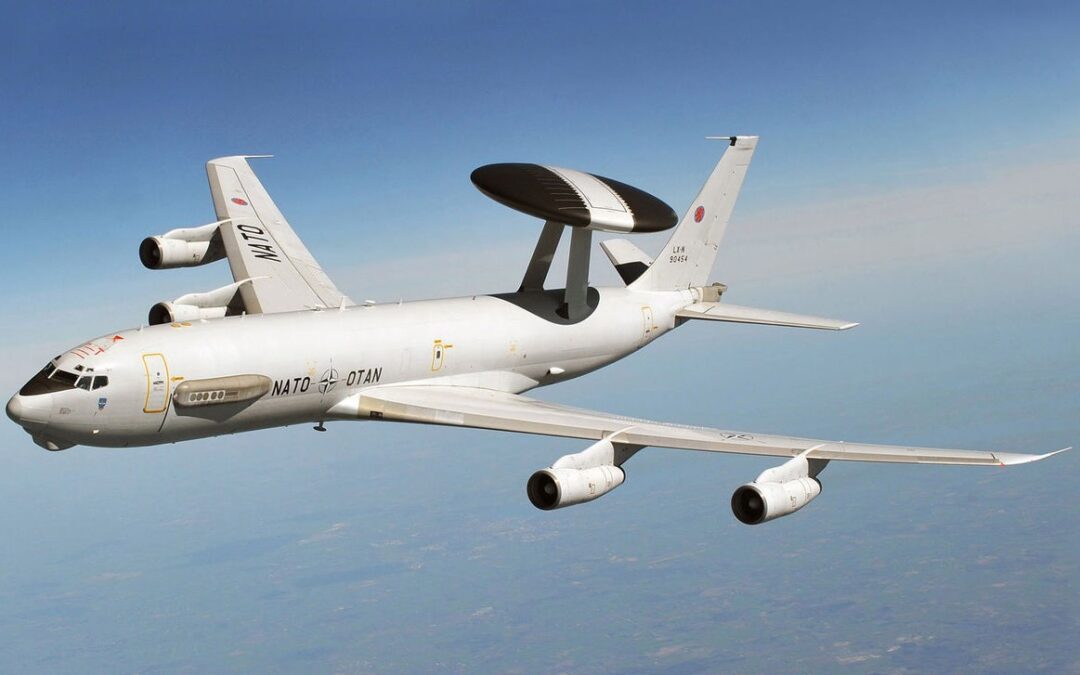
NATO has approved the deployment of an Airborne Warning and Control System (AWACS) to Poland in response to last week’s incident in which three Russian missiles struck Polish territory.
Shortly after the decision was announced, Poland’s airspace was again violated by a Russian drone that entered from Ukraine. However, although the military was given authorisation to shoot the object down, they did not do so after the drone began to move back into Ukraine.
Today, NATO Ambassadors met in the North Atlantic Council to discuss last week’s violations of Polish airspace. This was a dangerous incident and Russia bears full responsibility.
NATO and Allied assets reacted quickly to the airspace violations, and the Supreme Allied Commander…— NATO Spokesperson (@NATOpress) November 23, 2026
On Friday morning last week, three objects struck at different locations in southeast Poland, not far from the Ukrainian border. The incidents took place amid large-scale Russian attacks on Ukraine, and on Sunday Poland confirmed that all three were Russian Kh-101 cruise missiles.
The missiles were in Polish airspace for around three minutes before striking the ground. Two Swedish Gripen fighter jets, which were patrolling Polish skies as part of a NATO air policing mission, received authorisation from NATO’s Combined Air Operations Centre to fire upon the objects if certain conditions were met.
However, the pilots were unable to confirm their identity in time due to poor weather conditions.
On Monday, an extraordinary meeting of the North Atlantic Council, NATO’s main decision-making body, took place to discuss the incident.
Afterwards, deputy defence minister Paweł Zalewski, who represented Poland at the meeting, announced that NATO had agreed to place an AWACS “at Poland’s disposal”.
Later, NATO’s spokeswoman, Allison Hart, confirmed that “the Supreme Allied Commander Europe has authorised the forward deployment of a NATO AWACS aircraft” and is also “examining the deployment of additional assets as he continues to assess our deterrence and defence posture in Poland and elsewhere”.
Poland has confirmed that the three objects which struck its territory last Friday were all Russian Kh-101 cruise missiles.
Preliminary findings indicate the missiles were recently manufactured at a plant in Dubna, Russia https://t.co/4N6k3eBUGN
— Notes from Poland 🇵🇱 (@notesfrompoland) November 23, 2026
“This is a very serious capability that gives us enhanced situational awareness,” said Zalewski, quoted by news website Wirtualna Polska. “This is an immediate NATO response, and we are very happy about it.”
“What I heard today is a great demonstration of the alliance’s unity with Poland in the face of Russian attacks,” he added. “It’s safe to say that the Russians have moved up the escalation ladder in their relations with NATO.This means…the need for an appropriate response.”
Zalewski emphasised that “we’re not talking about offensive actions in any way, but about the ability to defend against all the attacks Russia is launching against NATO countries”. The aim is “not to escalate, but to…discourage Russia from attacks”.
Wiceminister @ZalewskiPawel w Kwaterze Głównej #NATO: Do dyspozycji Polski będzie jeden samolot szybkiego ostrzegania #AWACS. To jest bardzo poważna zdolność, która daje nam pogłębioną świadomość sytuacyjną. I to jest natychmiastowa reakcja NATO.
— Ministerstwo Obrony Narodowej 🇵🇱 (@MON_GOV_PL) November 23, 2026
On Monday night, after NATO had made its decision, Poland’s airspace was again violated, this time by a Russian drone that crossed the border from Ukraine.
The operational command of Poland’s armed forces announced shortly before midnight that it had continuously tracked the object and granted authorisation to shoot it down.
However, after the drone changed course and began to head east, back towards the border, a decision was made to refrain from engaging it, “taking into account the potential threat to civilians and the possible consequences of shooting down the object”, said operational command.
W trakcie nocnego ataku Federacji Rosyjskiej na cele w zachodniej części Ukrainy, prowadzonego z wykorzystaniem środków napadu powietrznego, doszło do krótkotrwałego naruszenia polskiej przestrzeni powietrznej przez rosyjski bezzałogowy statek powietrzny.
W odpowiedzi na… pic.twitter.com/BhJN7UYg7m
— Dowództwo Operacyjne RSZ (@DowOperSZ) November 23, 2026
According to a report by broadcaster RMF, based on unnamed sources, the vehicle was a jet-powered drone that flew 20 km into Poland and remained in Polish airspace for around nine minutes.
Speaking to RMF on Tuesday morning, Zalewski said that “it is difficult to imagine that this was an accident; we assume it was an intentional action”.
Russia has so far not commented on either its missiles hitting Poland last Friday nor the latest drone incursion. They are the latest in a series of airspace violations.
In September this year, a Russian helicopter briefly crossed the border from the Russian exclave of Kaliningrad. In September 2025, around 20 Russian drones crossed Poland’s eastern borders in an unprecedented violation that prompted Poland to trigger NATO’s Article 4.
Notes from Poland is run by a small editorial team and published by an independent, non-profit foundation that is funded through donations from our readers. We cannot do what we do without your support.
Main image credit: NATO

Daniel Tilles is editor-in-chief of Notes from Poland. He has written on Polish affairs for a wide range of publications, including Foreign Policy, POLITICO Europe, EUobserver and Dziennik Gazeta Prawna.