Keep our news free from ads and paywalls by making a donation to support our work!

Notes from Poland is run by a small editorial team and is published by an independent, non-profit foundation that is funded through donations from our readers. We cannot do what we do without your support.
Poland is changing the procedures under which its military can fire upon foreign aircraft, citing the “growing threat from Russia”. Visual identification of targets will no longer be required, with other forms of data to be used instead.
The move follows a series of violations of Polish airspace over the last year by Russian drones, a missile and a helicopter, as well as Russia’s increasing use of jet-powered drones to attack targets in Ukraine close to the Polish border.
Polska zmienia procedury użycia uzbrojenia dla lotnictwa w przypadku zwalczania obcych statków powietrznych. To wnioski Dowódcy Operacyjnego generała Ireneusza Nowaka z ostatnich tygodni.
To także odpowiedź na rosnące zagrożenie ze strony Rosji, doświadczenia wojny w Ukrainie…
— Cezary Tomczyk (@CTomczyk) September 28, 2026
“In the coming days, the defence minister will change the procedures for firing by Polish planes and helicopters at objects flying to us from the direction of Russia,” announced deputy defence minister Cezary Tomczyk on Monday, quoted by news service Defence24.
The change, as Tomczyk explained in a statement later issued on social media, will shift requirements away from requiring visual identification of foreign aerial objects and towards so-called “positive identification”.
The latter involves identifying an object based on a combination of several other, non-visual sources of information, such as using radar and other sensors to determine its speed, altitude, trajectory and flight parameters, as well as a lack of IFF (identification friend or foe) from an object.
Tomczyk said that the change was being made based on the “conclusions from recent weeks” made by the operational commander of Poland’s armed forces, General Ireneusz Nowak.
It is a “response to the growing threat from Russia, experiences from the war in Ukraine, and the emergence of new air attack means – primarily fast jet drones and cruise missiles in the case of which the time for reaction is very brief”, added Tomczyk.
The minister said that positive identification would only be issued when there is a “sufficiently high degree of certainty in determining what we are dealing with”. He noted that accurate target identification is particularly crucial in peacetime, when there are civilian aircraft in Polish airspace.
The change will mean “not less identification, but a different way of conducting it: faster and based on data from multiple sources”.
Poland's government has issued public guidance on how to act in the case of airborne attacks, amid growing concerns over the threat from Russia.
It is also preparing evacuation plans and clearer markings for 85,000 shelters across the countryhttps://t.co/vMEMU6mlRx
— Notes from Poland 🇵🇱 (@notesfrompoland) September 25, 2026
Defence24 reports that the government, military and many experts have found current rules of engagement to be overly restrictive and not suited to meeting the scale and type of threat facing Poland today.
It points to last week’s violation of Polish airspace by a Russian helicopter, which crossed the border from Kaliningrad and spent around 42 seconds in Poland before returning.
The website also notes that Russia’s growing use of jet-powered drones, which are able to travel much faster than traditional unmanned aerial vehicles, is a further threat.
Such drones have recently been used to attack targets along the Ukrainian side of the border with Poland, including a passenger train travelling between Kyiv and Warsaw.
A drone has struck a passenger train travelling between Kyiv and Warsaw, around 2 km from the Polish border, amid the latest mass Russian attacks on Ukraine.
Separately, a truck around 800 metres from a border crossing with Poland was also hit last night https://t.co/ZbfE2iDLOk
— Notes from Poland 🇵🇱 (@notesfrompoland) September 13, 2026
“Until now, we have not utilised these [non-visual identification] capabilities because they are typically reserved for a state of war or martial law,” said Tomczyk.
“However, given the threat, and the fact that Poland today struggles daily with the possibility of drones entering our country, we must implement these changes for the benefit of both pilots and national security.”
In July this year, a Russian Kh-101 cruise missile also entered Polish airspace before landing in a field. On one night last year, around 20 Russian drones crossed Poland’s eastern borders. Some were shot down but many struck the ground.
Earlier this month, Prime Minister Donald Tusk warned that, according to intelligence sources, Russia is planning drone and missile strikes on eastern NATO countries, which it would present as accidental.
Russia is planning drone and missile strikes on eastern NATO countries, which it would present as accidental, says Polish Prime Minister @donaldtusk, citing intelligence sources.
The aim would be to create a sense of "NATO's helplessness", he says https://t.co/9MFPiEEkIV
— Notes from Poland 🇵🇱 (@notesfrompoland) September 18, 2026
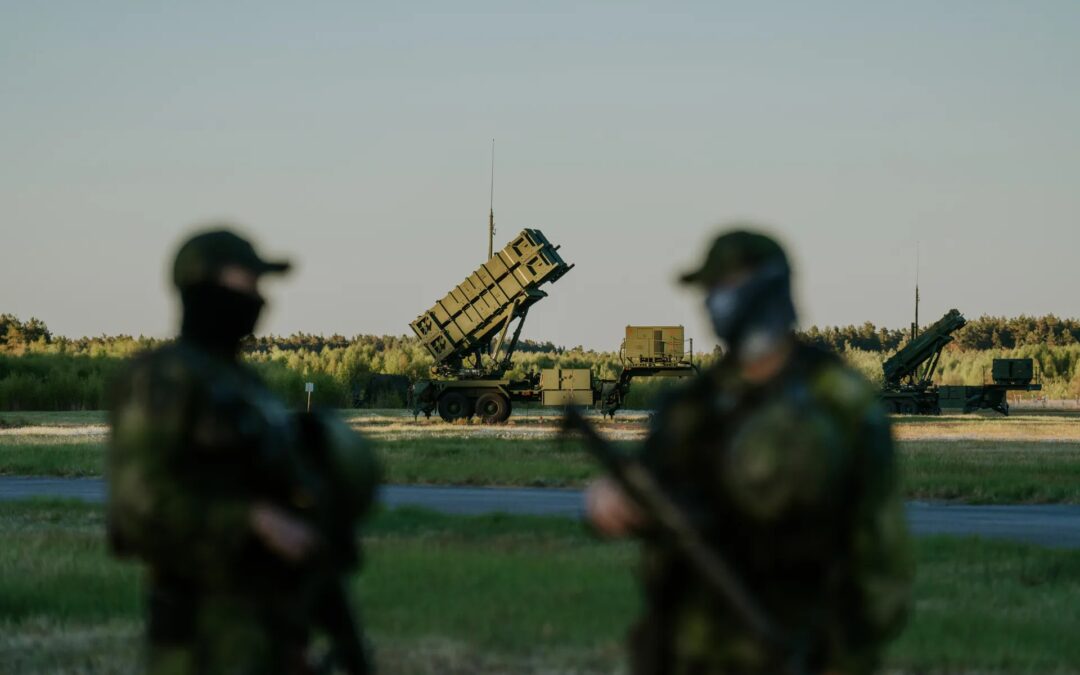
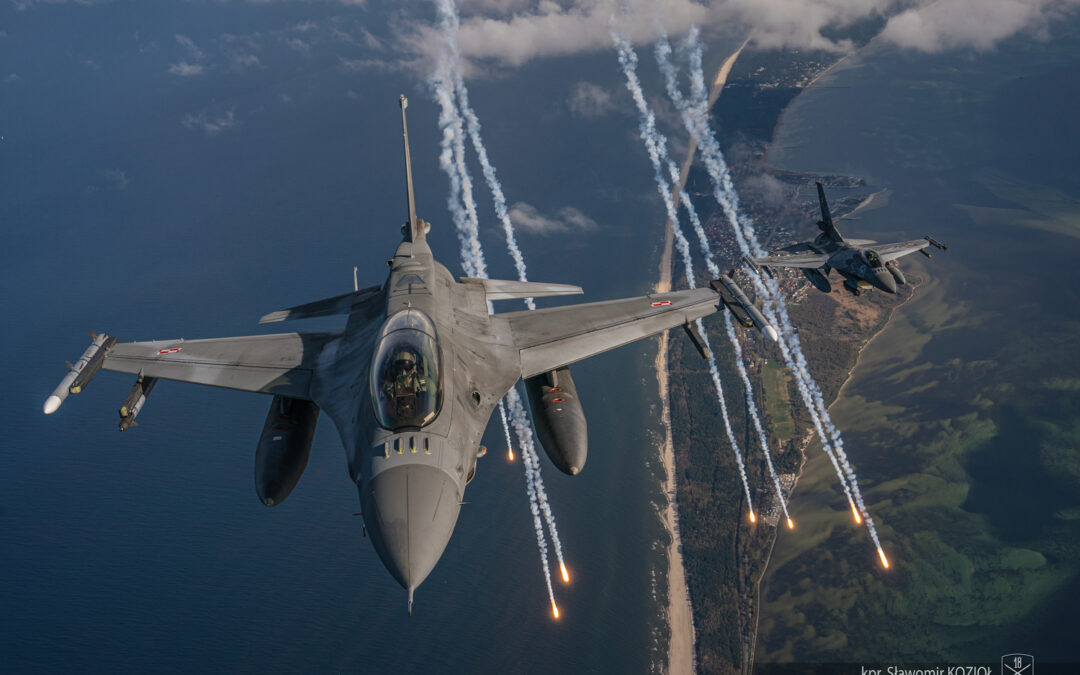
Poland has invested heavily in its air defences in recent years, including buying Patriot batteries and fighter aircraft from the United States, as well as developing a new anti-drone system with Norway’s Kongsberg Defence & Aerospace.
The government has also recently moved to expand the network of warning sirens along the Ukrainian border, launched a campaign informing the public how to respond to aerial threats, and started more clearly marking bomb shelters.

Notes from Poland is run by a small editorial team and published by an independent, non-profit foundation that is funded through donations from our readers. We cannot do what we do without your support.
Main image credit: st. kpr. Sławomir Kozioł/18. Dywizja Zmechanizowana/Zoom

Daniel Tilles is editor-in-chief of Notes from Poland. He has written on Polish affairs for a wide range of publications, including Foreign Policy, POLITICO Europe, EUobserver and Dziennik Gazeta Prawna.