Keep our news free from ads and paywalls by making a donation to support our work!

Notes from Poland is run by a small editorial team and is published by an independent, non-profit foundation that is funded through donations from our readers. We cannot do what we do without your support.
This is a breaking news story and will be updated as it develops.
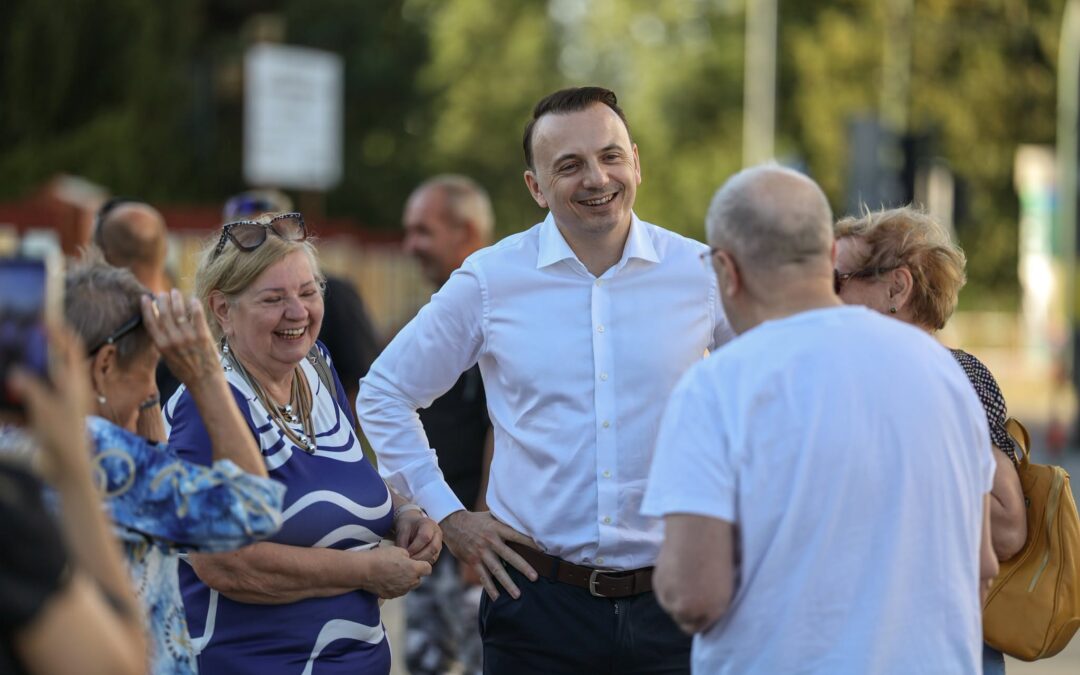
Łukasz Gibała, an independent, has won the mayoral election in Kraków, Poland’s second-biggest city, beating Monika Piątkowska, the candidate backed by Prime Minister Donald Tusk.
While final results from Sunday’s vote – which was called after the previous mayor was removed from office in a recall referendum – have not been announced, official counts from the 94% of districts that have reported so far show Gibała with an unassailable lead of 62.3% to 37.7%.
Two major exit polls also show Gibała winning with 64% (in an OGP poll for Newsmax Polska) or 61% (in an Ipsos poll for TVN, Polsat and TVP). That prompted Piątkowska to concede defeat and congratulate her opponent.
Gibała’s victory had been expected after he came top in the first round two weeks ago with 36.4% of the vote among the seven candidates who stood. Piątkowska trailed on 29.9%. The top two candidates then met in today’s run-off.
Dziś 11 października 2026 roku, po 24 latach, mieszkańcy odzyskali swoje miasto. Chciałbym podziękować wszystkim Krakowianom, którzy mi zaufali i zdecydowali się oddać ma mnie głos.
To nasze wspólne zwycięstwo. Dziękuję mojej partnerce Adzie, sztabowi i współpracownikom ze… pic.twitter.com/0FsNYwjPkj
— Łukasz Gibała (@LukaszGibala) October 11, 2026
“Today in Poland, more and more people realise that we don’t have to live in the reality that politicians in Warsaw project upon us,” declared Gibała, quoted by the Polish Press Agency (PAP). “More and more people realise that we, in our own towns and cities, know better what’s good for us than they do in Warsaw.”
For Gibała, this was victory at the fourth attempt, having stood in every mayoral contest since 2014, obtaining a growing share of the vote each time.
He stood as an independent, promising to sort out the city’s finances, end cronyism in the appointment of municipal officials, improve public transport and reverse ticket-price increases, and hold a referendum on Kraków’s clean transport zone for vehicles.
He also pledged to favour residents over developers in planning decisions and to counteract the negative effects of tourism in what is Poland’s most-visited city, including by restricting short-term-rental properties.
Piątkowska was the joint candidate of Tusk’s centrist Civic Coalition (KO) party and the centre-right Polish People’s Party (PSL), which are both part of the national government.
She has, since last year, been a member of the Senate in Warsaw. Previously, she had worked in Kraków city hall during the mayoralty of Jacek Majchrowski, who ran the city from 2002 to 2024.
Piątkowska received the personal backing of Tusk, who announced her candidacy in June alongside PSL leader and deputy prime minister Władysław Kosiniak-Kamysz (though critics noted that they held the event in Warsaw rather than Kraków). Tusk also visited Kraków before the election first round to support his candidate.
Among her campaign promises were to seek to locate an AI “gigafactory” in Kraków, boost the availability of housing for young people, and a package of policies for women, including free mammograms, pram-friendly infrastructure, free menstrual hygiene products, and safer nighttime public transport.
Poland’s government has approved legislation that would allow local communities to ban short-term rentals of the type offered through services such as Airbnb.
Such accommodation has boomed in recent years, often prompting a backlash from local residents https://t.co/8MRfRWTDxd
— Notes from Poland 🇵🇱 (@notesfrompoland) September 3, 2026
Kraków’s election was held in unusual circumstances after the previous mayor, Aleksander Miszalski, also from KO, was removed from his position in May, just two years into his term. He had faced accusations of cronyism and poor financial management, as well as criticism over the introduction of the clean transport zone.
A petition to hold a recall referendum received more than the 58,355 signatures required. In the subsequent referendum, 97.3% supported removing the mayor (though that figure was partially explained by Miszalski appealing to his supporters not to vote in an effort to keep turnout below the 27% needed for the result to be binding).
Before today’s election, both Miszalski and Majchowski had called on Cracovians to vote for Piątkowska. After his victory had become clear, Gibała declared that “11 October 2026 will be remembered as the day when, after 24 years, the inhabitants of Krakow regained their city”.
The vote had been particularly closely watched as it comes just one year before parliamentary elections at which Tusk’s ruling coalition will seek another term. Gibała’s victory has already been celebrated by figures from the right-wing opposition, though the new mayor is not politically aligned with them.

Notes from Poland is run by a small editorial team and published by an independent, non-profit foundation that is funded through donations from our readers. We cannot do what we do without your support.
Main image credit: Łukasz Gibała/Facebook

Daniel Tilles is editor-in-chief of Notes from Poland. He has written on Polish affairs for a wide range of publications, including Foreign Policy, POLITICO Europe, EUobserver and Dziennik Gazeta Prawna.