Keep our news free from ads and paywalls by making a donation to support our work!

Notes from Poland is run by a small editorial team and is published by an independent, non-profit foundation that is funded through donations from our readers. We cannot do what we do without your support.
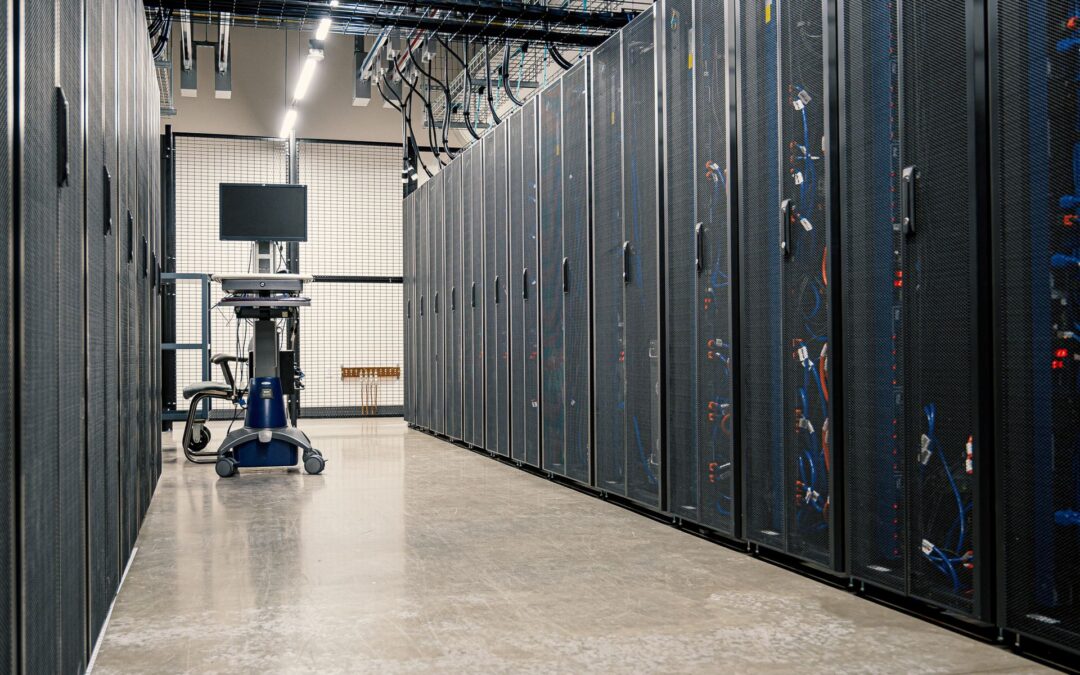
Poland has joined the European Union’s plan to build artificial intelligence (AI) gigafactories with a view to hosting one of the bloc’s new computing centres.
Deputy digital affairs minister Dariusz Standerski said Poland had completed a key legal step by joining the joint procurement process.
The move enables Poland to bid for one of seven AI gigafactory projects planned under the EU programme, potentially attracting investment of more than 10 billion zloty (€2.3 billion) while giving businesses, researchers and public institutions access to advanced AI computing capacity.
🔴@DStanderski: Gigafabryka #AI da Europie suwerenność https://t.co/17vkHh1g5l
— Rzeczpospolita (@rzeczpospolita) July 28, 2026
“On behalf of the Republic of Poland, I have signed the Joint Procurement Agreement, which means that Poland joins the AI gigafactory initiative,” Standerski told daily Rzeczpospolita.
Under the proposed model, AI gigafactories will be designed, financed, built and operated by private consortia selected through a European tender organised by the European High Performance Computing Joint Undertaking (EuroHPC JU).
In the first procurement round, EuroHPC JU plans to select seven projects comprising four medium-scale facilities and three large-scale sites.
Poland is bidding for a medium-scale project, which would initially provide computing capacity equivalent to at least 25,000 AI accelerators before expanding to at least 75,000.
The EU and its member states will support the projects by committing to purchase computing services during the initial years of operation, providing demand certainty for investors.
“Poland and the EU will each buy 17% of the power, and the remaining two thirds will be made commercially available by a private consortium; Poland will commit to purchasing its own pool for five years,” Standerski said.
Standerski also told the newspaper that companies’ interest in the project is “enormous”.
“This means that, from the very first day the gigafactory is operational, part of its computing capacity will already have been sold,” he added.
Poland’s government will spend 1.9 billion zloty (€437 million) equipping the majority of schools with so-called AI labs before the start of the next school year.
The money will fund laptops, AI software and interactive displays, among other equipment https://t.co/outNQIGCv0
— Notes from Poland 🇵🇱 (@notesfrompoland) June 19, 2026
Standerski said the government would not designate a site for the facility, with the final location to be determined by the winning consortium through the European procurement process. He said the government had previously identified 10 locations across Poland capable of hosting.
Last week, the deputy minister also said Poland was preparing to sign an agreement with the Czech government, under which cooperation would involve mutual purchases of computing capacity between the two countries.
He also said Lithuania had committed to a one-sided arrangement to buy computing power from a Polish AI gigafactory.
Częstochowa will become the first city in Poland to use the Polish Large Language Model to support the use of AI in providing municipal services.
It will help write letters, analyse inquiries from residents, and summarise long documents https://t.co/SLrmVg9VBz
— Notes from Poland 🇵🇱 (@notesfrompoland) August 11, 2025
Earlier this month, Poland’s government approved a resolution enabling the country to participate in the European AI Gigafactory programme, committing more than 400 million zloty towards what the government says would be the largest computing centre in the country’s history.
The government also pledged to purchase AI services worth €100 million between 2028 and 2033, with a matching contribution from the European Union.
According to the government’s timetable, the European procurement process is expected to begin later this year.
Bidding consortia will have 15 weeks to submit proposals, contracts are due to be awarded in early 2027 and the facilities are scheduled to become operational in 2028.
🚀 Droga do Gigafabryki AI otwarta. Rząd przyjął uchwałę, która umożliwia Polsce udział w europejskim programie Gigafabryk AI.
To ważny krok dla rozwoju nauki, biznesu i całego ekosystemu AI w Polsce.
🔗 Więcej informacji https://t.co/ROCPDaAye4@KGawkowski @DStanderski… pic.twitter.com/R00OLAgoFF— Ministerstwo Cyfryzacji (@CYFRA_GOV_PL) July 14, 2026
Notes from Poland is run by a small editorial team and published by an independent, non-profit foundation that is funded through donations from our readers. We cannot do what we do without your support.
Main image credit: Brett Sayles/Pexels

Alicja Ptak is deputy editor-in-chief of Notes from Poland and a multimedia journalist. She has written for Clean Energy Wire and The Times, and she hosts her own podcast, The Warsaw Wire, on Poland’s economy and energy sector. She previously worked for Reuters.