Why are you now seeing adverts on our website for the first time? Click here to learn more.
Keep our news free from paywalls by making a donation to support our work!

Notes from Poland is run by a small editorial team and is published by an independent, non-profit foundation that is funded through donations from our readers. We cannot do what we do without your support.
Two Ukrainians have been charged in Poland with working on behalf of Russia to paint slogans praising the Ukrainian Insurgent Army (UPA), a nationalist formation responsible for massacring Poles during World War Two, on three monuments in the Polish city of Poznań.
Polish prosecutors say that the operation was intended to fuel hostility between Poles and Ukrainians. The incidents in Poznań were part of a seemingly coordinated wave of similar graffiti on monuments in three other Polish cities.
Ukraińcy malowali na pomnikach hasła „Sława UPA”. Działali na zlecenie wywiaduhttps://t.co/knLgZzo8ct
— Rzeczpospolita (@rzeczpospolita) November 19, 2026
In early November, the words “Slava UPA” (“Glory to the UPA”) were painted in red on three monuments in Poznań commemorating World War Two soldiers.
While the UPA is remembered by many in Ukraine for fighting for independence from Moscow-imposed Soviet rule, in Poland it is primarily associated with leading the Volhynia massacres, in which around 100,000 Polish civilians, mostly women and children, were slaughtered as part of an ethnic cleansing operation.
The history of those massacres, and the continued veneration of the UPA by some in Ukraine, has regularly stirred tension between Poland and Ukraine, who are otherwise close allies.
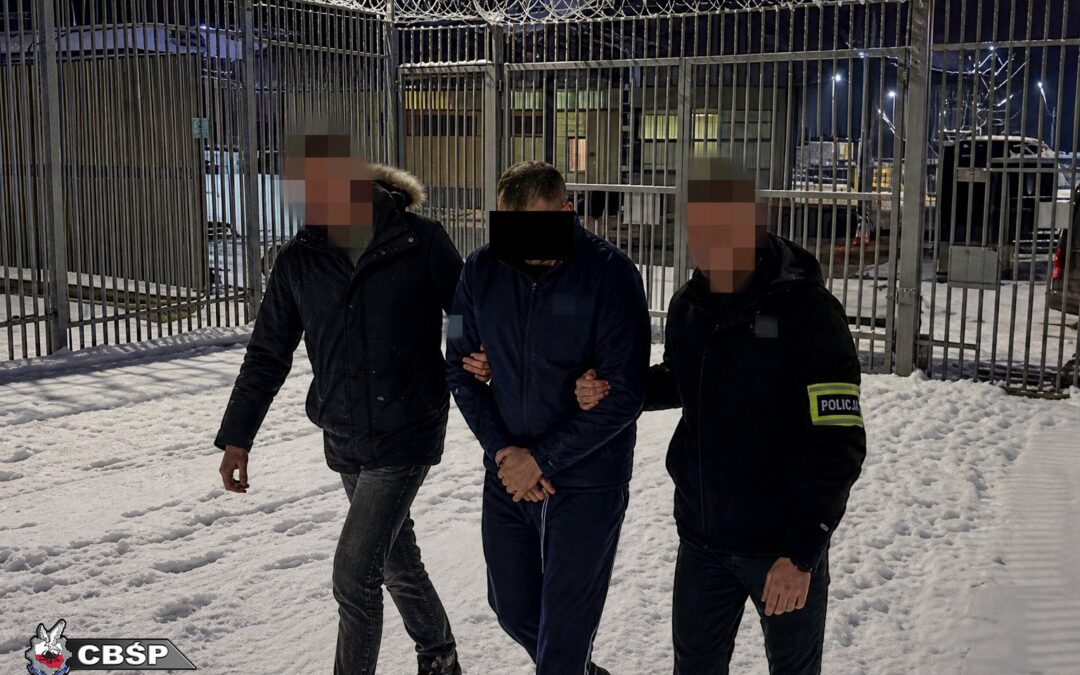
On Thursday, the National Prosecutor’s Office confirmed to the Polish Press Agency (PAP) that two Ukrainians, who can be named only as Nikita S. and Dmytro Y. under Polish privacy law, had been detained and charged in relation to the vandalism.
According to prosecutors, Nikita S., “acting on behalf of Russian intelligence and in order to obtain financial benefit of $500”, persuaded Dmytro Y. to “commit an act of sabotage by painting the slogans” with the aim of “publicly inciting hatred based on national differences between the Polish and Ukrainian peoples”.
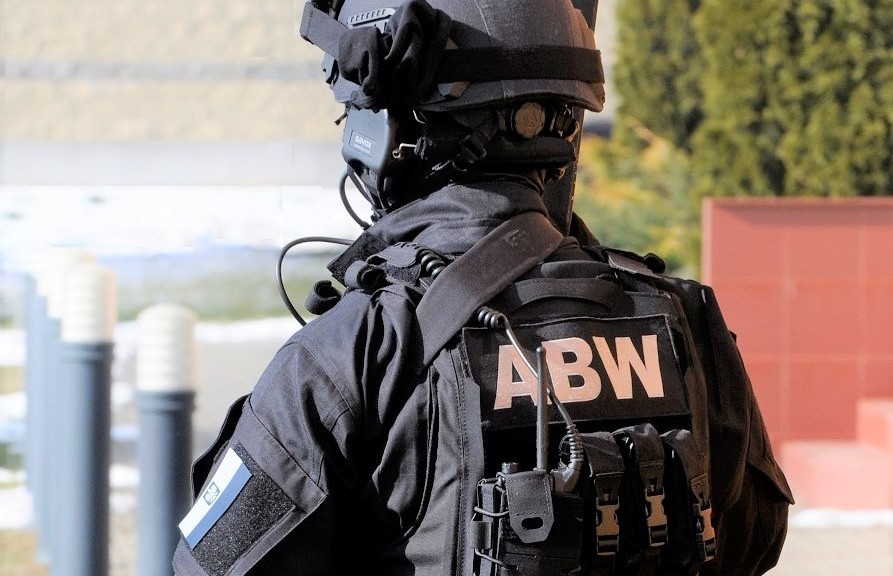
The suspects were identified by police and the Internal Security Agency (ABW), who had analysed surveillance footage of the perpetrator, reports the Gazeta Wyborcza daily. Both were detained in Poznań, according to PAP.
In the wake of the Poznań vandalism, Poland-based Belarusian news outlet MOST reported that, a few days before the graffiti appeared, an advert offering $500 for someone to paint pro-UPA slogans on monuments in the city had appeared on messaging service Telegram.
When an undercover journalist from the outlet contacted the person offering the job, they were told that similar work was available in other Polish cities.
Around the same time, almost identical graffiti praising the UPA appeared on further monuments in the cities of Gdańsk, Gdynia and Warsaw, including one dedicated to the heroes of the Warsaw Ghetto Uprising.
Around a dozen monuments in Poland, including one dedicated to the Warsaw Ghetto Uprising, have been defaced with graffiti glorifying the WWII Ukrainian Insurgent Army (UPA).
Ukraine’s embassy in Warsaw has condemned the vandalism and blamed it on Russia https://t.co/iaZb2CyiPx
— Notes from Poland 🇵🇱 (@notesfrompoland) November 15, 2026
Last week, local police in Gdańsk confirmed that they had detained a 17-year-old Ukrainian suspected of carrying out the graffiti there and in Gdynia. He has been charged with promoting fascist ideology, incitement to violence and hatred based on nationality, and desecration of monuments.
The Ukrainian embassy in Poland has condemned the acts of vandalism, calling them a “disgraceful provocation” and “a manifestation of the hybrid war that Russia is attempting to wage by any means in European states”.
Poland has been a primary target for Russia’s so-called hybrid actions in Europe, which have included acts of sabotage, espionage, disinformation and efforts to stir hostility towards Ukrainians.
Such operations are rarely carried out by Russian operatives themselves. Instead, Russia often recruits people already on the ground, often members of Poland’s large Ukrainian and Belarusian migrant communities, as well as Poles themselves in some cases.
In July this year, a Ukrainian teenager was indicted by Polish prosecutors on charges of painting dozens of pro-UPA slogans in public places, including on a monument to victims of the Volhynia massacres.
Notes from Poland is run by a small editorial team and published by an independent, non-profit foundation that is funded through donations from our readers. We cannot do what we do without your support.
Main image credit: ABW (under CC BY-SA 4.0)
Alicja Ptak is deputy editor-in-chief of Notes from Poland and a multimedia journalist. She has written for Clean Energy Wire and The Times, and she hosts her own podcast, The Warsaw Wire, on Poland’s economy and energy sector. She previously worked for Reuters.