Keep our news free from ads and paywalls by making a donation to support our work!

Notes from Poland is run by a small editorial team and is published by an independent, non-profit foundation that is funded through donations from our readers. We cannot do what we do without your support.
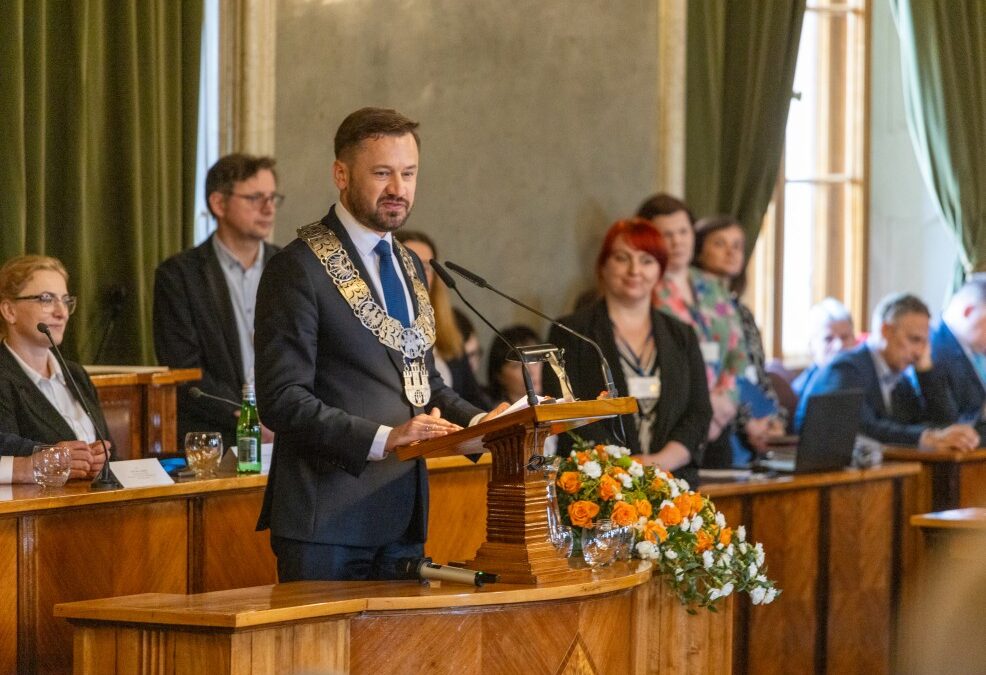
The mayor of Kraków, Poland’s second-largest city, has been removed from his position in a rare recall referendum.
Aleksander Miszalski, who was just two years into his first term, had faced accusations of cronyism and poor financial management, as well as criticism over the introduction of a “clean transport zone”.
He is a member of Prime Minister Donald Tusk’s centrist Civic Coalition (KO) party, and his dismissal was celebrated by the right-wing opposition, who hope it will provide a boost ahead of next year’s parliamentary elections.
Wyniki referendum w Krakowie (24 maja 2026):
➡️ Referendum ws. odwołania Prezydenta Miasta Krakowa
✅ ważne i rozstrzygające
📊 frekwencja: 29,99%
🗳️ przekroczono wymagany próg: 158 555 ważnych kart➡️ Referendum ws. odwołania Rady Miasta Krakowa
❌ nieważne
📊 frekwencja:… pic.twitter.com/elDX55vrLD— Kraków (@krakow_pl) May 25, 2026
On Monday morning, official results from Sunday’s referendum showed that turnout – the decisive factor in whether the mayor would be ousted – had reached 29.99%. That was above the threshold of 26.98% (three fifths of the number of people who voted to elect the mayor in 2024) for it to be valid.
Among those who voted, 97.3% were in favour of removing Miszalski. However, that figure was influenced by the fact that Miszalski appealed to his supporters simply not to vote, so that the referendum would fall below the turnout threshold.
A second referendum on whether to dismiss the entire city council, held at the same time, achieved almost identical turnout of 29.97%. However, the validity threshold in that case was 30.59%, meaning the vote fell short.
In a social media post, Miszalski wrote that he “accepts with respect” the decision made by Kraków’s residents. “Local democracy is precisely about the residents having the final say.”
“Serving as mayor of Kraków was an immense honour and responsibility,” he added. “Not everything was achieved in the way I had hoped…That is why today I want to make one appeal – that after this referendum, Kraków should once again be able to function as a community.”
Now that Miszalski’s dismissal has been confirmed, new mayoral elections must be held within 90 days. Until then, Kraków will be managed by an acting mayor, formally known as a commissioner, appointed by the prime minister.
The favourite in the election is likely to be Łukasz Gibała, an independent who narrowly lost to Miszalski in 2024. Gibała has not yet confirmed that he will stand. In a post on Monday morning, following confirmation of the referendum results, he congratulated all those who had fought to have Miszalski removed.
Mieszkańcy Krakowa podjęli decyzję.
Przyjmuję ją z szacunkiem.
Dziękuję wszystkim Krakowiankom i Krakowianom za udział w referendum – zarówno tym, którzy mnie wspierali, jak i tym, którzy byli wobec mnie krytyczni.Demokracja samorządowa polega właśnie na tym, że to mieszkańcy… pic.twitter.com/sqiAuS30Pv
— Aleksander Miszalski (@Miszalski_) May 25, 2026
The recall of a mayor in a large city is a relatively rare event in Poland. It has only previously happened six times in places whose mayor holds the title “city president” (prezydent miasta), which is reserved for 107 of the largest cities.
Given that Miszalski is from KO, Poland’s main ruling party, his dismissal also takes on additional significance, especially in a rare year when no national elections are taking place.
Poland’s two main national opposition parties, the national-conservative Law and Justice (PiS) and far-right Confederation (Konfederacja), supported the campaign to collect signatures for a petition to hold a recall referendum.
“This is what happens when you don’t listen to the Poles. Tusk, you’ll be next,” wrote Przemysław Czarnek, a deputy leader of PiS and the party’s prime ministerial candidate for next year’s parliamentary elections.
“This is the start of a great wave that will sweep across Poland and culminate in the departure of Tusk himself,” he added, quoted by news website Wirtualna Polska.
Another of the party’s deputy leaders, former Prime Minister Mateusz Morawiecki, said that the problems Kraków faced under KO rule are also experienced by Poland as a whole but “on a scale 45 times larger”.
Poland is due to hold parliamentary elections in autumn 2027. Polling currently indicates a fairly even split between support for Tusk’s ruling coalition and for the right-wing opposition.
Głupia władza sprawowana dla pieniędzy i kolesi została przez mieszkańców Krakowa usunięta. Tak się kończy jak nie słucha się Polaków.
Tusku, Ty będziesz następny.
— Przemysław Czarnek (@CzarnekP) May 24, 2026
Deputy foreign minister Władysław Teofil Bartoszewski told Polsat News that the Kraków referendum was “a local matter” that related to the “bad or ill-considered decisions of one mayor” and had little relevance to national politics.
Bartoszewski also noted that, when elections are held, “a candidate from Confederation or PiS will certainly not win”. Both parties perform badly in large, more liberal cities.
The group behind the referendum petition accused Miszalski of overseeing rising municipal debt, cronyism in appointments, and policies that favour property developers who supported his campaign.
They also criticised the introduction at the start of this year of a new “clean transport zone” that bans older, more polluting cars from the city, as well as rising costs of public transport, waste collection and parking.
Kraków has been rated as the 16th best city in the world by Time Out, which describes it as a "real-life fairytale" and praises its walkability, food and culture https://t.co/N8qAKylwEB
— Notes from Poland 🇵🇱 (@notesfrompoland) March 12, 2026
Notes from Poland is run by a small editorial team and published by an independent, non-profit foundation that is funded through donations from our readers. We cannot do what we do without your support.
Main image credit: Bogusław Świerzowski / krakow.pl

Daniel Tilles is editor-in-chief of Notes from Poland. He has written on Polish affairs for a wide range of publications, including Foreign Policy, POLITICO Europe, EUobserver and Dziennik Gazeta Prawna.