Keep our news free from ads and paywalls by making a donation to support our work!

Notes from Poland is run by a small editorial team and is published by an independent, non-profit foundation that is funded through donations from our readers. We cannot do what we do without your support.
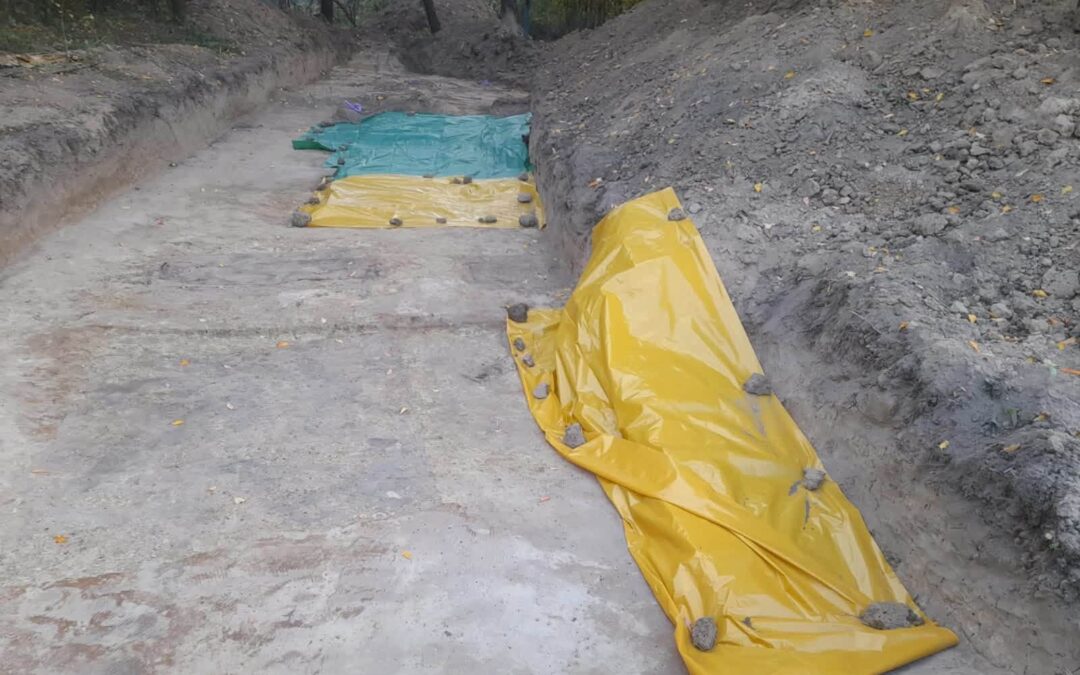
Polish and Ukrainian researchers have exhumed the remains of over 100 Polish soldiers who died in 1939 defending the city of Lviv – which is now in Ukraine but was then part of Poland and known as Lwów – during the invasions by Nazi Germany and the Soviet Union at the start of World War Two.
The work continues recent moves towards reconciliation over the issue of exhuming victims of the war, which has long been a point of contention between the two countries.
ℹ Komunikat o zakończeniu prac ekshumacyjnych na terenie dawnego cmentarza w miejscowości Hołosko Wielkie
⚠️ Zakończyły się prace ekshumacyjne na terenie dawnego cmentarza w miejscowości Hołosko Wielkie, znajdującej się obecnie w granicach administracyjnych Lwowa. Działania… pic.twitter.com/w9rSHuLeua
— Instytut Pamięci Narodowej (@ipngovpl) September 28, 2026
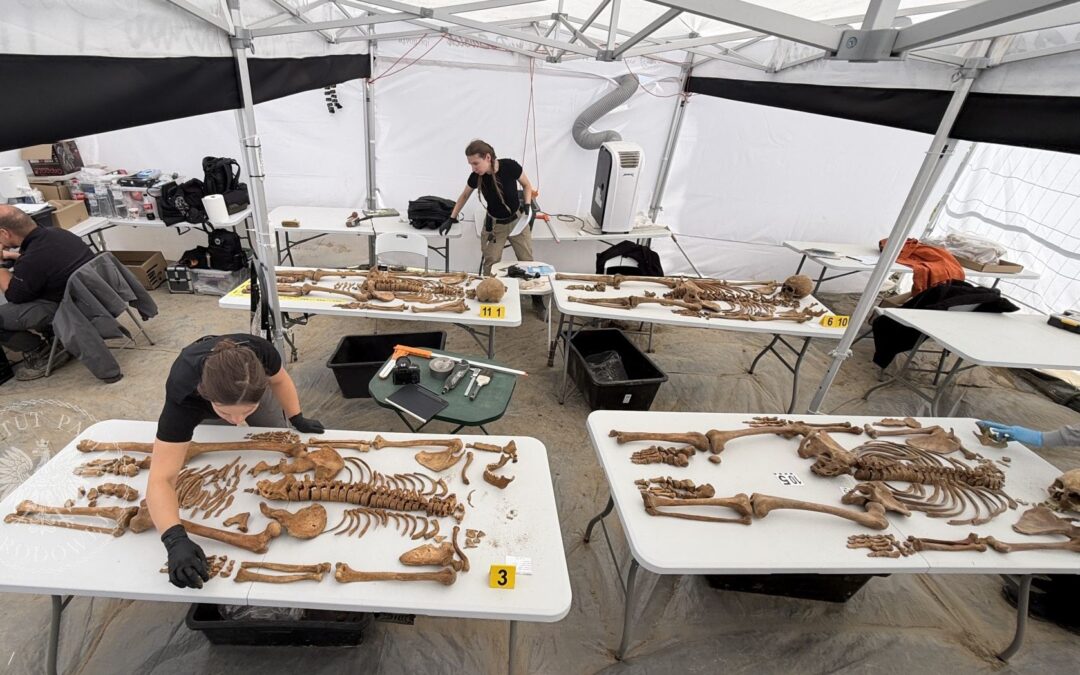
During the work on a 260-square-metre area at Holoskivske Cemetery in Lviv, which began in August, experts found 133 burials. They were identified as 115 soldiers from the Polish army and 18 from the German Wehrmacht.
They died during the Battle of Lwów in September 1939, when Poland sought to defend the city from Nazi Germany, which had invaded from the west on 1 September, and the Soviet Union, which invaded from the east on 17 September.
On 22 September, the Polish forces surrendered and the city came under Soviet control, as Nazi Germany and the Soviet Union had decided when secretly agreeing to divide up Poland in the Molotov-Ribbentrop Pact earlier that year.
Efforts are now focused on identifying the remains. Experts have taken bone samples for DNA testing, which will be compared with samples from possible relatives.
Another part of the puzzle will be the roughly 2,900 objects – including identification tags, bayonets, helmets and religious items – discovered at the site alongside the remains.
“For us, the identification of the remains is the most important stage of the work, because it is important to return these people their names,” said Dominika Siemińska, a researcher from Poland’s state Institute of National Remembrance (IPN), in a statement published by Lviv city council.
“Currently we have a list of 76 [potential] names,” she added. However, because “so many years have passed, it will be difficult to find their relatives”.
Siemińska also expressed her gratitude to the authorities in Lviv “for providing us with protection, support and the opportunity to work peacefully”. She said that “cooperation with the Ukrainian side is going very well”.
The final stage of the work will be the burial of the recovered remains of Polish soldiers at the Polish cemetery in the Ukrainian city of Mostyska. The date of the ceremony has not yet been announced.
The German remains are being handed over to the Volksbund organisation, which specialises in searching for and reburying German soldiers, said the IPN.
The remains of 55 Poles massacred by Ukrainian nationalists in WWII have been reburied at a ceremony in Ukraine attended by political and religious figures from both countries.
The victims, around half of them children, were exhumed this summer https://t.co/4q3giZhBAL
— Notes from Poland 🇵🇱 (@notesfrompoland) August 31, 2026
Last year, Ukraine also granted permission for the exhumation of Polish soldiers in Lviv. Researchers subsequently found the remains of 31 people, as well as possible remains of dozens more that were difficult to identify due to them having been reburied and the manner of their death in artillery fire.
They were also reburied in Mostyska, at a ceremony attended by prominent officials from both Poland and Ukraine.
Previously, from 2017 to 2024, Ukraine had banned searches for Polish victims of World War Two on its territory in response to the dismantling in Poland of a monument to the Ukrainian Insurgent Army (UPA), a nationalist partisan formation that fought against the Soviets but also led the massacre of ethnic Poles.
However, in a major diplomatic breakthrough last year, Ukraine allowed exhumations to resume, including both the Polish soldiers in Lviv as well as victims of the UPA-led massacres, tens of thousands of whom are believed to remain buried in unmarked mass graves.
Poland has cautiously welcomed President @ZelenskyyUa's announcement of a five-point plan to alleviate the diplomatic crisis triggered by his earlier decision to name a military unit after a group that led massacres of Poles during WWII https://t.co/M3GXD9vtAr
— Notes from Poland 🇵🇱 (@notesfrompoland) July 18, 2026
Researchers have subsequently uncovered the remains of dozens of victims of the massacres, who have also been reburied in ceremonies attended by both Polish and Ukrainian officials.
However, such steps towards reconciliation have been hindered this year by a dispute sparked by President Volodymyr Zelensky’s decision to name a Ukrainian military unit after the “heroes of the UPA”. That prompted his Polish counterpart, Karol Nawrocki, to strip Zelensky of Poland’s highest state honour.
Since then, both sides have moved to calm tensions, with Zelensky setting out a five-point plan to resolve the dispute, including issuing “a substantial number of permits for search and exhumation work”.
Notes from Poland is run by a small editorial team and published by an independent, non-profit foundation that is funded through donations from our readers. We cannot do what we do without your support.
Main image credit: Tomasz Trzaska/IPN

Leo Greenberg is an assistant editor at Notes from Poland. Based in Kyiv, he writes about global politics, Europe and America, and the war in Ukraine.