Keep our news free from ads and paywalls by making a donation to support our work!

Notes from Poland is run by a small editorial team and is published by an independent, non-profit foundation that is funded through donations from our readers. We cannot do what we do without your support.
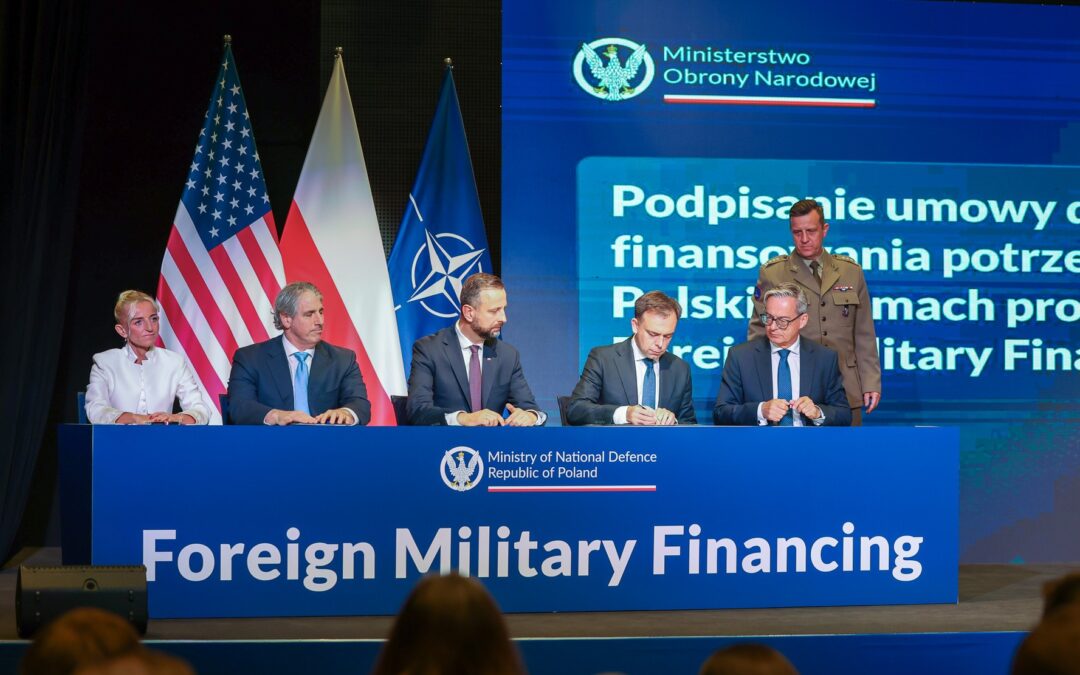
Poland has signed an agreement for a further $4 billion (14.8 billion zloty) from the United States Foreign Military Financing (FMF) programme, which provides grants and loans to fund the purchase of American military equipment.
Defence minister Władysław Kosiniak-Kamysz called the development a “great honour”, because FMF is “granted only to the best allies”. The agreement is not only “another important step in the modernisation of the Polish armed forces” but also “strengthens the strategic partnership between Poland and the US”.
The US embassy in Warsaw likewise hailed the agreement as “reaffirming the strength of the US-Poland partnership as we work together to strengthen NATO, deter aggression, and support peace and security in Europe”.
.@UnderSecT took part in the signing of a $4 billion Foreign Military Financing (FMF) loan guarantee—an important step in U.S.-Polish security cooperation. Poland’s significant investments in its defense capabilities and the U.S. defense industrial base reflect our shared… pic.twitter.com/Dz3huAp8pj
— US Embassy Warsaw (@USEmbassyWarsaw) September 9, 2026
Since Russia’s full-scale invasion of Ukraine in 2022, Poland has embarked on an unprecedented military procurement spree, with its defence budget rising to the highest relative level in NATO.
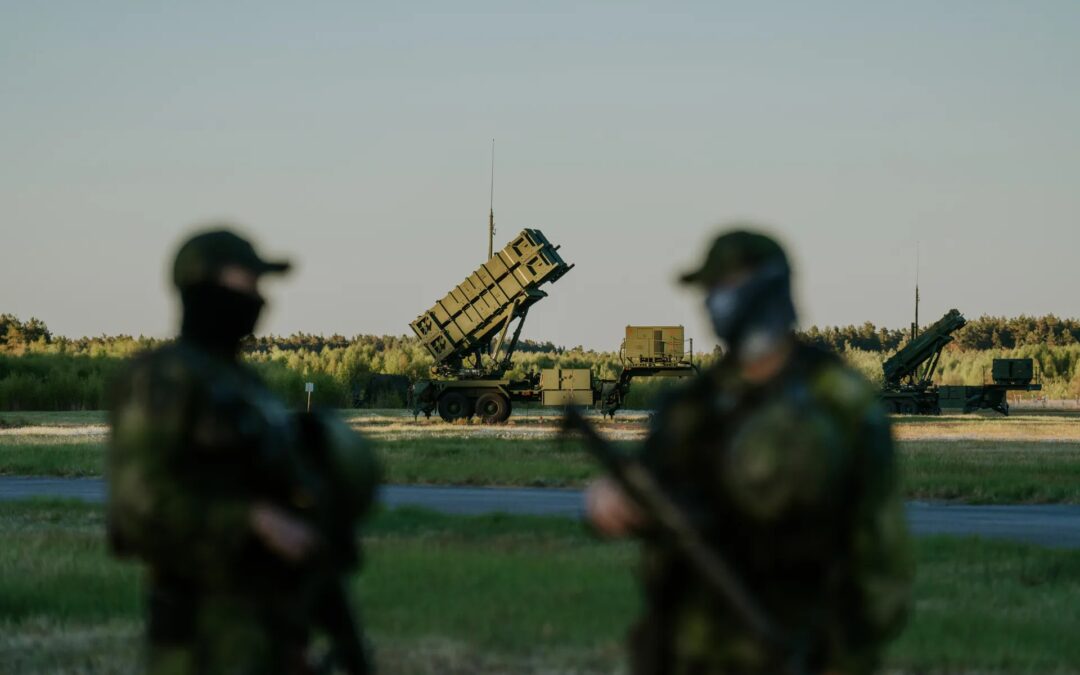
Between 2021 and 2025, Poland was also the largest importer of arms in NATO. Around 44% of those purchases came from the US, including Abrams tanks, Patriot air defence batteries, and HIMARS rocket artillery.
The new agreement marks the sixth time Poland has received funds through FMF, for a total of almost $20 billion. Kosiniak-Kamysz said that the latest financing would be used to “accelerate the implementation of existing contracts, including for Apache helicopters”.
In 2024, Poland signed a $10 billion deal to buy 96 AH-64E Apache attack helicopters, along with a logistics and training package and a stockpile of ammunition and spare parts. It will make Poland the second-largest operator of Apaches in the world, after only the US itself.
Thomas DiNanno, the US under secretary of state for arms control and international security, said that the new agreement “signifies our commitment to assistance, but also Poland’s commitment to ensuring security, building defence capabilities, and ensuring the security of NATO’s eastern flank”.
“Poland is not only a trusted partner; it is not only an ally on the front line; it is a model ally of the United States,” he added, repeating recent remarks by US defence secretary Pete Hegseth.
The terms of the financing have not been revealed, but Marta Postuła, vice president of Poland’s national development bank, BGK, through which the funds will be channelled, said it was “on more favourable terms than the last two [FMF] loan guarantee agreements”.
This, she added, was “due to the subsidisation of a portion of the financing costs through a grant awarded for this purpose by the US government”.
💬 Obecna umowa została zawarta na korzystniejszych warunkach niż dwie poprzednie umowy z gwarancjami pożyczkowymi dzięki subsydiowaniu części kosztów finansowania w ramach grantu przyznanego w tym celu przez Rząd USA. To kolejny wyraz bardzo bliskiej, transatlantyckiej… pic.twitter.com/Ipd4cYDeFo
— Bank Gospodarstwa Krajowego 🇵🇱 (@BGK_pl) September 9, 2026
The issue of who Poland should buy military equipment from, and how such purchases should be funded, has become embroiled in domestic political disputes this year.
President Karol Nawrocki and the right-wing opposition with which he is aligned have criticised the government for signing Poland up to the EU’s SAFE programme, which is providing €43.7 billion (188.7 billion zloty) in loans for defence and security spending.
They argue that provisions requiring most of the money to be spent within Europe itself could damage Poland’s relations with the US and South Korea, who have in recent years been the main sources of military procurement.
However, speaking today, Kosiniak-Kamysz said that the new loan agreement with the US shows that SAFE and FMF “do not compete with one another; they complement one another”.
Amerykański sprzęt wojskowy ponownie wzmocni Wojsko Polskie i bezpieczeństwo Polaków! Właśnie zabezpieczyliśmy środki w wysokości 4 mld dolarów, czyli prawie 15 mld zł na jego zakup. Łącznie w ramach amerykańskiego programu Foreign Military Financing pozyskaliśmy już blisko 20… pic.twitter.com/hhzXcE1hoC
— Magdalena Sobkowiak (@magdasobkowiak) September 9, 2026
While Nawrocki is a close ally of President Donald Trump, who endorsed him ahead of last year’s Polish presidential elections, the more liberal government, led by Prime Minister Donald Tusk, has at times clashed with Washington.
In May this year, the sudden and unexpected cancellation of the rotational deployment of almost 4,000 US troops to Poland raised concern in Warsaw.
Shortly afterwards, Trump declared that he would deploy 5,000 additional troops to Poland. However, since then, no clear details of that plan have been announced, although Poland has formally submitted a request for the US to establish a new permanent US military base on its territory.
On Wednesday morning, Polish deputy defence minister Paweł Bejda told broadcaster TVP that an American delegation, including DiNanno, was in Poland this week to discuss potential locations for the base.
Notes from Poland is run by a small editorial team and published by an independent, non-profit foundation that is funded through donations from our readers. We cannot do what we do without your support.
Main image credit: MON (under CC BY-SA 4.0)

Daniel Tilles is editor-in-chief of Notes from Poland. He has written on Polish affairs for a wide range of publications, including Foreign Policy, POLITICO Europe, EUobserver and Dziennik Gazeta Prawna.