Keep our news free from ads and paywalls by making a donation to support our work!

Notes from Poland is run by a small editorial team and is published by an independent, non-profit foundation that is funded through donations from our readers. We cannot do what we do without your support.
Poland’s largest opposition party, the national-conservative Law and Justice (PiS), has called for Ukrainian men of conscription age who are not legally working to be deported to Ukraine.
The policy, which continues a recent hardening of PiS’s position towards Ukraine and Ukrainians as it competes with the far right for support, was condemned by government figures, who called it “absurd” and “disgusting”.
🇵🇱 Bezpieczeństwo obywateli powinno być priorytetem każdego rządu. Potrzebne są zdecydowane działania wobec osób przebywających w Polsce niezgodnie z prawem.
👉 Udostępnij! 🔥 Ku nowemu rządowi! pic.twitter.com/m8MctmmPXd— Prawo i Sprawiedliwość (@pisorgpl) August 6, 2026
On Thursday, PiS, which has recently been hit by falling support in the polls and the defection of a large breakaway group of more moderate MPs, held a policy convention at which it presented ideas it wants to implement if it returns to power after next year’s parliamentary elections.
“One of [our] government’s first, most significant decisions will be to deport men, Ukrainians of military age, who are not legally working in Poland,” announced Tobiasz Bocheński, a deputy leader of the party.
“They will have the opportunity to fight for their homeland, so that the horrors of this war can quickly end,” he continued. “Because for Central and Eastern Europe to be secure and free, Ukraine must win.”
Bocheński denied that the policy was inhumane, noting that, in 2022, when PiS was in government, “Poles, like no other nation in Europe, opened their hearts, their homes and their wallets to women, children, the elderly and disabled people fleeing Putin’s bombs”.
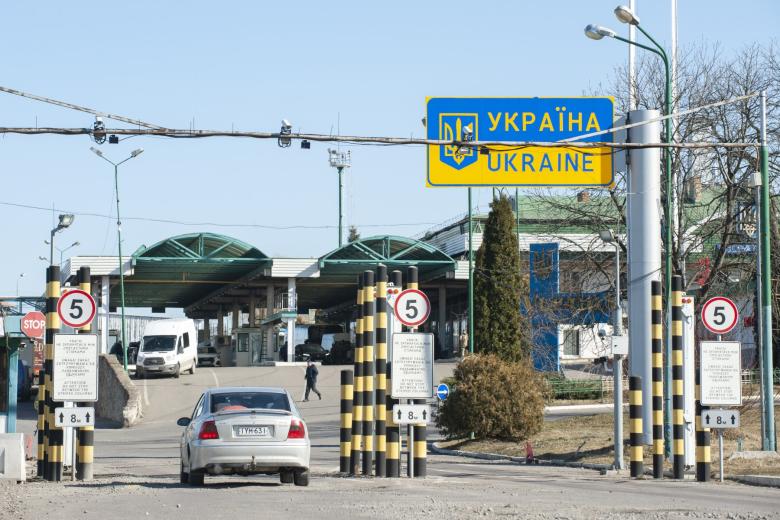
Poland was the primary destination for refugees fleeing Ukraine in 2022. Almost one million of them remain in the country, alongside hundreds of thousands of other Ukrainian immigrants, many of whom arrived before 2022. They are by far Poland’s largest foreign national group.
In their announcement of the proposed policy, PiS gave no details of how it would work in practice, nor on what legal basis Ukrainians who are legally resident in Poland and have not violated any laws would be deported.
News website Interia, which had reported on PiS’s plans shortly before they were officially announced, notes that data from Poland’s labour ministry show that only around 11,000 Ukrainians are registered as unemployed in Poland. The figures are not broken down by gender, but most are believed to be women.
However, PiS’s policy would also apply to Ukrainians in the so-called grey economy, where people work informally without registering or paying taxes, reports Interia.
Military-age Ukrainian men in other European countries should not receive social benefits, says Poland's foreign minister, @sikorskiradek.
"There should be no financial incentives for avoiding the draft" https://t.co/5TcTqyDa6X
— Notes from Poland 🇵🇱 (@notesfrompoland) September 16, 2024
PiS’s plan was immediately criticised by government figures, with interior ministry spokeswoman Karolina Gałecka calling it “an absurd idea” and “pure demagoguery”.
She noted that over 95% of Ukrainian men of conscription age in Poland are working legally and paying taxes. “Without these people, many key sectors of the Polish economy would simply grind to a halt,” wrote Gałecka. “Stop the incitement.”
Deputy interior minister Maciej Duszczyk, meanwhile, told broadcaster TVN that, among the Ukrainian men not working, many are wounded soldiers in Poland for treatment and rehabilitation or fathers caring for disabled children. Deportations are a “purely political, disgusting idea”, he added.
Interior minister Marcin Kierwiński wrote that, “when [PiS] was in power, they couldn’t even deport those who were breaking the law, and now they’re supposedly going to deport everyone without rhyme or reason”.
Since taking power, the current government has increased deportations of foreigners who are in Poland illegally or broke the law while in the country. Last year, it carried out over 9,000 deportations, up from 7,200 in 2023, the last year that PiS was in power
Absurdalny pomysł @pisorgpl ws. deportacji Ukraińców to czysta demagogia! Ponad 95% mężczyzn w wieku poborowym legalnie pracuje w 🇵🇱 i płaci podatki (dane ZUS).@OficjalnyJK zapowiada deportacje. A jak miałoby to wyglądać w praktyce? Patrole sprawdzające dokumenty na ulicach?…
— Karolina Gałecka (@K_Galecka) August 6, 2026
During the conference on Thursday, PiS emphasised its tough approach to migration more broadly, saying that it would “create a new, restrictive system for foreigners” that would track each immigrant in the country.
“Every foreigner will have their own individual account,” and if they commit any offences or fail to abide by any administrative obligations, “the information will be immediately entered into the system, and the deportation process will begin”, said Bocheński.
“The only good migration is the return of Poles from abroad,” declared the party on social media.
🛡️ Bezpieczne granice to bezpieczna Polska. Skuteczna ochrona granic i walka z nielegalną imigracją to obowiązek każdego odpowiedzialnego państwa.
👉 Udostępnij! 🔥 Ku nowemu rządowi! pic.twitter.com/rRPZpmXi5U— Prawo i Sprawiedliwość (@pisorgpl) August 6, 2026
In fact, it was during PiS’s time in power from 2015 to 2023 that Poland saw the largest wave of immigration in its history, and one of the largest anywhere in Europe.
In every year between 2017 and 2022, Poland was the EU member state that issued the highest number of first residence permits to immigrants from outside the bloc.
There are now over two million foreigners registered as living in Poland, making up just 5% of the population. Around three quarters are Ukrainians (1.55 million), with the next largest groups being Belarusians (139,300), Indians (26,100), Georgians (22,200), Russians (19,500), Vietnamese (15,100) and Turks (14,500).
The number of foreigners with residence permits in Poland has reached two million, making up just over 5% of the country’s population, new government data show.
The largest national group by far are Ukrainians, followed by Belarusians and Indians https://t.co/SI09WtR7hR
— Notes from Poland 🇵🇱 (@notesfrompoland) April 26, 2026
While in government, PiS welcomed Ukrainian migrants and refugees and was a strong supporter of Ukraine in its defence against Russian aggression. However, since going into opposition, it has taken an increasingly tough line.
That has reflected a broader shift in Polish society, with a variety of polls showing rising negative sentiment towards Ukraine and Ukrainians. Recent months have also seen a rise in reported hate crimes against Ukrainians in Poland, including a number of high-profile incidents.
Meanwhile, two far-right parties that have long taken an anti-Ukrainian stance, Confederation (Konfederacja) and Confederation of the Polish Crown (KKP), have soared in the polls, placing pressure on PiS to toughen its own position.
One Confederation MEP, Stanisław Tyszka, mocked PiS’s latest policy announcement. “PiS wants to heroically deport hundreds of thousands of Ukrainians whom they themselves let into Poland,” he wrote. “Comedy.”
The number of reported hate crimes against Ukrainians in Poland is up 30% so far this year, police data show.
The figures come following recent high-profile cases of verbal and physical attacks against Ukrainians, who are Poland's largest immigrant group https://t.co/pcTsJddDz7
— Notes from Poland 🇵🇱 (@notesfrompoland) July 17, 2026
Notes from Poland is run by a small editorial team and published by an independent, non-profit foundation that is funded through donations from our readers. We cannot do what we do without your support.
Main image credit: Grzegorz Krzyżewski/BRPO (under CC BY-SA 4.0)

Daniel Tilles is editor-in-chief of Notes from Poland. He has written on Polish affairs for a wide range of publications, including Foreign Policy, POLITICO Europe, EUobserver and Dziennik Gazeta Prawna.