Keep our news free from ads and paywalls by making a donation to support our work!

Notes from Poland is run by a small editorial team and is published by an independent, non-profit foundation that is funded through donations from our readers. We cannot do what we do without your support.
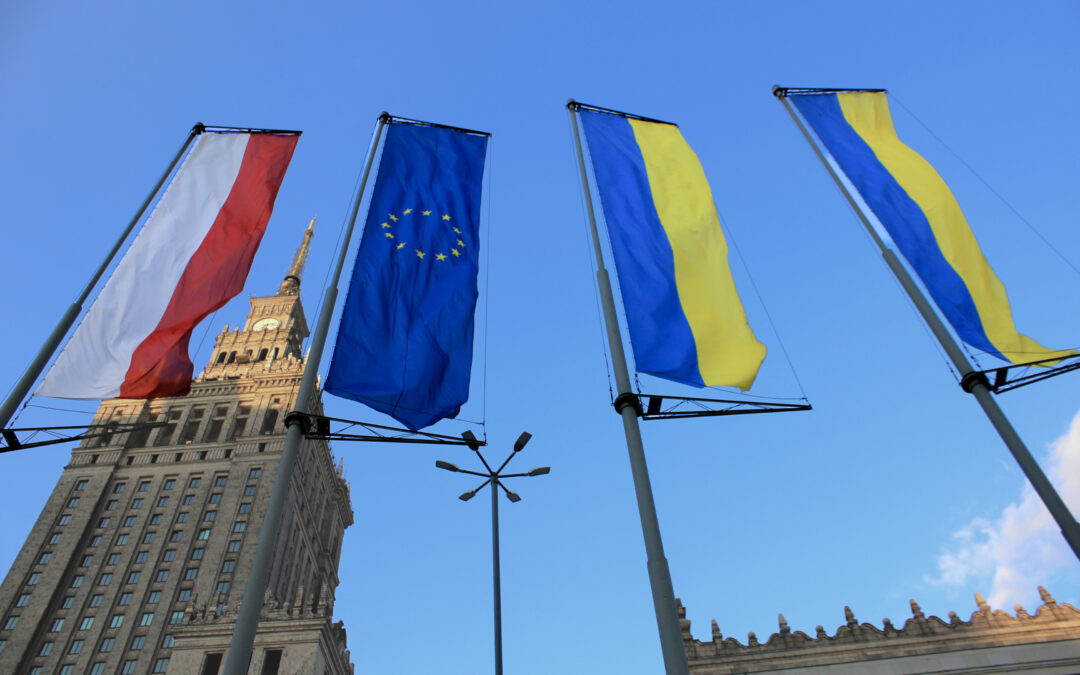
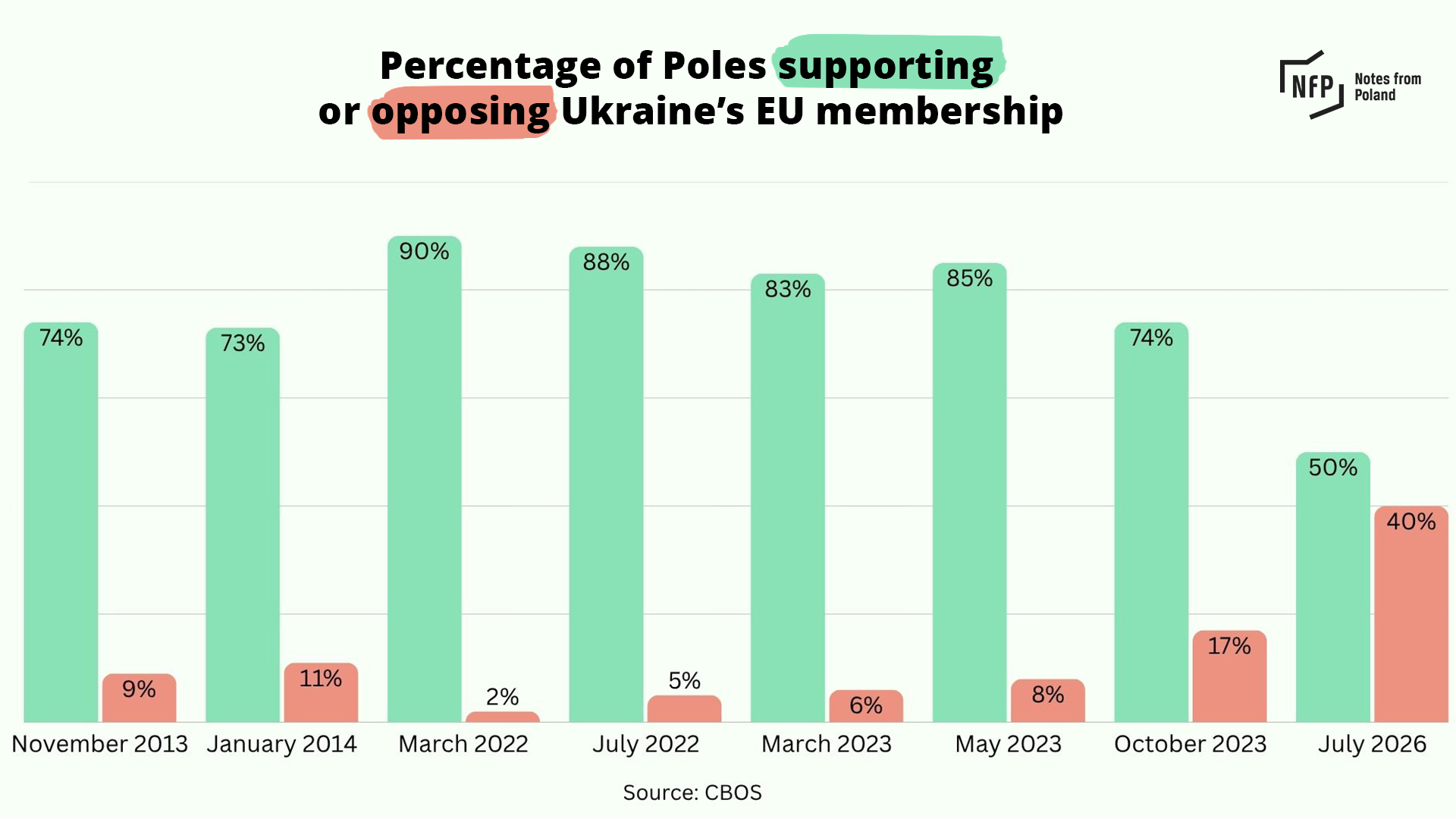
Support for Ukraine joining the European Union has fallen sharply in Poland, with opposition reaching a record high of 40%, according to polling by Polish state research agency CBOS.
The figures show that 50% of Poles still support Ukraine’s EU membership, but that is a significant decline from 74% in October 2023, when the question was last asked, and from a record 90% in March 2022, shortly after Russia launched its full-scale invasion of Ukraine.
The shift comes as public sentiment towards Ukraine in general in Poland has deteriorated in recent years, including during an ongoing dispute between Warsaw and Kyiv over the massacre of Poles by Ukrainian nationalists during World War Two.
The latest CBOS poll shows that, among those who support Ukraine’s EU accession, most favour a gradual process, with 41% of all respondents saying Ukraine should join the EU but “without undue haste”.
“Only 9% of respondents currently support Ukraine’s earliest possible EU membership, which is the lowest figure in the history of these surveys,” CBOS reported.
Meanwhile, opposition to Ukraine’s EU membership has increased by 23 percentage points since October 2023, reaching its highest level in the history of CBOS surveys.
People with right-wing political beliefs are most likely to be opposed to Ukraine’s accession (53%), while the age group with the highest percentage of people opposed is those aged 18-24 (58%).
The survey also found that a majority of Poles expect the war in Ukraine to end with territorial concessions from Kyiv – 55% of respondents said they believed Ukraine would lose some territory, a view that has remained dominant since December 2024.
Compared with the previous survey, however, pessimism has eased. The proportion of respondents who expect Ukraine to lose part of its territory fell by 8 percentage points, while the number expecting Russia to take control of the entire country declined from 8% to 6%.
On Western support for Ukraine, 39% of respondents said the military, financial and humanitarian assistance provided by countries in the West was sufficient. Meanwhile, 27% said aid was excessive, while 22% said it was insufficient.
Russia has published purported archival documents relating to massacres of Poles by Ukrainians in WWII.
Kyiv had warned that Russia was planning to release the files in order to stir tensions, while Polish media note that the material contains nothing new https://t.co/CI0cfAlDle
— Notes from Poland 🇵🇱 (@notesfrompoland) July 6, 2026
Ukrainians are Poland’s largest foreign national group, with almost 1.6 million living in the country, but recent polls have shown growing hostility towards them, fuelled in part by anti-Ukrainian rhetoric from far-right parties and a tougher stance towards Kyiv from some opposition politicians.
In its annual survey of attitudes towards national and ethnic groups, CBOS found earlier this year that the proportion of Poles who said they disliked Ukrainians increased by five percentage points this year, the largest rise recorded among all groups surveyed, reaching 43%.
Tensions between the two countries have also been heightened by disputes over historical issues and a series of recent incidents targeting Ukrainians in Poland.
The number of reported hate crimes against Ukrainians in Poland is up 30% so far this year, police data show.
The figures come following recent high-profile cases of verbal and physical attacks against Ukrainians, who are Poland's largest immigrant group https://t.co/pcTsJddDz7
— Notes from Poland 🇵🇱 (@notesfrompoland) July 17, 2026
The number of reported hate crimes against Ukrainians rose by 30% in the first half of 2026 compared with the same period a year earlier, according to newly reported police data.
Last weekend, three men were filmed violently attacking a Ukrainian woman and her partner outside a shop in Wrocław, apparently because of her accent. Two of the assailants have since been detained by police, while their victims required treatment in hospital.
In response, Prime Minister Donald Tusk called for Poles to “wage war on violence”, saying that the perpetrators of such acts “have become emboldened precisely because they now have political role models, political patrons, and political support”.
Notes from Poland is run by a small editorial team and published by an independent, non-profit foundation that is funded through donations from our readers. We cannot do what we do without your support.
Main image credit: Ivonna Nowicka/Wikimedia Commons (under CC BY-SA 4.0)

Alicja Ptak is deputy editor-in-chief of Notes from Poland and a multimedia journalist. She has written for Clean Energy Wire and The Times, and she hosts her own podcast, The Warsaw Wire, on Poland’s economy and energy sector. She previously worked for Reuters.