Keep our news free from ads and paywalls by making a donation to support our work!

Notes from Poland is run by a small editorial team and is published by an independent, non-profit foundation that is funded through donations from our readers. We cannot do what we do without your support.
New Polish opposition group Development Plus (Rozwój Plus), which recently broke away from the national-conservative Law and Justice (PiS) party, has proposed the idea of paying a “parental salary” for the first three years of a child’s life.
The idea is part of a package of proposals to tackle Poland’s dire demographic situation released on Friday by Development Plus in its first major policy announcement since leader Mateusz Morawiecki announced that the group would soon become a political party.
3600 zł miesięcznie na dziecko do 3. roku życia – jedna z wielu propozycji @RozwojPlus dla demografii!
Pensja Rodzicielska wynosząca równowartość płacy minimalnej, czyli obecnie około 3600 zł netto miesięcznie przez pierwsze 3 lata życia dziecka.
To ponad czterokrotnie więcej… pic.twitter.com/253pwcskNK
— Mateusz Morawiecki (@MorawieckiM) August 7, 2026
The proposed parental salary would amount to 3,600 zloty (€837) per month, the equivalent of the minimum wage after taxes. It is 4.5 times more than the current child benefit payment of 800 zloty per month that all Polish parents of children under 18 receive.
Development Plus says that the parental salary could be combined with income from other work that parents undertake and that it would include contributions towards their pensions. It would end once a child turns three, after which parents would have access to normal child benefit payments.
The group says that, for now, the idea is just a proposal, based on expert analysis of how to tackle Poland’s demographic crisis, and that it now wants to “refine it through dialogue with Poles” rather than “imposing top-down provisions”.
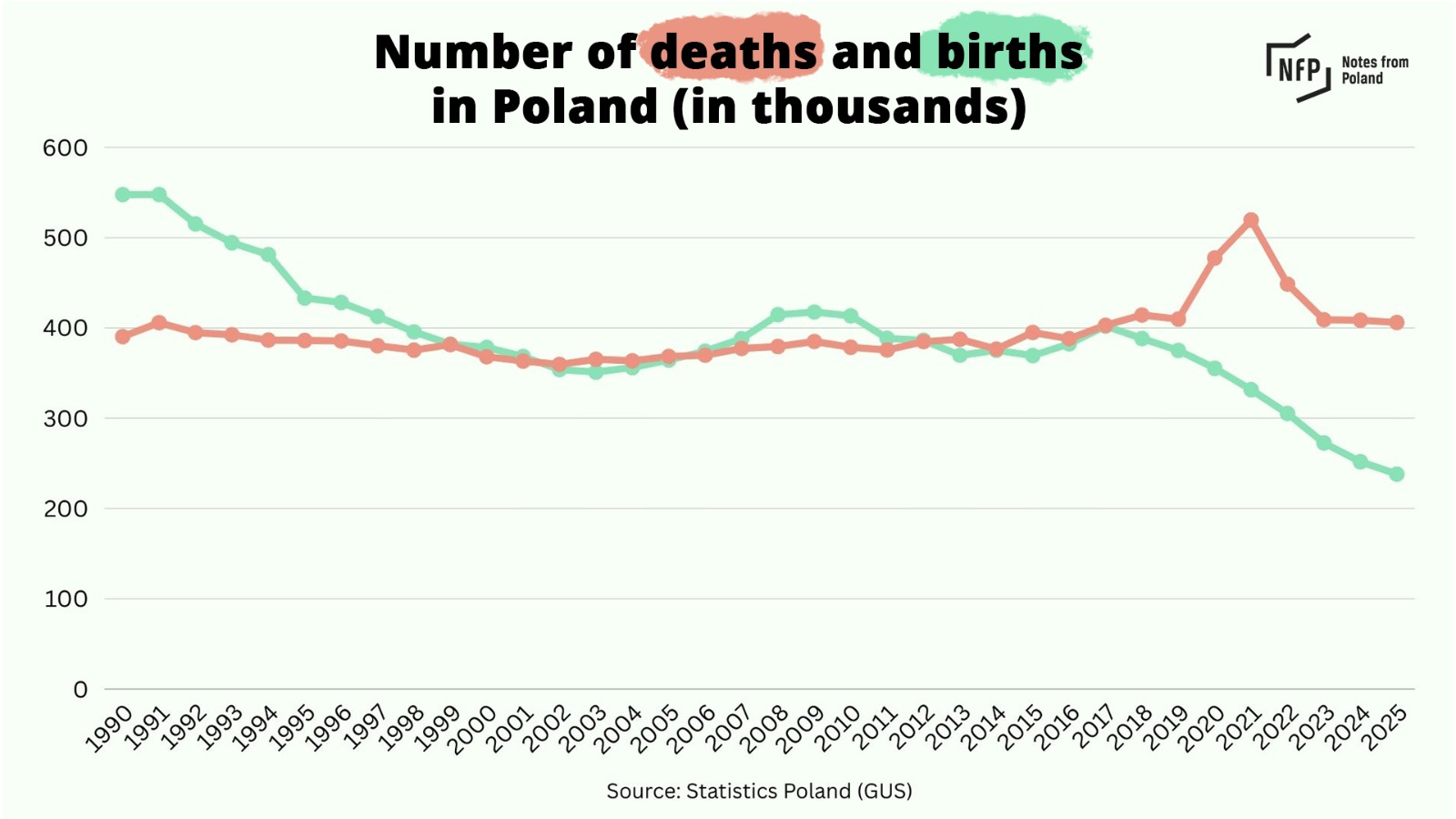
Poland has long been grappling with a shrinking, ageing population. Last year, the number of births fell to a new post-war low of 238,000, while deaths totalled 406,000. That marked the 13th consecutive year in which more people died than were born in Poland.
The country’s fertility rate – meaning the average number of children that are born to a woman over her lifetime – fell to a new record low of 1.068 in 2025.
That is one of the lowest figures anywhere in the world and well below the so-called “replacement rate” – the figure needed to ensure that the population does not decline – which is generally defined as 2.1.
Poland’s fertility rate, already one of the lowest in the world, fell to a new record low of 1.07 in 2025, deepening concerns over the country's shrinking and ageing population https://t.co/OMGC1MpA5l
— Notes from Poland 🇵🇱 (@notesfrompoland) May 28, 2026
Successive Polish governments have introduced various measures intended to boost the birth rate, though so far without clear success.
The former PiS government, with Morawiecki as finance minister and later prime minister, introduced and expanded the current child benefit programme. While there was a brief bump in births after it was launched in 2016, numbers subsequently continued their downward trend.
After PiS lost power in 2023, the current government, led by Prime Minister Donald Tusk, continued the child benefit programme and also introduced new payments to support parents who return to work and restored funding for IVF treatment, which was previously cut by PiS.
When announcing the proposed parental salary on Friday, Development Plus also outlined seven other proposed new policies to ease Poland’s demographic problems.
One would allow workers to have a portion of their contributions go towards their parents’ pensions. Another pledged to provide better maternity care, including access to anaesthesia, a private hospital room and dedicated midwife, prenatal testing, and infertility treatment.
Other policies promised more flexible working arrangements and mortgage repayments to prevent people from having to choose between a family or a career, as well as school hours and after-school care that “adapt to the lives of families, not the other way around”.
Development Plus also proposed “granting parents the right to represent the voices of their minor children”. However, they provided no details of what this would mean in practice.
Dzieci to nasza przyszłość! To fundament bezpieczeństwa Polski i polska racja stanu. Jak sprawić, by Polaków rodziło się coraz więcej? Oto strategia demograficzna dla Polski Stowarzyszenia @RozwojPlus🇵🇱➕. pic.twitter.com/1hiQPNuL47
— Mateusz Morawiecki (@MorawieckiM) August 7, 2026
Development Plus was founded as an association by Morawiecki in April this year. That immediately prompted criticism from some other members of the party, who saw it as a step towards creating a breakaway group.
Matters came to a head last month, when PiS leader Jarosław Kaczyński demanded that all the party’s lawmakers sign a pledge of loyalty and commit to leave any political associations they are part of. Morawiecki and his allies refused to do so, prompting Kaczyński to declare that meant they had effectively resigned from the party.
Last week, Development Plus announced it had formed its own separate parliamentary caucus with 40 MPs in the Sejm, the most powerful lower house of parliament. The move immediately made it the third-largest group in the parliament, while also meaning PiS was no longer the biggest.
On Monday this week, Morawiecki confirmed that his group would soon form a party of its own. He laid out a vision of a more moderate, centre-right party that would focus on economic development rather than “ideological disputes”, following PiS’s shift in a more hardline direction over recent months.
Mateusz Morawiecki has confirmed that his Development Plus group, which is splitting from the national-conservative opposition PiS party, will soon form a party of its own.
However, he categorically ruled out ever working with Prime Minister @donaldtusk https://t.co/J6mQaer4MA
— Notes from Poland 🇵🇱 (@notesfrompoland) August 4, 2026
Notes from Poland is run by a small editorial team and published by an independent, non-profit foundation that is funded through donations from our readers. We cannot do what we do without your support.
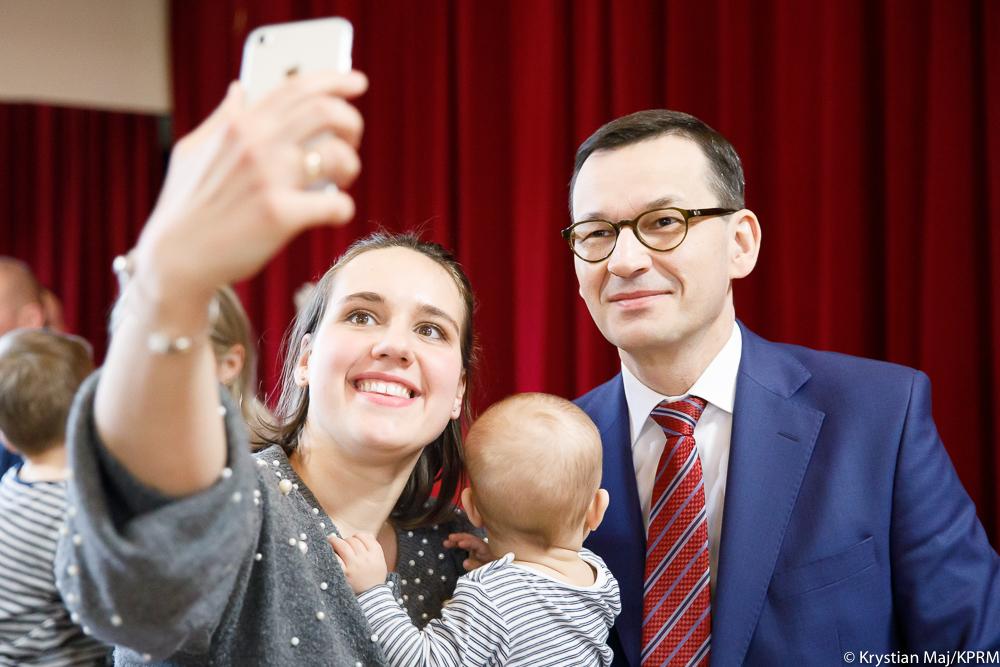
Main image credit: Krystian Maj/KPRM (under CC BY-SA 4.0)

Daniel Tilles is editor-in-chief of Notes from Poland. He has written on Polish affairs for a wide range of publications, including Foreign Policy, POLITICO Europe, EUobserver and Dziennik Gazeta Prawna.