Keep our news free from ads and paywalls by making a donation to support our work!

Notes from Poland is run by a small editorial team and is published by an independent, non-profit foundation that is funded through donations from our readers. We cannot do what we do without your support.
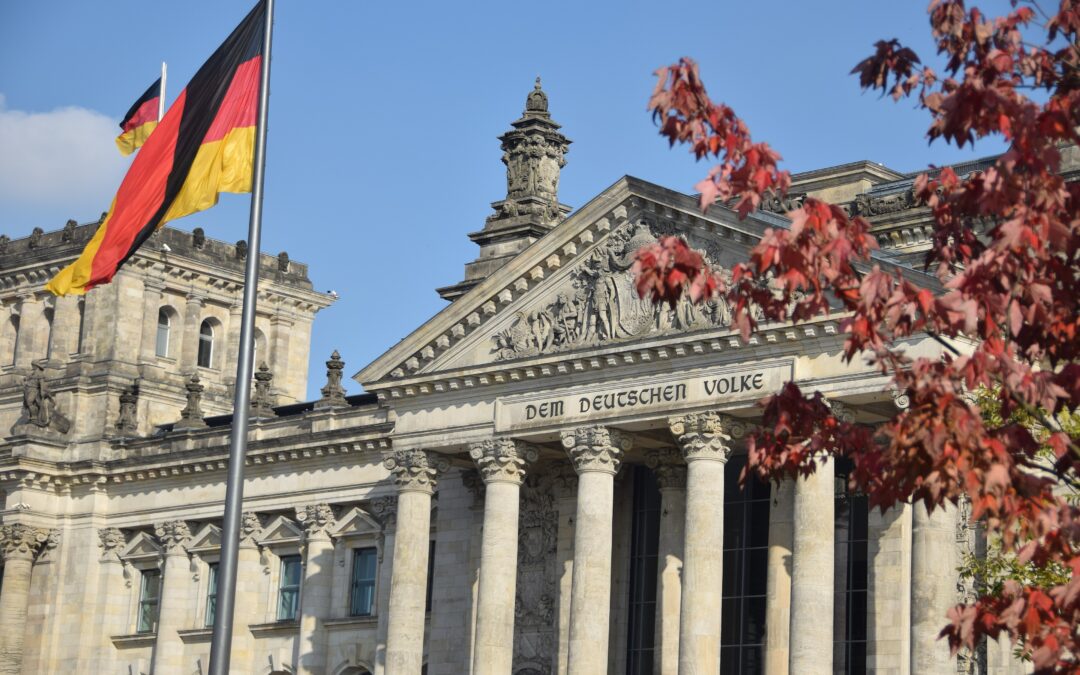
Germany’s federal parliament, the Bundestag, has held a debate on Polish-German relations, with politicians from all parties hailing Poland’s growing importance – and some even holding it up as a “model” to follow.
The discussion was held to mark the 35th anniversary of the Treaty of Good Neighbourship and Friendly Cooperation signed in June 1991, which marked a breakthrough moment for two countries that have a difficult history.
“When we look at our large eastern neighbour today, 35 years after the signing of the treaty, we see something impressive…a modern, well-organised, self-confident and strong country,” said Knut Abraham of the centre-right Christian Democratic Union (CDU), the party of German Chancellor Friedrich Merz.
“Today, Germany and Poland act as equal partners in the EU and NATO. For some time Poland has no longer been a junior partner. In many ways, it has even become a role model,” added Abraham, who is the German government’s coordinator for cooperation with Poland.
That sentiment was echoed, though from a different perspective, by Alexander Wolf of the far-right Alternative for Germany (AfD), which is the largest opposition party. He likewise declared that “Poland can serve as a model for us”, in particular when it comes to “the defence of our own interests”.
Wolf noted that Poland has built “arguably the largest and most powerful army of all EU member states” and “is considered by Washington to be the most reliable partner” in Europe.
Meanwhile, Poland’s economy is booming thanks “not only to sound economic and defence policies, but also and above all a sound migration policy” of the type that “the AfD also demands for Germany”.
Wolf condemned German media and politicians who accuse Poland of “narrow-mindedness and xenophobia” when in fact all it has done is “what any sensible country, not consumed by self-loathing, would do: protecting its own borders and its own country”.
Poland has in fact had among the highest levels of immigration in the European Union over the last decade. However, most arrivals have come from eastern European countries, particularly Ukraine and Belarus.
Meanwhile, Poland has also implemented tough measures to prevent irregular migrants – who are mainly from Asia and Africa – crossing the border from Belarus.
The AfD itself has enjoyed uneasy relations with Poland. Last year, one of its co-leaders, Tino Chrupalla, suggested that Poland is as much of a threat to Germany as Russia is. This year, a senior AfD figure called for Warsaw to pay Germany reparations for the sabotage of the Nord Stream pipelines.
The number of foreign workers in Poland rose 7.2% last year to reach 1.14 million.
Immigrants now make up almost 7% of all workers. While Ukrainians remain by far the largest group, the fastest-growing nationalities last year were Colombians and Indians https://t.co/E0LNJXyyTx
— Notes from Poland 🇵🇱 (@notesfrompoland) June 9, 2026
During the debate, speakers from all parties other than the AfD commented upon the history of German aggression and oppression against Poles, in particular the brutal occupation of World War Two, which resulted in the deaths of around six million Polish citizens.
“German responsibility for the suffering that Poland experienced through the Nazi war of annihilation is and remains part of our history,” said Johannes Schraps of the centre-left Social Democratic Party (SPD), which rules in coalition with the CDU.
“That is precisely why reconciliation between Germany and Poland…is one of the greatest European achievements of recent decades,” he added.
Last year, the Bundestag adopted a motion calling on the German government to move ahead with longstanding plans to establish a memorial in Berlin to Polish victims of the German-Nazi occupation. All parties supported the measure apart from the AfD.
Germany’s parliament has passed a motion calling on the government to establish a permanent memorial in Berlin to Polish victims of the German-Nazi occupation.
The measure was supported by all parties apart from the far-right AfD https://t.co/8dk0ZSpmjJ
— Notes from Poland 🇵🇱 (@notesfrompoland) December 3, 2025
Paul Ziemiak of the CDU, who was born in Poland before moving to Germany as a young child, noted that the history of German repression of Poles goes back even further, including the period in which Prussia partitioned Poland alongside Russia and Austria.
“Anyone who speaks of Polish sensitivities today, in light of the discussion about border shifts in Europe and the security needs of our eastern neighbours, has no understanding of the trauma of an entire nation and of European history,” said Ziemiak.
Katrin Göring-Eckardt of Alliance 90/The Greens (B90/Die Grünen) called upon the German government to finally establish a fund to support the few surviving victims of German World War Two crimes, fulfilling a commitment first announced in 2024 by former Chancellor Olaf Scholz.
That issue, as well as the question of war reparations, has been a longstanding point of tension between Warsaw and Berlin.
Polish President @NawrockiKn has called on Germany to pay Poland war reparations during talks in Berlin with Chancellor @_FriedrichMerz.
In response, Germany has reiterated that it considers the issue to be legally closed and that no reparations are owed https://t.co/sX07qtCFRL
— Notes from Poland 🇵🇱 (@notesfrompoland) September 16, 2025
Göring-Eckardt and Janina Böttger of The Left (Die Linke) also noted that, before Russia’s full-scale invasion of Ukraine in 2022, Poland had long been warning of the threat from Moscow. Both welcomed the fact that the German and Polish governments are next week planning to sign a new security agreement.
But Göring-Eckardt criticised the fact that Poland has been excluded from recent talks between Germany, France and the UK on ending the war in Ukraine.
“If, in Germany too, Europe is always only or primarily thought of as western Europe, then that is only half of Europe. We need an easternisation of thinking in Europe,” she declared. Böttger likewise spoke of the “need to end the West’s arrogance towards the East”.
Schraps and Göring-Eckardt also called for Germany to end the controls it reintroduced on the border with Poland in 2023. The measures were intended to prevent illegal migration but have disrupted travel, especially for border communities. Poland also introduced its own similar controls last year.
A Pole who lives along the Polish-German border has filed a lawsuit against Germany for the border controls it has introduced.
The measures are intended to prevent illegal immigration, but he says they violate free-movement rules in the Schengen Area https://t.co/If6EJMA2Lw
— Notes from Poland 🇵🇱 (@notesfrompoland) January 4, 2025
Notes from Poland is run by a small editorial team and published by an independent, non-profit foundation that is funded through donations from our readers. We cannot do what we do without your support.
Main image credit: Hagen Albers/Wikimedia Commons (under CC BY-SA 4.0)

Daniel Tilles is editor-in-chief of Notes from Poland. He has written on Polish affairs for a wide range of publications, including Foreign Policy, POLITICO Europe, EUobserver and Dziennik Gazeta Prawna.