Keep our news free from ads and paywalls by making a donation to support our work!

Notes from Poland is run by a small editorial team and is published by an independent, non-profit foundation that is funded through donations from our readers. We cannot do what we do without your support.
Poland is a rare example of a major European country that does not have a dedicated national natural history museum. But the Polish Academy of Sciences (PAN), a state research body, now hopes to change that after launching plans to establish such an institution in the capital, Warsaw.
The new museum would bring together millions of artefacts from PAN’s collections that are currently dispersed across multiple institutions and, in most cases, are not accessible to the public.
Instytucje naukowe w Polsce zgromadziły ogromne kolekcje mogące stać się podstawą Muzeum Historii Naturalnej. To, że nadal go nie mamy, jest po prostu wielkim zaniedbaniem – mówi prof. Jarosław Stolarski, dyrektor Instytutu Paleobiologii PAN.https://t.co/vOTqNXT08E pic.twitter.com/qtyeJnArd2
— Michał Wojtczuk (@MichaWojtcz) May 14, 2026
PAN presented plans for the Natural History Museum in Warsaw last week, after its executive committee adopted a resolution earlier this year to develop the concept.
For now, there are no details of where the museum would be located, when it would open, how much it will cost, and from what sources it will be financed.
“Poland remains the only European country that does not have a modern, proper natural history museum,” wrote PAN on a new website dedicated to the project.
“Our rich paleontological, zoological, botanical, geological and mineralogical collections are scattered across various institutions and are often inaccessible to the general public,” they added.
Poland does currently have some local natural history museums, including in Kraków and Wrocław, the country’s second- and third-largest cities respectively. Warsaw is also home to a Museum of Evolution and Museum of the Earth, both run by PAN.
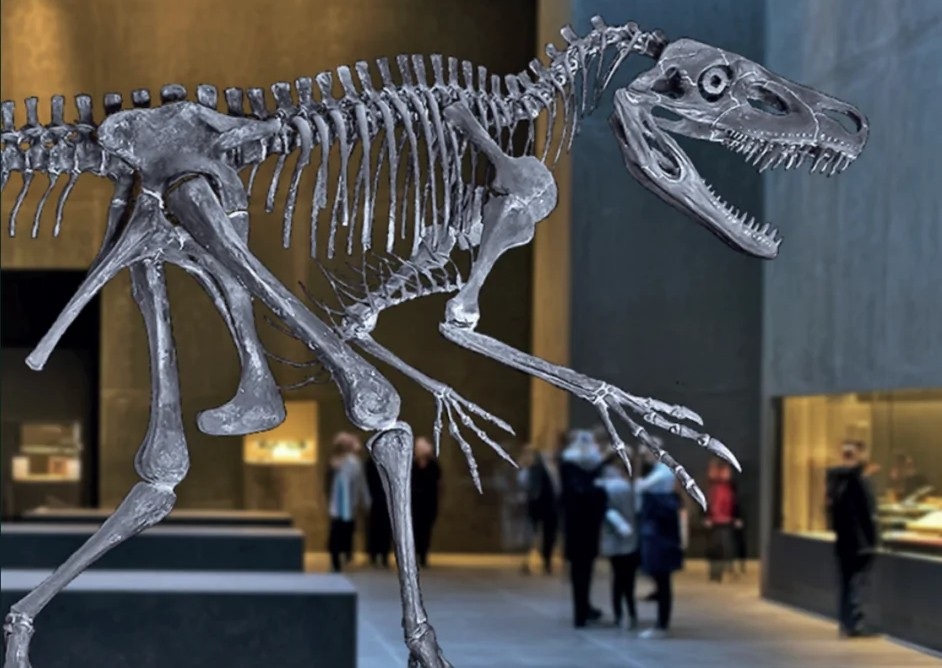
However, there is no central institution capable of showcasing the roughly nine million natural artefacts held by PAN, which include dinosaur skeletons, fossils of Palaeozoic fish and Pleistocene mammals and meteorite fragments.
“The lack of a central, modern facility does not allow for the full presentation and popularisation of the achievements of Polish science, and also limits educational and research opportunities,” says the academy.
“We believe that such a museum will become not only a place for presenting unique collections and achievements, but also a modern centre for research, social dialogue and inspiration for future generations,” it added.
Polska ma unikalne szkielety dinozaurów z pustyni Gobi i historyczne zbiory zoologiczne z XIX wieku.
Nikt tego nie nie może zobaczyć.
Wszystko leży w magazynach instytutów PAN.
W Noc Muzeów warto zadać pytanie: dlaczego Polska wciąż nie ma Muzeum Historii Naturalnej?… pic.twitter.com/RRheZ3hxoh
— Academia: Portal Polskiej Akademii Nauk (@AcademiaPAN) May 13, 2026
In other major European countries, natural history museums are popular with tourists and locals alike. Last year, London’s welcomed around 7.1 million visitors and Paris’s 3.6 million.
By contrast, PAN’s Museum of Evolution received only 60,000 visitors. However, the potential popularity of a modern, dedicated science museum is demonstrated by the Copernicus Science Centre in Warsaw, which received 1.2 million visitors last year.
In 1919, a year after Poland regained its independence at the end of World War One, efforts were made to establish a natural history museum. However, no single building for it was ever created, and many of its collections were destroyed by a fire in 1935 and then by the German occupiers in World War Two.
The world's oldest poster museum has reopened in Warsaw after a five-year break for refurbishment.
Its new exhibition features 240 works showcasing 130 years of Poland's history, including from the world-renowned Polish Poster School https://t.co/C6hL9TX52U
— Notes from Poland 🇵🇱 (@notesfrompoland) March 17, 2026
Notes from Poland is run by a small editorial team and published by an independent, non-profit foundation that is funded through donations from our readers. We cannot do what we do without your support.
Main image credit: PAN (press materials)

Olivier Sorgho is senior editor at Notes from Poland, covering politics, business and society. He previously worked for Reuters.