Keep our news free from ads and paywalls by making a donation to support our work!

Notes from Poland is run by a small editorial team and is published by an independent, non-profit foundation that is funded through donations from our readers. We cannot do what we do without your support.
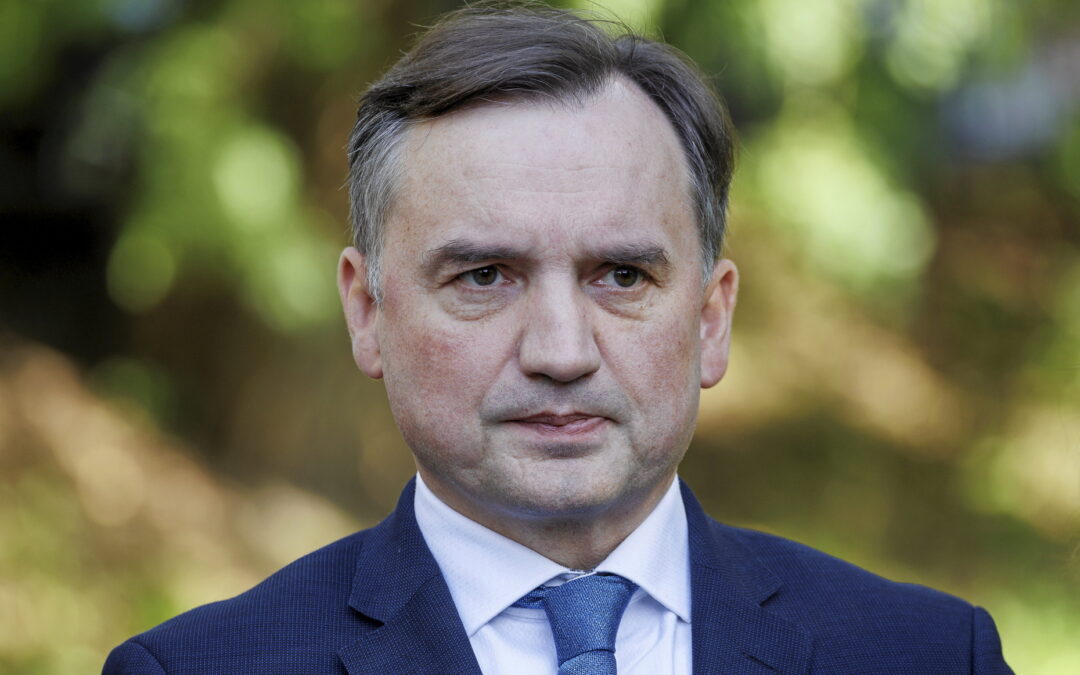
Hungary has granted asylum to former Polish justice minister Zbigniew Ziobro, who is facing charges in Poland for alleged crimes committed while he served in the former national-conservative Law and Justice (PiS) government.
“I have decided to accept the asylum granted to me by the government of Hungary due to political persecution in Poland,” wrote Ziobro in a statement on social media. “I extend my sincere thanks and gratitude to [Hungarian] Prime Minister Viktor Orbán.”
Ziobro claimed that Poland’s current government, which replaced PiS in power in December 2023, is overseeing a “creeping dictatorship” and that he had “become the target of [Prime Minister] Donald Tusk’s personal vendetta”.
He also revealed that he had applied for asylum for his wife, saying that there is “an attempt to treat [her] as a hostage to force me to return to the country” and “I will not allow my wife, in my stead, to become the victim of Donald Tusk’s psychopathic revenge”.
Statement
I have chosen to fight against political banditry and lawlessness. I stand in opposition to a creeping dictatorship. I do this in the name of the principles that I have always upheld, and for which I have now become the target of Donald Tusk’s personal vendetta and his…
— Zbigniew Ziobro | SP (@ZiobroPL) January 12, 2026
Ziobro left Poland for Hungary in October, shortly before Poland’s justice minister asked parliament to lift his immunity from prosecution. In November, parliament approved that request, opening the way for prosecutors to bring charges for 26 alleged crimes against Ziobro relating to his time as justice minister.
They include establishing and leading a criminal group and abusing his powers for personal and political gain. If found guilty, he could face up to 25 years in prison.
Ziobro – who was one of the most prominent figures in the PiS government and led its contested overhaul of the judiciary – denies wrongdoing but says he will only return to Poland to face trial “when the rule of law is restored”.
Shortly after arriving in Budapest, Ziobro met with Orbán, who posted a picture of the pair together and condemned the “witch hunt” against the Polish right launched by “the pro-Brusselian Polish government”. Orbán’s Fidesz party and PiS have long been close allies.
On 16 December, Poland revoked Ziobro’s passport, meaning that he cannot travel outside the European Schengen area. This week, a Polish court is due to rule on prosecutors’ request to issue an arrest warrant for Ziobro, which would then pave the way for a possible European Arrest Warrant and Interpol notice.
Last week, it emerged that Hungary had granted asylum to two unnamed Polish citizens on 23 December. That led to speculation that one of them was Ziobro, whose former deputy justice minister, Marcin Romanowski, was likewise granted asylum by Hungary in 2024 after fleeing criminal charges in Poland.
On Friday, the Polish foreign ministry summoned the Hungarian ambassador to clarify the situation, but spokesman Maciej Wewiór said afterwards that they had still “not received an answer from the Hungarian side as to who was granted asylum”.
On Monday morning, Ziobro’s lawyer, Bartosz Lewandowski, confirmed that his client “has obtained political asylum in Hungary in connection with violations of rights and freedoms on Polish territory guaranteed by international law… bearing the hallmarks of politically motivated repression”.
❗️ Poseł @ZiobroPL uzyskał ochronę międzynarodową i azyl polityczny na Węgrzech w związku z naruszeniami praw i wolności na terytorium Polski gwarantowanych prawem międzynarodowym.
Azyl polityczny został mu przyznany przez rząd węgierski na mocy ustawy o prawie do azylu z 2007… pic.twitter.com/NKzPD9cFds
— Bartosz Lewandowski (@BartoszLewand20) January 12, 2026
Ziobro’s announcement today that he had received asylum was met with criticism and mockery from figures in Tusk’s ruling coalition.
“Asylum in Hungary is a perfect summary of Ziobro’s career. A former minister of justice fleeing the Polish justice system like a coward,” wrote Tomasz Siemoniak, the minister in charge of the security services.
“Next stop Minsk or Moscow?” wrote foreign minister Radosław Sikorski, suggesting where Ziobro may seek to hide next. Orbán is facing elections in April, with opinion polls indicating he may lose power.
Next stop Minsk or Moscow? https://t.co/SZhEKbg6az
— Radosław Sikorski 🇵🇱🇪🇺 (@sikorskiradek) January 12, 2026
Tusk’s government has made it one of its priorities to hold to account former PiS officials for alleged crimes. Prosecutors have brought charges against a number of prominent figures, including former PiS Prime Minister Mateusz Morawiecki.
However, PiS has argued that the Tusk administration is simply pursuing a “political vendetta” against its opponents, and that it is using unlawful methods to do so.
In May last year, a group of five Republican members of the US House Committee on the Judiciary wrote to the European Commission expressing “deep concern” about the rule of law in Poland, in particular that the government is “weaponising the justice system” against the conservative opposition.
In December, a Warsaw court cancelled the European Arrest Warrant issued against Romanowski, with the judge saying that the the Polish government had “violated human rights and civil liberties”, including the presumption of innocence. He even suggested that a “crypto-dictatorship” was being established in Poland.
A court has cancelled Poland's European Arrest Warrant for an opposition politician who fled to Hungary.
The judge accused the Polish government of "violating human rights", including the presumption of innocence, and of creating a "crypto-dictatorship" https://t.co/v7n7s7aODF
— Notes from Poland 🇵🇱 (@notesfrompoland) December 19, 2025
Notes from Poland is run by a small editorial team and published by an independent, non-profit foundation that is funded through donations from our readers. We cannot do what we do without your support.
Main image credit: Patryk Ogorzalek / Agencja Wyborcza.pl

Daniel Tilles is editor-in-chief of Notes from Poland. He has written on Polish affairs for a wide range of publications, including Foreign Policy, POLITICO Europe, EUobserver and Dziennik Gazeta Prawna.