Keep our news free from ads and paywalls by making a donation to support our work!

Notes from Poland is run by a small editorial team and is published by an independent, non-profit foundation that is funded through donations from our readers. We cannot do what we do without your support.
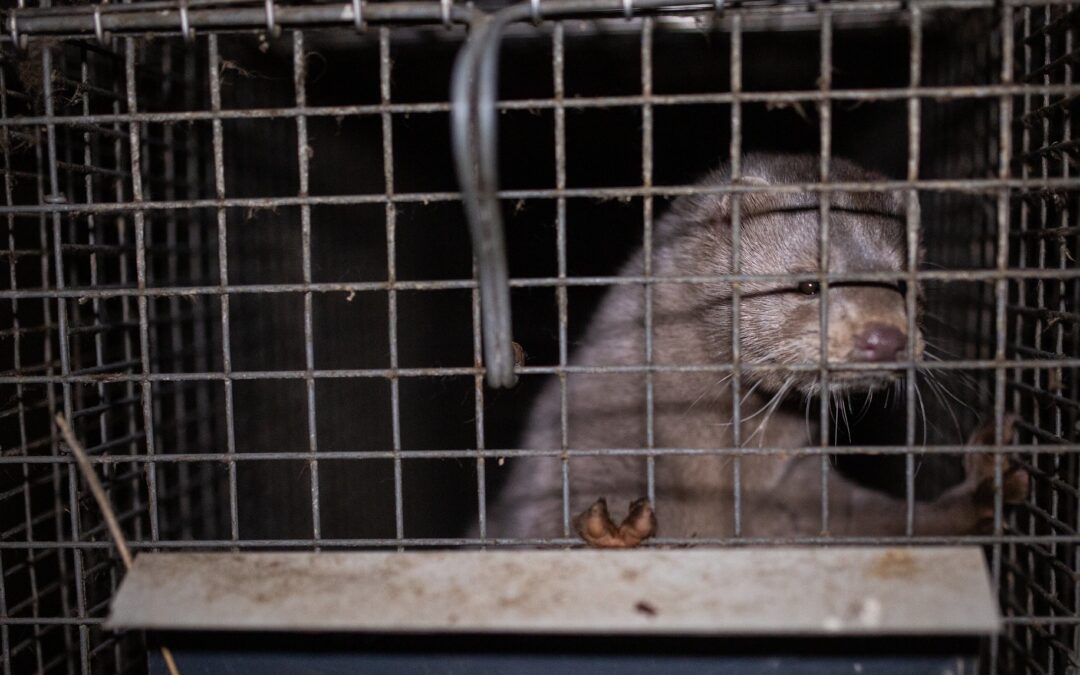
President Karol Nawrocki has signed into law a ban on fur farming in Poland, which is one of the world’s leading fur producers. However, at the same time, he vetoed a separate bill that would have prohibited keeping dogs on chains at home and introduced minimum kennel sizes.
The president argued that the latter bill was poorly drafted, imposing some rules that would harm rural residents, particularly farmers, and others that would have been impossible to enforce. He said that he would present his own alternative legislation to parliament.
Prezydent nie jest od podejmowania decyzji łatwych. Jest od podejmowania decyzji słusznych – Prezydent RP @NawrockiKn o swoich decyzjach dotyczących tzw. ustawy o hodowli zwierząt na futra i tzw. ustawy łańcuchowej. pic.twitter.com/dIWYE07Ci9
— Kancelaria Prezydenta RP (@prezydentpl) December 2, 2025
In September, parliament voted in favour of the bill to ban the keeping of dogs on chains at home. It also introduced requirements for the minimum size of kennels in which dogs can be kept, depending on the weight of the animal.
In October, parliament then approved the ban on fur farming, which sets an eight-year phase-out period and introduces a compensation scheme for breeders who close their businesses early.
Both bills were supported by the ruling coalition – which ranges from left to centre right – and opposed by the far-right Confederation (Konfederacja) party. Meanwhile, MPs from the main opposition party, the national-conservative Law and Justice (PiS), were split, with some in favour, others against, and many abstaining.
That raised questions as to whether Nawrocki, who was elected as president this year with the support of PiS, would sign the bills into law or veto them. On Tuesday evening, he announced his decision.
The president said that he had chosen to approve the fur-farming ban because it is supported by over two thirds of Poles, including rural residents, according to polls. “Their voice cannot be ignored,” said Nawrocki.
He added, however, that he had “listened carefully to farmers” when making his decision and noted that their “demands are included in the bill I signed today”, including the eight-year transition period and compensation payments.
In 2023, Poland was the largest producer of fox and mink furs in Europe and the second largest in the world, behind only China, though production has been falling. As well as opposition to fur in general, the industry has long faced accusations of mistreating animals.
Parliament has approved a ban on fur farming in Poland, which is the world's fourth-largest exporter of fur skins.
Three quarters of MPs were in favour of the bill, with the result of the vote drawing applause in the chamber https://t.co/BJC1BVP66B
— Notes from Poland 🇵🇱 (@notesfrompoland) October 18, 2025
On the other hand, Nawrocki said that he was vetoing the bill on leashing dogs because, “although the intention – protecting animals – is just and noble, the law itself was poorly drafted”.
In particular, the “proposed standards for dog kennels were completely unrealistic”, said Nawrocki. He noted that, for the largest dogs (weighing over 30 kg), the minimum kennel size is 20m². That is “the size of urban studio apartments”, said the president.
Introducing such requirements would in particular “harm farmers, breeders and ordinary rural households”, said Nawrocki. He also argued that, in practice, many of the measures would be “impossible to enforce”, declaring that “a dead law is worse than no law at all”.
Finally, the president said that the legislation encourages the “harmful stereotype that rural Poles mistreat animals” and declared that he “will not sign a bill that stigmatises rural Poland while failing to address any real problem”.
Poland’s parliament has voted in favour of a ban on dogs being kept on leashes at home.
The new measures also specify a minimum size for kennels that dogs can be kept in https://t.co/1p4wUuZPZu
— Notes from Poland 🇵🇱 (@notesfrompoland) September 26, 2025
However, Nawrocki added that, because animal welfare is an important issue to him, he will submit to parliament his own proposed legislation.
It “will allow dogs to be unleashed, will truly improve the lives of animals, but will not impose restrictive and unrealistic obligations on people to build kennels [of] several dozen square meters”, he pledged.
Since taking office in August, Nawrocki has vetoed an unprecedented number of government bills while also regularly submitting his own legislation to parliament. However, he has complained that the ruling coalition has regularly put his bills into the “parliamentary freezer”, failing to process them.
Ustawa łańcuchowa. Panie Prezydencie – ręce opadają. pic.twitter.com/l30Fqi4sH7
— Włodzimierz Czarzasty 📚📖 (@wlodekczarzasty) December 2, 2025
Figures from the ruling coalition condemned Nawrocki’s decision not to sign the dog-chaining bill. “This veto hurts the most those who cannot defend themselves. I’m speechless,” wrote government spokesman Adam Szłapka.
“Mr President, I feel like crying,” said Włodzimierz Czarzasty, the speaker of parliament. “You were supposed to free dogs from their chains, but in reality…you gave impunity to bad people who will continue to treat dogs badly.”
Meanwhile, Confederation politicians criticised the president’s decision to sign the fur-farm ban. “Unfortunately, President Karol Nawrocki, under the diktat of the radical left, agreed to the destruction of another branch of Polish agriculture,” wrote Sławomir Mentzen, one of the group’s leaders.
However, Humane World for Animals, an NGO, welcomed Nawrocki’s decision as “an historic moment for animal protection in Poland that will end the suffering and death of millions of animals kept on fur farms”.
Secret filming at Poland's biggest fur farm has revealed evidence of alleged abuse
The footage was quickly followed by a proposal from the ruling party to ban fur farming, as most EU countries have done. Poland's fur industry is one of the world's biggest https://t.co/jMfwWPR8Bz
— Notes from Poland 🇵🇱 (@notesfrompoland) September 8, 2020
Notes from Poland is run by a small editorial team and published by an independent, non-profit foundation that is funded through donations from our readers. We cannot do what we do without your support.
Main image credit: Otwarte Klatki (under CC BY 2.0)

Daniel Tilles is editor-in-chief of Notes from Poland. He has written on Polish affairs for a wide range of publications, including Foreign Policy, POLITICO Europe, EUobserver and Dziennik Gazeta Prawna.