Keep our news free from ads and paywalls by making a donation to support our work!

Notes from Poland is run by a small editorial team and is published by an independent, non-profit foundation that is funded through donations from our readers. We cannot do what we do without your support.
By Olivier Sorgho
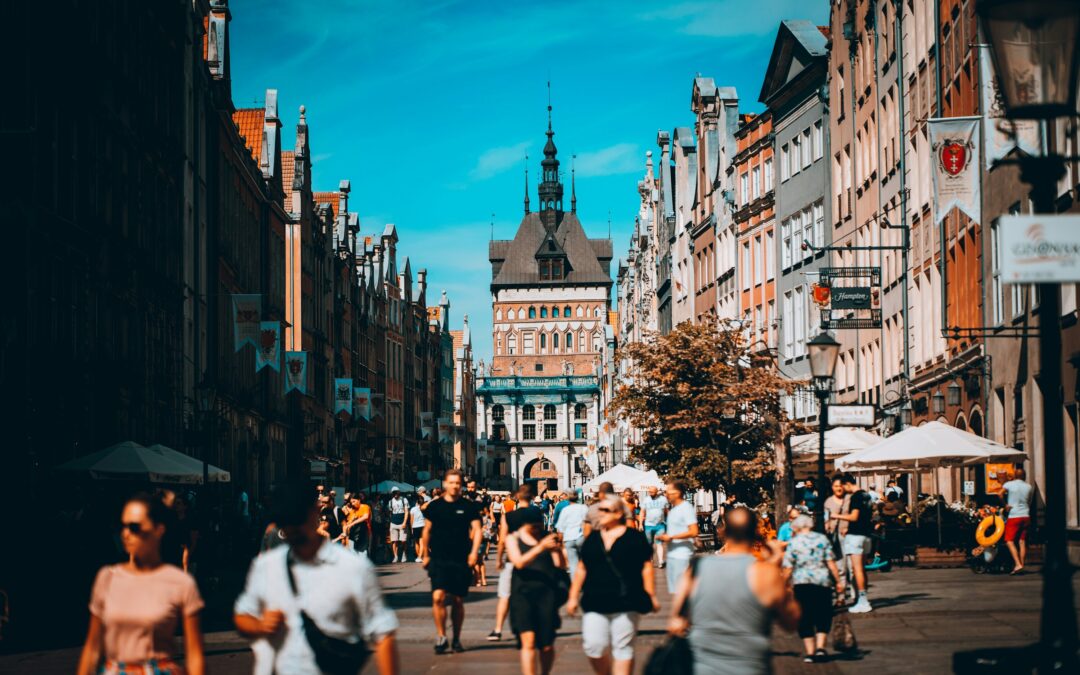
With its history-laden cities, array of natural landscapes – from beaches in the north to mountains in the south – and a growing culinary scene, Poland is in a strong position to attract tourists from all over the world.
Yet the tourism sector accounted for only 4% of the country’s GDP last year, well below the EU-wide figure of more than 10%, according to the World Travel and Tourism Council.
“Poland still lacks a strong, international brand, as the Czechs have through Prague, for example,” says Adam Karpiński, an economist and tourism expert from WSB Merito University in Wrocław. Poland ranks only 32nd globally in Bloom Consulting’s country brand ranking for tourism.
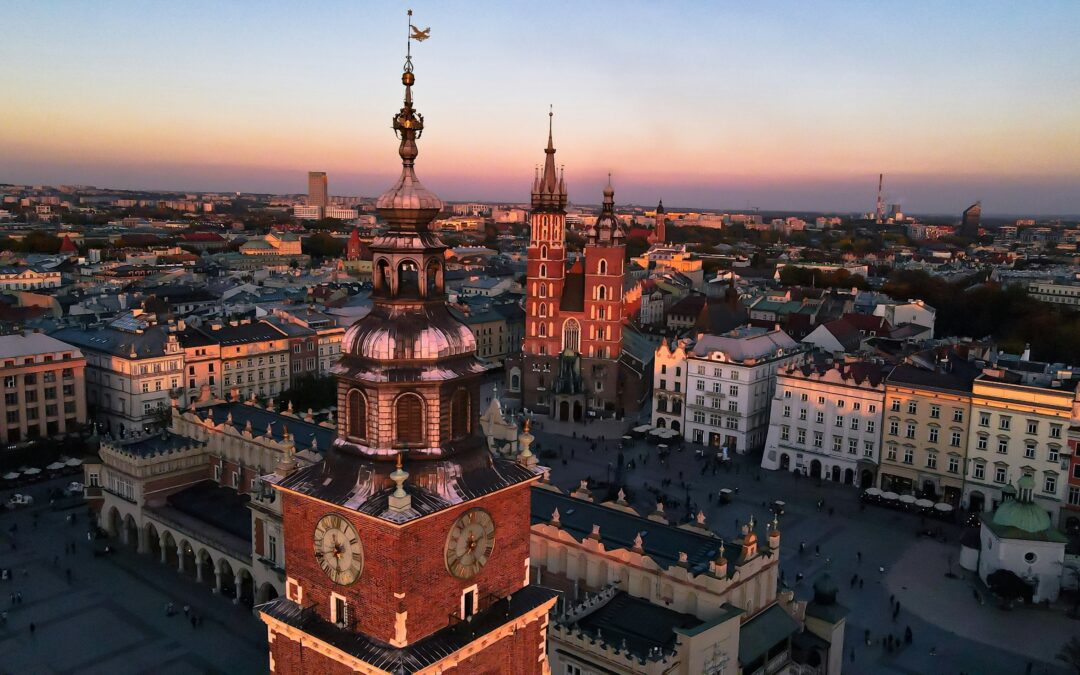
Kraków has been named Europe's best city break destination by members of @WhichUK.
The city's food and drink was rated as better than in Paris and Rome, while it also scored top marks for accommodation, ease of getting around and value for money https://t.co/U1P1QkQCm4
— Notes from Poland 🇵🇱 (@notesfrompoland) September 19, 2025
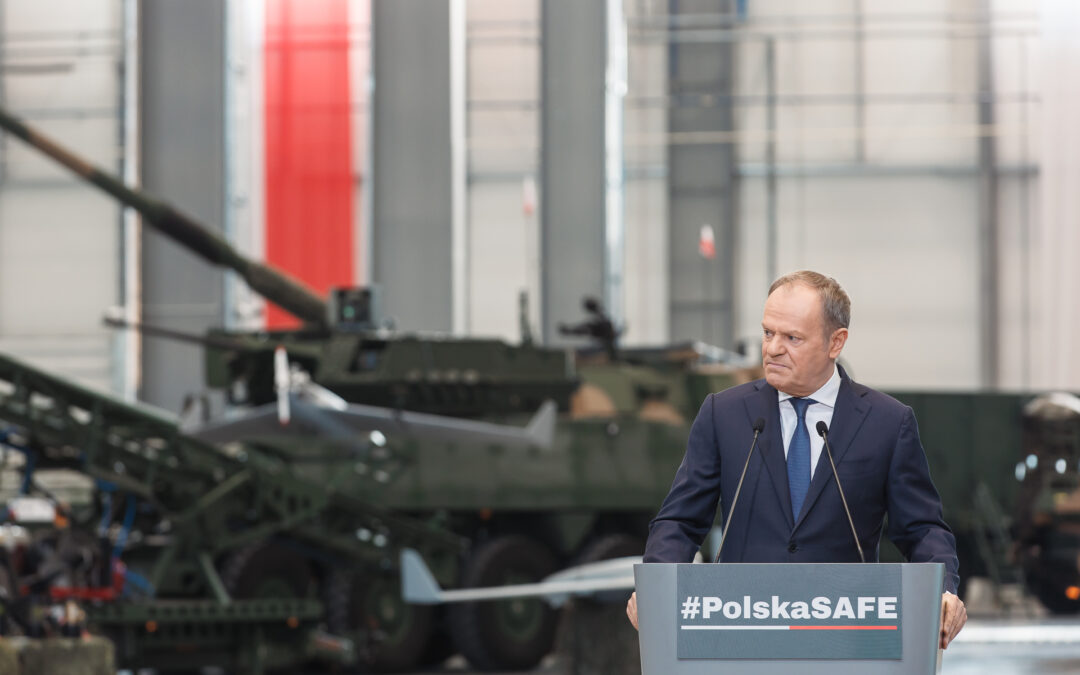
Recent trends, however, point to the prospect of a tourism boom in Poland. “The next 20 years could be the golden age of Polish tourism if we continue to act, and capitalise on the potential we already have,” deputy sport and tourism minister Ireneusz Raś tells Notes from Poland.
His ministry in September announced that it wants tourism to contribute 9% of GDP within a decade, and for Poland to become a leader in the sector in central and eastern Europe.
Investments in infrastructure and staff training, the introduction of tourism fees to raise funds for promotion, and the establishment of modern digital tools such as national trail maps will help achieve that goal, Raś explains. In this year’s state budget, 123.5 million zloty (€29.2 million) has been earmarked for tourism funding, up from nearly 115 million in 2024.
Next year, the government will also unveil a comprehensive strategy for Polish tourism, after hearing recommendations from businesses, regional authorities, and industry associations. The document will include 16 regional sub-strategies and 12 thematic plans covering areas such as cultural, nature-based and business tourism.
Cities and resorts thrive, challenges remain in the east
A record 40.8 million tourists stayed in registered accommodation facilities across Poland last year, up 11.8% compared to the pre-pandemic year of 2019, according to Statistics Poland (GUS), a state agency. One fifth of guests were foreigners, mainly from Germany, Ukraine, the United Kingdom, the United States and the Czech Republic.
Czechs are increasingly picking Polish seaside resorts over holidays in Croatia, lured by lower prices, while growing numbers of Japanese and Korean tourists are also arriving, alongside increasing economic links between their countries and Poland.
High-spending visitors from the Middle East, meanwhile, are flocking to the mountain resort of Zakopane, where many restaurants now offer Arabic-language menus with halal options.
“Tourists from Arab countries will likely increase in number,” says Karpiński. “Regions such as Lower Silesia and Pomerania are only beginning to attract them. Some tourist-oriented municipalities are even hiring influencers for that purpose”.
Signs in Arabic, created with the help of AI, have appeared around the Polish mountain resort town of Zakopane as local businesses welcome a record number of Arab tourists this year https://t.co/5dX1ZDUfos
— Notes from Poland 🇵🇱 (@notesfrompoland) June 3, 2024
Visits remain largely concentrated in the Masovia, Małopolska, Lower Silesia, and Pomerania regions, home to the cities of Warsaw, Kraków, Wrocław, and Gdańsk.
These provinces drew over half of all tourists and 66% of foreign visitors last year, helped by their natural attractions and historically symbolic sites. For example, the Auschwitz Museum in Oświęcim, Małopolska, is visited by around 2 million people annually.
Eastern regions have meanwhile struggled to attract foreign visitors due to lower exposure, inadequate infrastructure, and security concerns over the war in neighbouring Ukraine and the migration and security crisis on the Belarus border.
The Podlaskie region, home to Białowieża, Europe’s oldest remaining primeval forest, saw a rebound in visitor numbers in the first half of 2025, but that was mostly driven by Poles who spent cash through a government tourism voucher to encourage visits to the region.
The Polish province of Podlaskie, which borders Belarus, has launched a programme offering accommodation vouchers to tourists who visit the region, which has been hit by the ongoing migration and security crisis in eastern Poland.https://t.co/t8gugDcBut
— Notes from Poland 🇵🇱 (@notesfrompoland) March 25, 2025
Raś notes that an extra 10 million zloty is planned in next year’s tourism budget “for actions aimed at offsetting perceptions of eastern Poland being under threat due to the war in Ukraine”.
Boosting travel through infrastructure
Infrastructure development is improving Poland’s accessibility and tourism competitiveness against its neighbours. The Gołębiewski Group, the third-largest Polish hotel operator, will soon open what is expected to be the largest hotel on the entire Baltic coast. Competitors in Germany worry about losing clients and staff.
“Poland has very modern hotels and resorts, many of which were recently built or renovated. A growing number of staff in the hospitality sector speak multiple languages and are taught to understand cultural differences,” Karpiński says.
Airports in Poland served a record 59.2 million passengers in 2024, up by 20.8% compared to 2019. A new “mega airport” and transport hub in central Poland, intended to open in 2032, is expected to further boost travel.
In October, Poland’s national train operator PKP announced the opening of new direct cross-border connections with Munich, Vienna, Salzburg, Prague, Bratislava, and Budapest. The Baltic Express train, already running from Prague to Gdynia, has facilitated travel for Czechs, as have new roads.
Poland’s network of high-speed roads has grown from just 720 kilometres 20 years ago to 5,205 kilometres by the end of last year.
Grzegorz Przybyła, director of Szczyrk Mountain Resort in Silesia, says that, before the coronavirus pandemic, the number of foreign guests at the skiing and biking complex was minimal. But Czechs now make up around 9% of winter visitors.
“The new highways and express roads that now run from Brno in the Czech Republic, through Bielsko-Biała in Poland, and almost directly to Szczyrk, have helped us significantly.”
Promoting cultural assets
While investments in infrastructure are boosting Poland’s accessibility, a wave of new and revived cultural products and attractions are making the country more appealing to visitors.
The newly opened Museum of Modern Art in Warsaw helped Polish museums register their highest-ever visitor numbers last year.
The new Museum of Modern Art in Warsaw has topped a ranking by @lonelyplanet of the best museum openings and reopenings in the world this year.
It came ahead of the Yale Center for British Art in New Haven and the Frick Collection in New York https://t.co/av97z7kbSw
— Notes from Poland 🇵🇱 (@notesfrompoland) February 5, 2025
But beyond well-established cultural attractions, one area with still untapped potential is culinary tourism, experts say.
“Wine tourism is emerging. Connoisseurs are beginning to recognise the potential of Polish winemakers, and even locally produced hard cheeses,” says Karpiński. As of September 2025, there were 324 registered wine producers in Poland, compared with just 20 such entrepreneurs in 2010.
Gniewko Drewnicki, brewmaster at Piwnica Świdnicka – a Wrocław restaurant that bills itself as the oldest in Europe – makes a case for fostering Lower Silesia’s beermaking and culinary traditions. In 2022, the restaurant began brewing its own beer on-site.
“By uncovering original recipes and consulting historical sources, we aim to replicate the taste of two historic craft beers that were served here around 400 years ago,” he explains.
The number of restaurants in Poland recommended by Michelin has risen by 40% this year, with the city of Wrocław included in its prestigious guide for the first time.
Meanwhile, the number of restaurants awarded Michelin stars has risen from six to seven. https://t.co/ZoqoPw8ZQS
— Notes from Poland 🇵🇱 (@notesfrompoland) June 11, 2025
Around half of the restaurant’s guests are foreigners, many arriving from distant countries such as New Zealand and Argentina, he adds. “They often expect to try fresh, locally sourced products typical of Lower Silesia, such as craft cheeses and local hams.”
Unlocking the potential of sports and nature
Daniel Wojtas, a tourism entrepreneur in the Bieszczady mountains, points to another area where businesses are cooperating with the government to boost tourism in areas that require more investment to unlock their potential.
He has helped craft a strategy for several local municipalities to each apply for up to 30 million zloty (€7.1 million) of EU funds from regional authorities. Their project aims to develop existing biking infrastructure and build new trails, including ones that will eventually cross into neighbouring Slovakia and Ukraine.
“For the first time, municipalities can obtain funds specifically for tourism projects, rather than just for broader infrastructure like roads or sewage systems,” he says, adding that he believes the project could double the number of tourists in the area.
He also discusses Bieszczady’s promise in areas like geothermal pools and trail skiing, adding that the region is home to one of two dark-sky preserves in Poland.
A former 19th century railway bridge between Poland and Germany has been reopened as a bike and foot path.
Officials on both sides of the border hope it can act a symbol of reconciliation between the two countries, as well as boosting local tourism https://t.co/zhJu8AobiR
— Notes from Poland 🇵🇱 (@notesfrompoland) June 29, 2021
Wojtas’s enthusiasm for nature is shared by Aleksandra Klonowska-Szałek, co-founder of Slowhop, an online platform connecting travellers with hosts that offer agrotourism stays and guesthouses, typically in rural areas.
While the business has grown from managing 50 accommodation facilities in 2017 to more than 2,000 today, it has also witnessed a shift in consumer expectations around sustainable travel, she says.
“Initially, our clients were eager to meet their hosts directly, to interact with them, and hear their stories. After the pandemic, they, especially the young, prefer to avoid contact. The popularity of agrotourism is therefore declining, while separate guesthouses are growing rapidly,” she explains, adding that there is also a boom in tourism related to bodily regeneration and rest.
Overtourism and climate change
“Poland has yet to fulfil its enormous potential in nature-driven, sustainable tourism, whereas mass tourism has done a lot of harm,” Klonowska-Szałek continues. The Gołębiewski hotel in Pobierowo required the cutting down of around 1,500 trees. Some residents fear its scope and gated layout will stop guests from spending locally.
Studies show that overtourism in cities not only drives up housing costs for locals but also harms the environment.
The sport and tourism ministry is preparing legislation to regulate the short-term rental market, including through mandatory registrations for apartments listed on platforms like Airbnb and Booking.com, and possible bans on the practice in certain areas.
Kraków has appointed a “night mayor” who will be responsible for reconciling the needs of residents, business owners and tourists.
The city is Poland's biggest tourist attraction, which is a boon to the local economy but causes tension with residents https://t.co/SlPGBzY8oE
— Notes from Poland 🇵🇱 (@notesfrompoland) July 17, 2024
Government programmes encourage travel to less popular regions and, in the case of traffic-heavy areas, during off-peak periods, Raś says.
Klonowska-Szałek instead promotes the idea of regenerative tourism, saying that new accommodation sites in some rural areas have led to the emergence of entrepreneurial communities that are helping villages thrive without damaging their environment.
Climate change is already leaving its mark on the Polish tourism sector. The 2024 floods led to a decrease in visitors in the most affected Kłodzko Valley, while southern skiing resorts are beginning to adjust their strategies in response to shorter winters.
“We no longer call them skiing resorts but mountain resorts. Ski resorts in Poland used to operate without artificial snow systems, but now there is simply less natural snowfall,” Przybyła says, adding that, while 80% of the firm’s revenue still comes from winter visits, the resort is diversifying towards more summer activities.
Yet climate change could also boost Polish tourism in some ways. Media outlets have identified the “coolcation” trend, whereby tourists pick cooler destinations in northern Europe rather than the sweltering south. In 2023, travel giant TUI named Poland as among the countries that will benefit from this.
Poland will be among the countries to see a rise in summer tourism as climate change pushes holidaymakers north, predicts travel giant TUI, which plans to increase investment there
Poland has 770km (480 miles) of coast, much of it made up of sandy beaches https://t.co/wBvyPvkVPC
— Notes from Poland 🇵🇱 (@notesfrompoland) August 10, 2023
Historic and sensitive sites also need to be protected from overtourism. Earlier this year, the Auschwitz Museum announced new restrictions on entry amid a surge in visitor numbers.
“We do not engage in promotion, but in education and commemoration of the victims,” says the museum’s deputy spokesperson, Paweł Sawicki.
Likewise, some natural areas require special care. “Promoting mass tourism in undiscovered places is difficult. But maybe that is a good thing, because if we want to engage in sustainable tourism, it is worth having a few relatively uncut gems up our sleeves,” says Karpiński.
Notes from Poland is run by a small editorial team and published by an independent, non-profit foundation that is funded through donations from our readers. We cannot do what we do without your support.
Main image credit:Szymon Shields/Unsplash