Keep our news free from ads and paywalls by making a donation to support our work!

Notes from Poland is run by a small editorial team and is published by an independent, non-profit foundation that is funded through donations from our readers. We cannot do what we do without your support.
By Daniel Tilles
Two incidents this month have highlighted how state-led efforts to promote Poland abroad often disappoint. Yet, at the same time, the country has never had better international press. Politicians should let Poland’s successes speak for themselves, and support those already telling its story.
Poles care a lot about what the world thinks of their country. Major Polish media outlets regularly devote entire articles to what Western journalists, commentators and influencers are saying about Poland.
“A German showed what he saw on the streets of Poland,” read one typical recent headline by Onet, Poland’s biggest news website, which devoted an entire report to one video by a German-speaking TikToker with around 7,000 followers. One rarely sees such reports in more self-confident Western countries.
Given Poland’s history, such sensitivity regarding the country’s status is not surprising.
Poland was, up until the 18th century, a major European country. But, for most of the last 250 years, it has been under foreign subjugation. Only since 1989 has it been able to develop independently, and Poles are understandably keen for the world to take note of their return to the top table.
Poland has emerged as Europe’s undisputed growth champion over the past 35 years.
In the first part of a new series of articles and podcasts, @AlicjaPtak4 explores the reasons behind Poland's rapid economic development, and the dangers that may lie ahead https://t.co/bW3bnV7Ozn
— Notes from Poland 🇵🇱 (@notesfrompoland) July 7, 2025
Polish politicians are also inevitably eager to capitalise on such sentiment by showing voters that they are making an effort to promote Poland abroad. The problem is that such efforts are often poorly conceived and executed – as two examples this month have shown.
In mid-August, the sport and tourism ministry launched a new advertising campaign intended to attract visitors from western Europe and the United States.
However, the first advert – featuring Polish football star Robert Lewandowski, supermodel Anja Rubik, Hollywood filmmaker Jesse Eisenberg, and actor Nikodem Rozbicki playing Fryderyk Chopin – was widely panned in Poland. Res Futura, an organisation that monitors social media sentiment, found that 85% of comments about the advert were negative.
The campaign’s slogan – “Poland. More than you expected” – is negative and lacking confidence. The Polish Tourism Organisation says it is based on research showing that visitors to Poland are often positively surprised by how nice it is. Yet, while that is undoubtedly true, it does not mean it is a good idea to try to attract potential tourists by focusing on their low expectations.
Poland has launched a new advertising campaign to attract tourists from Europe and the US.
The first video, under the slogan "Poland. More than you expected", features footballer Robert Lewandowski, Hollywood star Jesse Eisenberg and supermodel Anja Rubik https://t.co/3jtqyUWQyy
— Notes from Poland 🇵🇱 (@notesfrompoland) August 19, 2026
The video also has no narrative, with the creators seeming to think that showing famous faces will be enough. Rubik does not speak a single word, while Eisenberg says only “Poland” and Lewandowski “More than you expected”.
The film itself does nothing to show that Poland is more than anyone expects. In fact, its depressingly colourless palette and focus on Warsaw’s Stalinist Palace of Science and Culture actually reinforce (false) stereotypes of Poland as grey, dull and post-communist. The country has so many interesting and colourful places that could have been showcased instead.
The advert is also a wasted opportunity to tell a story about the film’s stars, especially Eisenberg, who has reconnected with his family’s Polish roots, produced a critically acclaimed movie set in Poland, and last year obtained citizenship.
Instead, Chopin dominates the film, but his dialogue is incoherent. When he says, “Warsaw is where my heart is”, almost no potential visitors would understand that this is a reference to the real Chopin’s heart being transported from Paris, where he died, to Warsaw, where it is now entombed in a church.
Not long after that advert launched, another controversy emerged around a state official, Barbara Mróz-Gorgoń, who had been appointed only weeks earlier by the government to lead the promotion of Poland.
It quickly transpired that a report she had authored last year on creating a national brand – and which appeared to have played a big part in her getting the new job – contained significant errors, questionable methodology, and bizarre language. Many parts showed signs of being AI-generated.
Mróz-Gorgoń, who has now resigned, insists that the report was the genuine product of work by her and her team at Marka Polska (Brand Poland), a think tank she leads. However, that is not particularly reassuring given the report’s content.
Many parts are simply obvious: at the end of the 26-page text, the three recommendations for the government are to “develop a coherent, long-term national branding strategy”, “invest in promotional campaigns in key markets”, and “coordinate between ministries and other entities”. Other sections are very strange, such as noting that “Germany does not build its brand on the Holocaust”.
But perhaps the most telling aspect is that, although the introduction claims it is “a comprehensive report on building…a coherent, long-term branding strategy in the international arena”, the document focuses entirely on how Poles themselves view their own country (its title is even A Self-Portrait of the Poles).
It includes no research into what foreigners know or think about Poland and what could interest or attract them. While any national branding exercise should of course take account of the views of the native population, it is clearly incomplete without research into the target of such a campaign, the outside world.
Yet that is sadly typical of many state-led efforts to promote Poland, which focus more on pleasing a domestic audience – the voters that politicians want to keep happy – than on being truly outward looking.
A government official appointed last month to promote Poland's brand abroad has been hit by a wave of criticism after it emerged that she authored a report containing major errors, bizarre language, and signs of being generated by AI https://t.co/9fpfzFCFuI
— Notes from Poland 🇵🇱 (@notesfrompoland) August 21, 2026
It should be noted that such failings are nothing new. Successive governments have been responsible for botched efforts to promote Poland.
The uninspiring slogan “Poland. More than you expected” has been used since 2021. A previous one, “Polska. Spring Into”, launched in 2014, was simply bizarre and quickly disappeared.
In 2016, the former Law and Justice (PiS) government established the Polish National Foundation (PFN), which was pumped full of money from state-owned companies and tasked with promoting Poland abroad.
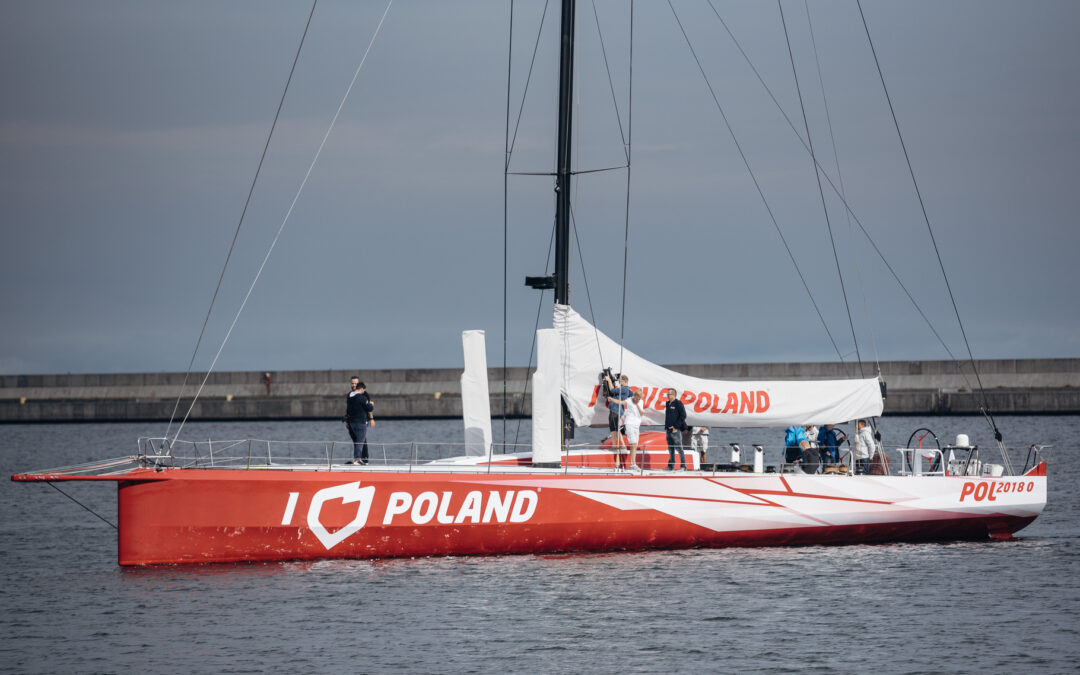
Instead, it focused much of its efforts on domestic activity, often intended to support PiS’s political agenda. The work it did do internationally was often of questionable efficacy, such as spending millions on buying a yacht, naming it “I Love Poland”, then attempting to sail it around the world (before it ended up breaking down and getting stuck in port).
A senior official under the former PiS government has been charged over alleged misspending of funds.
The case relates to a campaign in 2017 that used money meant for promoting Poland abroad to instead advertise PiS's judicial reforms domestically https://t.co/tH64Bekhec
— Notes from Poland 🇵🇱 (@notesfrompoland) July 15, 2026
Yet, despite woeful state-led efforts to promote Poland abroad, the country has in recent times been enjoying a soaring international reputation.
Western media have been full of articles about the country’s economic success; about how not only are Polish emigrants returning from the UK, but many Brits are moving to Poland too; about how Poles are becoming major buyers of property in Spain; about how companies with roots in Poland, such as InPost and ElevenLabs, are pioneering their industries.
Social media feeds are full of influencers extoling Polish cities, with their safe, clean streets; the beauty of Polish nature, with its mountains, lakes and beaches; and the sense of dynamic development that you can feel as soon as you set foot in the country.
Last weekend,@thetimes reported on how Brits are moving to Poland.
This weekend, on how Poles are replacing Brits as property owners in Spain. pic.twitter.com/IDDdDlluTE
— Daniel Tilles (@danieltilles1) June 21, 2026
This positive publicity is largely organic – it is the product of Poland’s own actual successes, not of artificial efforts to create an image of success. It is generated from the bottom up, not from the top down.
While the state can play a role – for example, by arranging visits for foreign journalists and influencers and supporting media and institutions that are already telling Poland’s story – it would be better for politicians to focus on creating the conditions for those successes, rather than concocting cockeyed schemes to promote them.
Notes from Poland is run by a small editorial team and published by an independent, non-profit foundation that is funded through donations from our readers. We cannot do what we do without your support.
Main image credit: Bartosz Banka / Agencja Wyborcza.pl

Daniel Tilles is editor-in-chief of Notes from Poland. He has written on Polish affairs for a wide range of publications, including Foreign Policy, POLITICO Europe, EUobserver and Dziennik Gazeta Prawna.