Keep our news free from ads and paywalls by making a donation to support our work!

Notes from Poland is run by a small editorial team and is published by an independent, non-profit foundation that is funded through donations from our readers. We cannot do what we do without your support.
A government official appointed last month to promote Poland abroad has been hit by a wave of criticism after it emerged that she authored a report containing errors and which shows signs of being generated by artificial intelligence.
The document mislocated major Polish cities and included bizarre language mixing Polish and English. It was marked as being part of a project financed by the sport and tourism ministry, though the ministry itself has denied that claim. The opposition has called on prosecutors to investigate potential misuse of public funds.
⁉️ Czy “Markę Polska” ma nam wygenerować sztuczna inteligencja?
⁉️ Czy Ministerstwo Sportu i Turystyki zapłaciło 200 000 złotych w ramach zadania publicznego za raport wygenerowany przez AI?
⁉️ Czy mogę prosić Panią Minister prof. @b_mroz_gorgon o odniesienie się do tych pytań… pic.twitter.com/lM2AY88oAh
— Sebastian Meitz (@MeitzPL) August 20, 2026
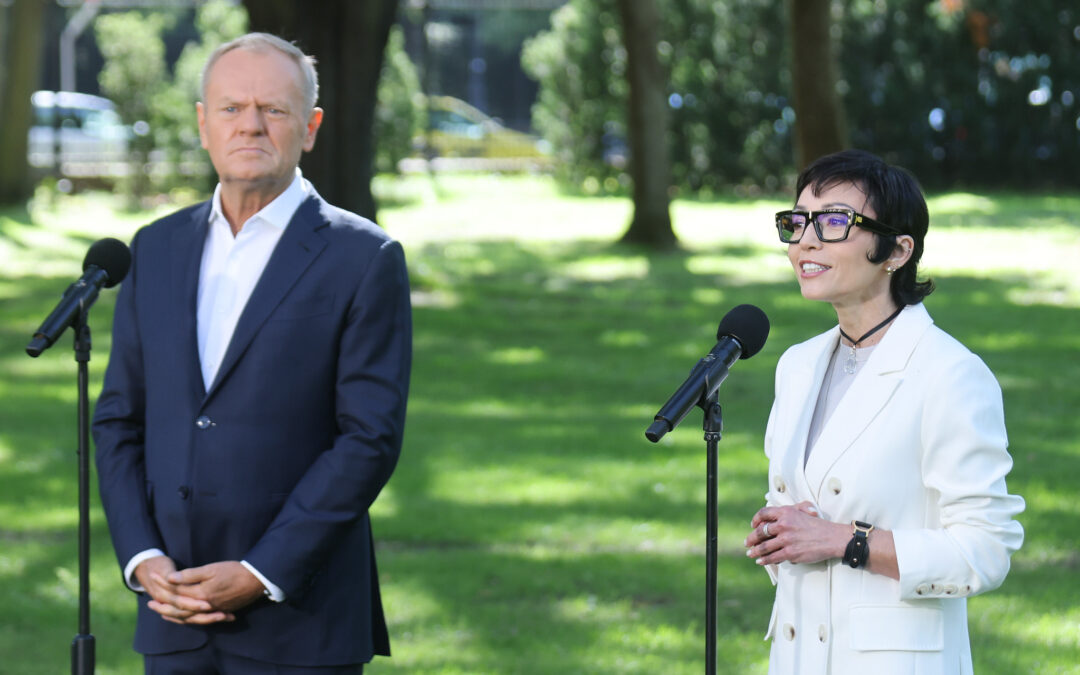
The official in question, Barbara Mróz-Gorgoń, is a professor at Wrocław University of Economics who was appointed three weeks ago as the government’s plenipotentiary for the promotion of Poland’s brand, a newly created position. She was presented at a press conference by Prime Minister Donald Tusk.
However, this week, journalists and commentators began highlighting cases of bizarre errors from a report, titled A Self-Portrait of the Poles (Polaków Portret Własny), published last year with Mróz-Gorgoń named as the author, in her position as president of a think tank called Marka Polska (Brand Poland).
The report contained some glaring errors, such as describing the city of Katowice as being in “north central” Poland (whereas in fact it is in the south) and Wrocław as being in the “northwest” (when it is actually in the southwest).
Geografia – czyli gdzie leżą Katowice
A propos miast jest też ciekawy chochlik lub też, jakby to powiedział ktoś złośliwy, klasyczna halucynacja AI.
Przy opisie badań FGI miasta opisane są w następujący sposób (zdjęcie poniżej):
👉 Olsztyn – północny wschód
👉 Szczecin -… pic.twitter.com/SF6XBRfhWS— Sebastian Meitz (@MeitzPL) August 20, 2026
Other parts contain strange analysis, such as noting that “after World War Two, Germany did not build its brand on the Holocaust”.
The text also features unusual language, including random use of words in English, some of which have been turned into Polish ones. It is also regularly features words written in capital letters.
One sentence, for example, refers to “INSTABILNOŚĆ” and “REZILIENCE”, presumably meaning “instability” and “resilience”, but neither of which is a Polish word.
Another section claims that 95% of Poles born after 1990 are “polilingwalni” (an invented Polonised version of “polylingual”) who speak “angielski fluent”, a strange linguistic mix that means they speak English fluently.
As well as the unusual language, the very claim that 95% of young Poles speak fluent English, as well as that many additionally speak Mandarin, has been questioned by many commentators.
The report also contains bizarre errors in footnotes, which are numbered randomly (on one page, three consecutive footnotes are numbered “41, 517, 6”) and some of which are completely empty.
A number of expert commentators have suggested that the text contains clear indications that it was generated by AI, a claim supported by evidence from programmes that check texts for AI-generated content.
AI czy nie AI, oto jest pytanie
Czytając ten raport kilkukrotnie, trudno mi było pozbyć się wrażenia, że nikt poważny, a szczególnie naukowiec z tytułem doktora habilitowanego, nie wygenerowałby dużych części raportu, za który zapłacili podatnicy, w jakimś LLM.
No bo przecież… pic.twitter.com/jyTexgmeXS
— Sebastian Meitz (@MeitzPL) August 20, 2026
As well as bearing Mróz-Gorgoń’s name as author, the report also features on its front cover the logo of the sport and tourism ministry. The first page then includes a note saying that the project was carried out under an initiative co-financed by the ministry.
After the issue began to draw attention and criticism on Thursday, the ministry issued a statement saying that the report was not ordered by them, was not part of any agreement to which the ministry was a party, and that no request to use the ministry’s logo was submitted.
However, a social media post last November by deputy sport and tourism minister Piotr Borys shows him attending an event to present the report. He thanked Mróz-Gorgoń for coordinating the project and inviting him to the presentation.
📚W Akademii Leona Koźmińskiego odbyła się prezentacja raportu „Polaków Portret Własny”, przygotowanego Think Tank Marka Polska. To wyjątkowe wydarzenie poświęcone premierze badań dotyczących DNA Marki Polska.
🧬To pierwsze tak kompleksowe badanie, które pokazuje, kim jesteśmy… pic.twitter.com/jb7KdCJTPM
— Piotr Borys (@piotr_borys) November 26, 2025
On Thursday evening, Mróz-Gorgoń herself addressed the controversy in an interview with Polsat News. She said that the report was actually a “work in progress” that “should never have appeared in the public space”.
However, she still defended the work, saying that “the research was conducted reliably” and “the conclusions stand up to scrutiny”. But she also admitted that the writing of the report had been “aided by artificial intelligence”.
In separate remarks to the Polish Press Agency (PAP), she said that “we used AI tools solely for transcription, summarising and text editing; they did not design research content or draw conclusions…We worked according to social science methodology, diligently and without cutting corners”.
Meanwhile, on the Marka Polska think tank’s website, where the report had been published, it was initially changed on Thursday to being marked as a “draft version” before later being deleted entirely.
Od raportu i deklaracji, że “praca badawcza [została] przeprowadzona zgodnie z zasadami nauk społecznych, rzetelnie i merytorycznie, w oparciu o opisaną metodologię”, przez “work in progress”, aż do “Oops! That page can’t be found”.
Myślę, że to słowo “Oops!” jest najlepszym… pic.twitter.com/OaSTxkwKwa
— Sebastian Meitz (@MeitzPL) August 20, 2026
On Thursday evening, the main opposition party, Law and Justice (PiS), announced that it was submitting requests to both prosecutors and the Central Anti-Corruption Bureau (ABW) to investigate the use of around 200,000 zloty (€46,380) in state funds for the project that the report was allegedly part of.
PiS has also called on Mróz-Gorgoń to resign or to be fired. On Friday, a deputy digital affairs minister, Dariusz Standerski, told the Wirtualna Polska news website that “all the circumstances surrounding the creation of this report will be clarified”.
The controversy around Mróz-Gorgoń comes just days after the sport and tourism ministry was involved in the launch of a new advertising campaign designed to encourage tourism to Poland, but which many commentators have argued was poorly conceived and executed.
Poland has launched a new advertising campaign to attract tourists from Europe and the US.
The first video, under the slogan "Poland. More than you expected", features footballer Robert Lewandowski, Hollywood star Jesse Eisenberg and supermodel Anja Rubik https://t.co/3jtqyUWQyy
— Notes from Poland 🇵🇱 (@notesfrompoland) August 19, 2026
Notes from Poland is run by a small editorial team and published by an independent, non-profit foundation that is funded through donations from our readers. We cannot do what we do without your support.
Main image credit: KPRM/Flickr (under CC BY-NC-ND 4.0)

Daniel Tilles is editor-in-chief of Notes from Poland. He has written on Polish affairs for a wide range of publications, including Foreign Policy, POLITICO Europe, EUobserver and Dziennik Gazeta Prawna.