Keep our news free from ads and paywalls by making a donation to support our work!

Notes from Poland is run by a small editorial team and is published by an independent, non-profit foundation that is funded through donations from our readers. We cannot do what we do without your support.
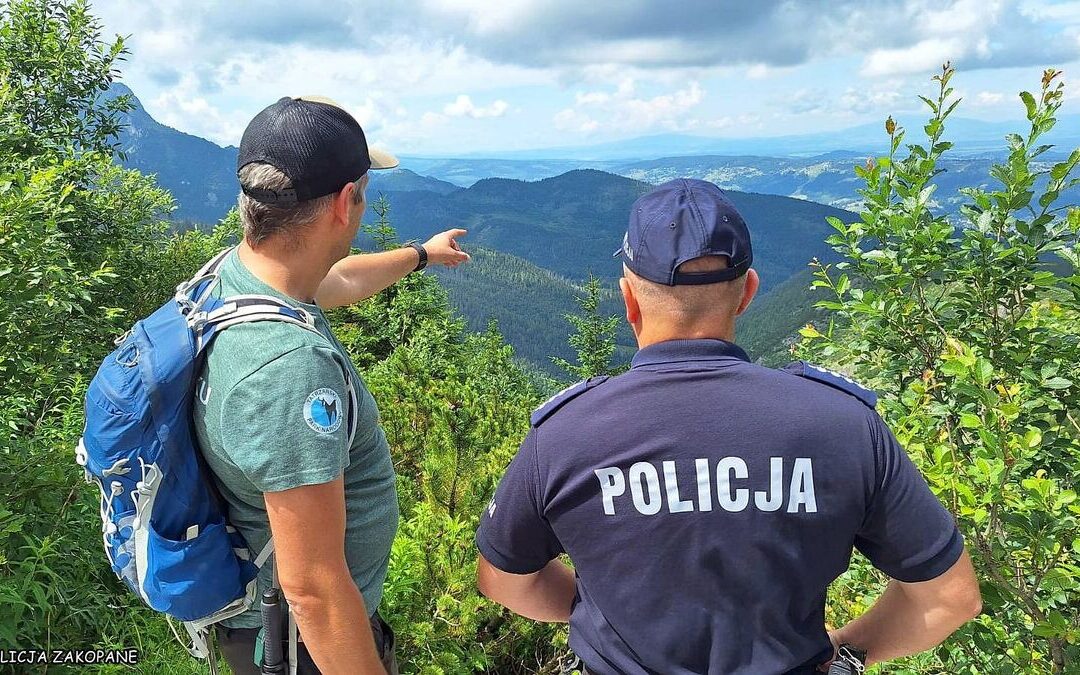
Police officers and rangers have stepped up joint patrols in Poland’s mountainous Tatra National Park during the peak summer season, following a spate of rule-breaking including swimming in the park’s lakes and ponds, driving cars and going off marked trails.
Meanwhile, national park authorities have repeated warnings that bathing, littering and breaking other rules can damage the park’s fragile ecosystem.
Local police officers have joined Tatra National Park rangers on patrols on popular tourist routes. On one such patrol last week, officers focused on education and prevention, reminding visitors not to leave marked trails or litter and explaining how to behave safely and responsibly in the mountains.
They also checked that organised groups were accompanied by qualified mountain guides, as required by law. Fines for such offences range from 50 zloty (€11.55) to as much as 1,000 zloty (€231) in the event of environmental damage or multiple offences.
Police said that all visitors encountered during the patrol were complying with the park’s regulations. However, they added that similar patrols would continue on a regular basis.
The Tatra National Park, home to Poland’s highest peaks, and the nearby mountain resort of Zakopane are among the country’s most popular holiday destinations, with crowds taking to park trails in the summer season.
The park, the most visited of Poland’s 23 national parks, welcomed a record 5.3 million visitors in 2025 and offers 275 km of marked hiking trails, including high-altitude routes that connect at several points with the adjacent national park in Slovakia.
🚨 Ukraiński Influencer wjechał nielegalnie samochodem na Morskie oko
🗣️: Jesteśmy pierwszymi ludźmi w historii, którzy wjechali samochodem nad Morskie Oko. To było jedno z miejsc, do których chcieliśmy dotrzeć podczas tej podróży i wszyscy znajomi oraz przyjaciele mówili, że… pic.twitter.com/tA9shZ6Rqk
— Pigułka 💊 (@informacyjnie) May 23, 2026
This season has already seen a number of high-profile cases of transgressions of the park’s strict rules. In May, a Ukrainian social media influencer sparked outrage after driving a sports car along a road closed to traffic to Morskie Oko, a picturesque lake nestled between the mountains.
As a result, he was banned from entering Poland and other Schengen Area countries for five years.
Tourists have also been filmed entering Morskie Oko and other protected lakes and ponds, which is not permitted in the national park. This month, a group of young Dutch tourists were filmed bathing in Przedni Staw Polski in the Valley of the Five Lakes, one of the Tatras’ best-known hiking destinations.
Witnesses repeatedly warned the group that entering the lake was prohibited, but they ignored the warnings, reports Gazeta Wyborcza. Park authorities have responded to such incidents by reminding visitors of the reasons for the strict rules.
“Tatra ponds are incredibly delicate ecosystems. Cosmetics, UV filters, insect repellents, and bacteria entering the water can have a long-lasting impact on its chemical composition and the organisms living in the lakes,” they warned.
A national park in Poland’s southern mountains has completed testing of an electric bus that could replace horse-drawn carriages carrying tourists to a famous lake.
The programme was launched after a film recently showed a horse collapsing on the route https://t.co/ricR2ozkBy
— Notes from Poland 🇵🇱 (@notesfrompoland) June 5, 2024
Notes from Poland is run by a small editorial team and published by an independent, non-profit foundation that is funded through donations from our readers. We cannot do what we do without your support.
Main image credit: KPP w Zakopanem

Alicja Ptak is deputy editor-in-chief of Notes from Poland and a multimedia journalist. She has written for Clean Energy Wire and The Times, and she hosts her own podcast, The Warsaw Wire, on Poland’s economy and energy sector. She previously worked for Reuters.