Keep our news free from ads and paywalls by making a donation to support our work!

Notes from Poland is run by a small editorial team and is published by an independent, non-profit foundation that is funded through donations from our readers. We cannot do what we do without your support.
A group of senior Polish and Ukrainian church figures have written a joint appeal for Poles and Ukrainians to “extend a hand of reconciliation”, “courageously forgive” one another for historical wrongs, and “not remain enslaved by the past”.
Their intervention comes amid ongoing tensions between the two countries over massacres that took place during World War Two. The crisis has resulted in Polish President Karol Nawrocki stripping his Ukrainian counterpart, Volodymyr Zelensky, of Poland’s highest honour.
Publikujemy wspólne oświadczenie w sprawie relacji polsko-ukraińskich. Tekst został opublikowany również w języku ukraińskim na oficjalnej stronie Ukraińskiej Cerkwi Greckokatolickiej.https://t.co/MlmJGkW4qx
— Archidiecezja Krakowska (@ArchKrakowska) June 29, 2026
While there have long been tensions between Poland and Ukraine over their conflicting national narratives of World War Two, the current dispute began in late May, when Zelensky named a military unit after the “heroes of the Ukrainian Insurgent Army (UPA)”.
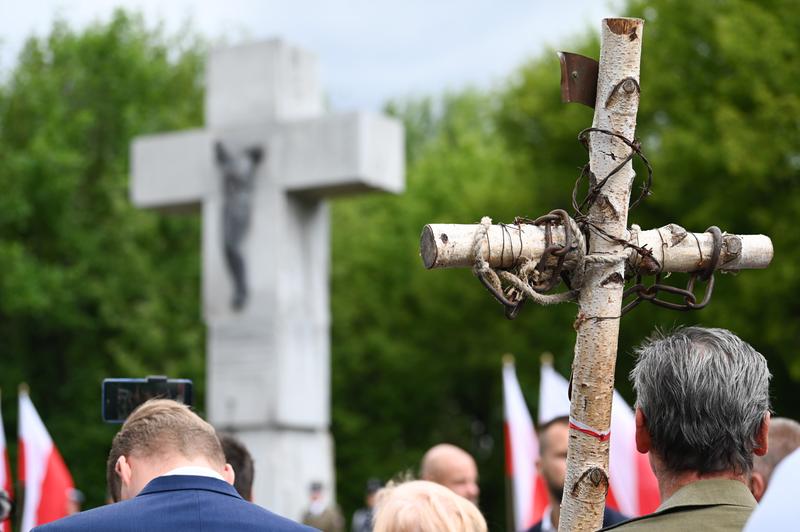
In Ukraine, the UPA is remembered primarily for its role in fighting for Ukrainian independence from Moscow-imposed Soviet rule. In Poland, however, it is associated with the Volhynia massacres, in which the UPA led the slaughter of around 100,000 ethnic Polish civilians, mostly women and children.
Poland has officially recognised the massacres as a genocide. But Ukraine rejects that label. It also argues that the massacres took place in the context of long-standing anti-Ukrainian policies by the prewar Polish state and points out that Polish partisan units massacred Ukrainian civilians during the war.
In response to Zelensky’s decision to name a unit after the UPA, Nawrocki stripped him of the Order of the White Eagle, which had been awarded to the Ukrainian president in 2023. In response, Zelensky cancelled plans to attend the Ukraine Recovery Conference that took place in Poland last week.
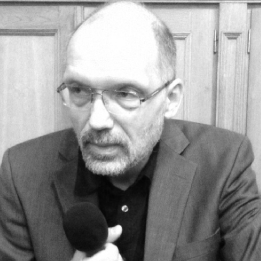
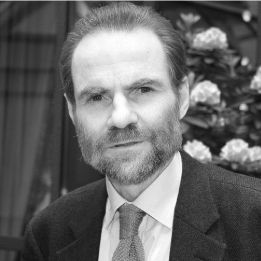
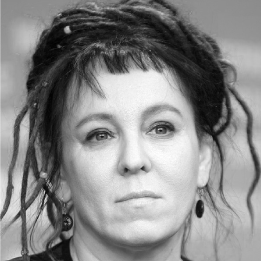
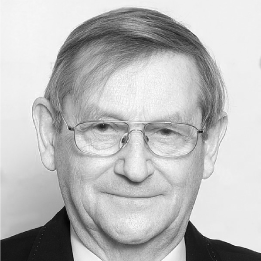
Now, a group of three Polish prelates – Cardinal Grzegorz Ryś, Cardinal Konrad Krajewski, and Cardinal Kazimierz Nycz – and two from Ukraine – Sviatoslav Shevchuk, the primate of the Ukrainian Greek Catholic Church, and Cardinal Mykola Bychok – have responded to the crisis with a joint appeal.
The bishops said that they “are saddened to observe the growing tensions and resurgent hostility between Poles and Ukrainians”.
“It is even more painful that this is happening at a time when Ukraine continues to experience the horrors of war, and Poland has shown great solidarity with millions of Ukrainian brothers and sisters in recent years,” they added.
While they acknowledged that “remembering the past is an incredibly important element of the identity of every human community”, they warned that “the issue of reconciliation between Poles and Ukrainians concerns not only the relations between the two nations but also the credibility of our shared Christian testimony”.
«Негативна пам’ять, натомість, — та, яка погляд розуму та серця нав’язливо зосереджує на злі, особливо на скоєному іншими.»
Спільний голос у справі польсько-українських відносин. https://t.co/XuFXGyJux8
— Piotr Łukasiewicz (@P_Lukasiewicz) June 30, 2026
The bishops recalled the words of former Polish Pope John Paul II in 2003, on the 60th anniversary of the Volhynia massacres, in which he called for “Ukrainians and Poles not [to] remain enslaved by their sad memories of the past”.
However, the pontiff also noted that “Christians…are called to acknowledge the errors of the past” and to “ask forgiveness for their own shortcomings” as well as to “forgive one another for the wrongs they have suffered”.
In that spirit, the five Polish and Ukrainian bishops now called on Poles and Ukrainians to “humbly ask for forgiveness and to courageously forgive, extending a hand of reconciliation despite still-unhealed and painful wounds”.
Moreover, they must “strive to think in terms of the common good, not just particular interests”, because “by imposing on others a particular vision of the past and future, we succumb to the dominant culture of violence and power today”.
Polish-Ukrainian reconciliation requires the WW2 massacre of Poles by Ukrainians to be referred to as a genocide, says Poland’s most senior bishop.
He today signed a joint declaration on the massacres with the head of the Ukrainian Greek Catholic Church https://t.co/tB9o7kib0k
— Notes from Poland 🇵🇱 (@notesfrompoland) July 7, 2023
The dispute between Poland and Ukraine shows no sign of abating. On Sunday, Zelensky declared that “no one will dictate” to Ukraine which heroes the country honours as he announced plans to establish a new national pantheon celebrating outstanding Ukrainians.
That was widely interpreted in Poland as an escalation of the dispute, with politicians from across the political spectrum in turn warning that the issue could lead Poland to hinder Ukraine’s efforts to join the European Union.
However, Poland’s government – which is regularly in conflict with the opposition-aligned Nawrocki – has sought to calm tensions. Prime Minister Donald Tusk has called the conflict between the two presidents a “strategic mistake” that will only benefit Russia.
"No one will dictate which heroes we should honour,” declared @ZelenskyyUa, announcing plans to create a new Ukrainian National Pantheon
His remarks were criticised in Poland as an escalation of the dispute over honouring a WWII group that massacred Poles https://t.co/Ecf0JWoPMF
— Notes from Poland 🇵🇱 (@notesfrompoland) June 29, 2026
Notes from Poland is run by a small editorial team and published by an independent, non-profit foundation that is funded through donations from our readers. We cannot do what we do without your support.
Main image credit: Anna Strzyżak/Kancelaria Sejmu (under CC BY-SA 4.0)
Daniel Tilles is editor-in-chief of Notes from Poland. He has written on Polish affairs for a wide range of publications, including Foreign Policy, POLITICO Europe, EUobserver and Dziennik Gazeta Prawna.