Keep our news free from ads and paywalls by making a donation to support our work!

Notes from Poland is run by a small editorial team and is published by an independent, non-profit foundation that is funded through donations from our readers. We cannot do what we do without your support.
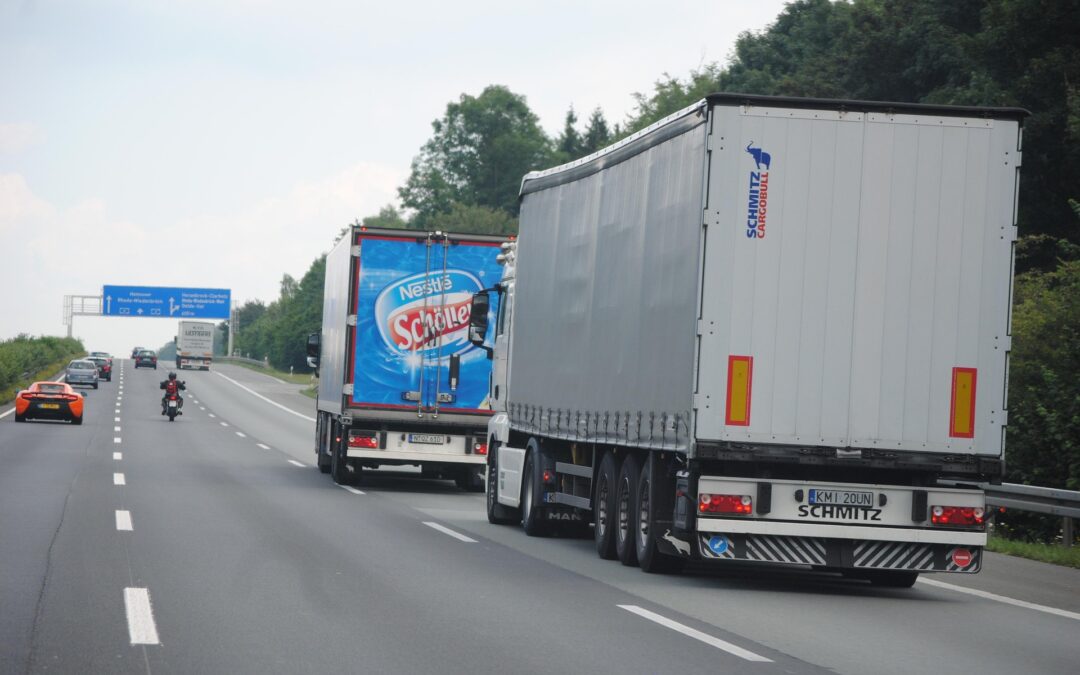
A group representing Germany’s transport sector has warned that measures introduced by Poland this week to lower the price of fuel amid the conflict in the Middle East give Polish companies an unfair disadvantage over German ones.
Its intervention comes as Poland’s prime minister and state oil company proudly proclaimed on Thursday that their country now has the lowest petrol prices in the European Union. However, the data they cited does not show a full comparison for all fuels and all EU member states.
Czy wiesz, że w Polsce mamy teraz najniższe ceny benzyny w UE? I to pomimo najwiekszego kryzysu na rynku paliw w historii. A już od jutra poza pakietem CPN obowiązuje nasza promocja nawet -35 groszy na każdy litr! #CenyPaliwaNiżej pic.twitter.com/Wi8wUsVzBn
— Biuro Prasowe ORLEN (@b_prasoweORLEN) April 2, 2026
On Thursday last week, the government unveiled a package of measures to cut VAT and excise duty on petrol and diesel as well as to introduce maximum retail prices for such fuels.
The policies, which were rushed through parliament at express pace and signed into law by President Karol Nawrocki last Friday, went into force this week, cutting fuel prices by around 11-12% on Tuesday compared with their seven-day average up to Monday.
In a statement issued on Wednesday, the Federal Association of Road Transport, Logistics and Waste Disposal (BGL), an organisation representing 7,000 German companies operating in the sector, said that Poland’s actions “threaten the medium-sized German transport industry with existential devastation”.
BGL: Existenz im deutschen Transportgewerbe bedroht https://t.co/JNoKwF6Z5Q #Transport
— Zeitung Güterverkehr (@_Transport_) April 2, 2026
“While Poland is providing relief to its businesses and citizens with reduced VAT, a lowered excise duty, and price caps the German government has yet to offer a comparable response,” wrote BGL. “This dramatically exacerbates the competitive disadvantage for the predominantly medium-sized German transport sector”.
The organisation calculated that the net diesel price in Poland is around 29 euro cents (1.24 zloty) per litre lower than in Germany. That translates into around €870 per month for a typical truck travelling 10,000 km, and €522,000 a year for a fleet of 50 such vehicles.
However, last week, the head of Transport and Logistics Poland, Maciej Wroński, told the Dziennik Gazeta Prawna daily that the VAT cut does not reduce costs for Polish transport firms, as businesses can already reclaim VAT as their business expense. The reduction in excise duty would provide some relief, he added.
Meanwhile, on Thursday, Polish Prime Minister Donald Tusk and state energy giant Orlen shared data that they claimed showed Poland now has the lowest fuel prices in the EU.
However, the data they cited covers only one type of petrol, 95-octane, and is not an official EU comparison, but comes from a Polish private web service, e-petrol.pl. It also excludes two EU member states, Cyprus and Malta.
E-petrol’s data does, however, indeed show that 95-octane petrol, at 6.16 (€1.44) per litre, was cheaper in Poland on 1 April than in other EU countries in its dataset.
Ceny Paliw… najniżej w Europie! pic.twitter.com/iUlw6vRyXY
— Donald Tusk (@donaldtusk) April 2, 2026
Grzegorz Maziak of e-petrol.pl told Money.pl that, aside from missing data for Malta and Cyprus, the comparison may also be affected by the inclusion of prices paid by foreign drivers, which are currently higher in countries such as Hungary and Slovakia than those paid by residents.
Separate data from e-petrol.pl shows Poland ranking fourth-lowest for diesel prices, at 7.54 zloty per litre. Only Slovakia, Bulgaria and Croatia recorded lower prices, while the Netherlands, Denmark and Germany were among the most expensive.
The most recent data from the European Commission and Eurostat showed that, on 30 April – prior to Poland’s measures going fully into force – Malta had the lowest 95-octane petrol and diesel prices in the EU. Poland had the 9th lowest petrol and 12th lowest diesel.
Poland has introduced maximum retail prices for petrol and diesel as part of measures to shield consumers from the surge in fuel costs caused by the conflict in the Middle East.
Retailers caught selling above the cap face fines of up to 1 million zloty https://t.co/g9FjdpUXm0
— Notes from Poland 🇵🇱 (@notesfrompoland) March 31, 2026
Notes from Poland is run by a small editorial team and published by an independent, non-profit foundation that is funded through donations from our readers. We cannot do what we do without your support.
Main image credit: Uwe Hoh/Pixabay

Alicja Ptak is deputy editor-in-chief of Notes from Poland and a multimedia journalist. She has written for Clean Energy Wire and The Times, and she hosts her own podcast, The Warsaw Wire, on Poland’s economy and energy sector. She previously worked for Reuters.