Keep our news free from ads and paywalls by making a donation to support our work!

Notes from Poland is run by a small editorial team and is published by an independent, non-profit foundation that is funded through donations from our readers. We cannot do what we do without your support.
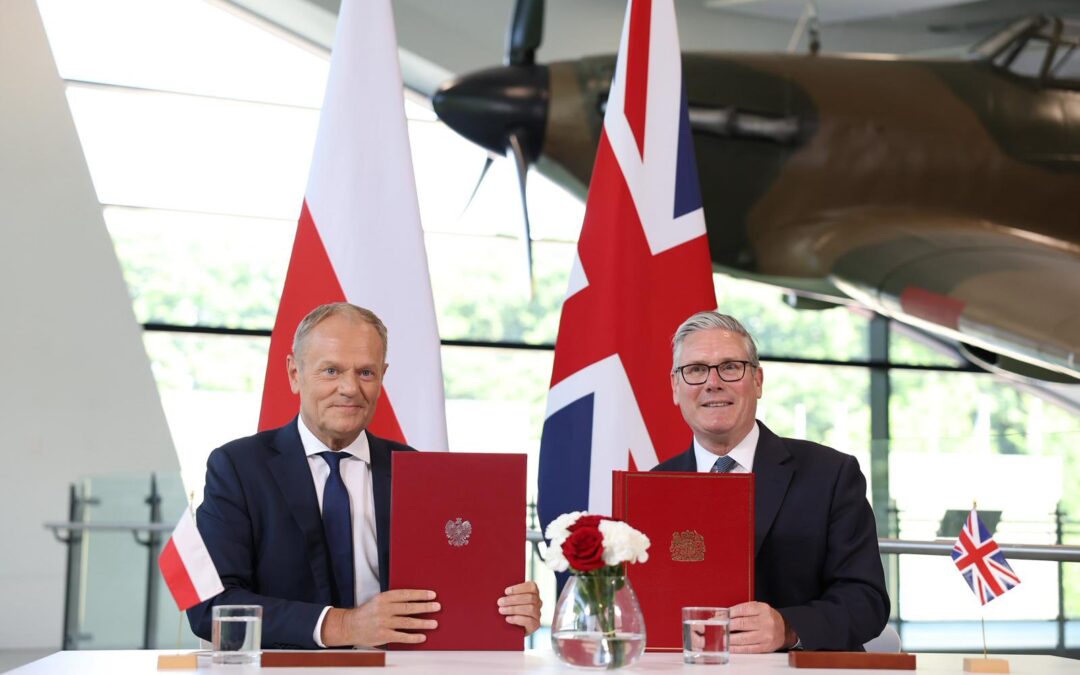
Poland and the UK have signed a treaty that will see them cooperate more closely on defence and security, including jointly developing a new air-defence missile, holding large-scale military exercises, and cooperating on countering Russian hybrid attacks.
“This treaty is the biggest step forward in our defence and security relationship with Poland in a generation,” said British Prime Minister Keir Starmer, ahead of the signing ceremony in London with Polish counterpart Donald Tusk.
The event took place at the Battle of Britain Bunker, where the Royal Air Force (RAF) coordinated fighter operations during World War Two. Polish pilots played an important role in the Battle of Britain, making the choice of venue a historically symbolic one.
Ahead of his departure for London, Tusk said that the new agreement would be called the Northolt Treaty in honour of the nearby RAF base from which Polish pilots flew and where a memorial to them now stands.
📍#Northolt | Premierzy Polski i Wielkiej Brytanii zwiedzili Izbę Pamięci polskich lotników – w tym z Dywizjonu 303, którzy stacjonowali w tutejszej bazie. pic.twitter.com/wI1QS8pS1B
— Kancelaria Premiera (@PremierRP) May 27, 2026
“Britain and Poland are already close allies and friends, but the challenges Europe now faces demand an even stronger partnership,” declared Starmer. “Our collective work together will keep our countries safe for years to come.”
Tusk, meanwhile, said that the treaty had now raised Polish-British relations “to the highest possible level” and would help “secure Poland and other countries against the Russian threat”.
“History teaches us, and geography teaches us in a particularly painful way, that Poland must build credible alliances that will, above all, deter potential aggressors,” added the Polish prime minister.
According to Starmer’s office, the agreement will see the two countries “combine expertise and industrial capability” to jointly develop and manufacture weapons in both the UK and Poland. That will include “co-production of a next‑generation medium‑range air defence missile”.
Polish and British forces will also hold “large‑scale joint exercises to sharpen interoperability across counter-drone warfare, electronic warfare, and engineering support”.
Meanwhile, the countries intend to cooperate and share expertise on countering “attempts by hostile state actors to sow discord”. Starmer’s office notes that such “hybrid attacks” have included arson, cyberattacks and espionage by operatives working on behalf of Russia.
A recent report by the International Centre for Counter-Terrorism on Russia’s campaign of sabotage in Europe found that Poland is the “most frequently targeted country”. One plot last year involved sending explosive packages to both Poland and the UK.
Poland is the "primary focus" of Russia's sabotage campaign in Europe, finds a new report by the International Centre for Counter-Terrorism.
Among 151 incidents identified since 2022, 31 of them took place in Poland – more than in any other country https://t.co/QXfSI00FD6
— Notes from Poland 🇵🇱 (@notesfrompoland) March 3, 2026
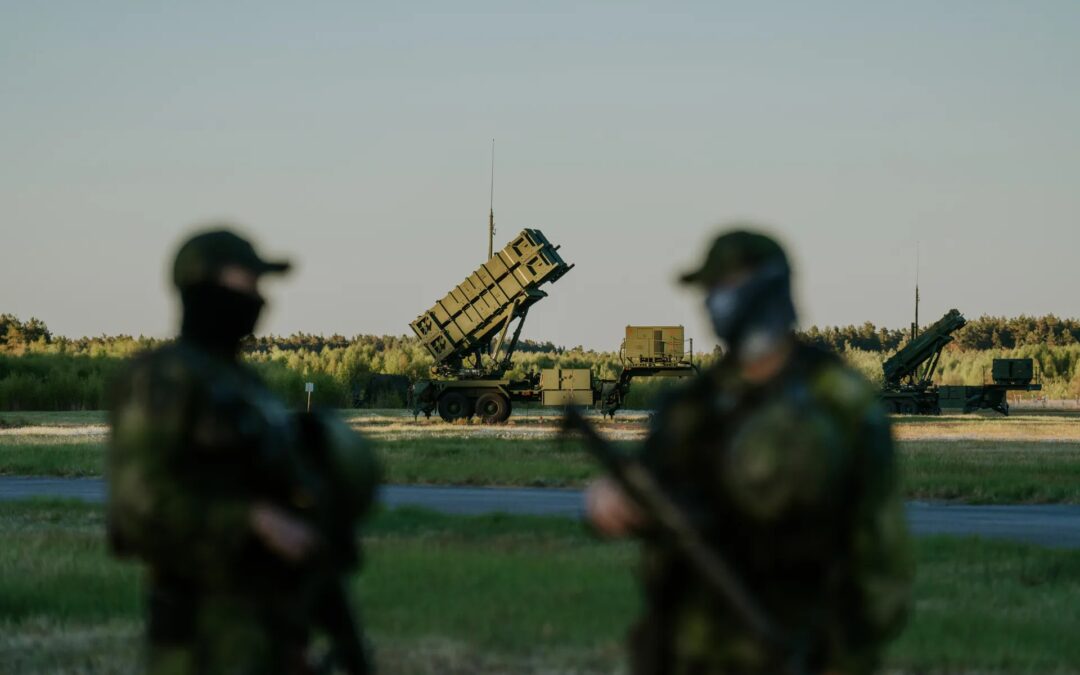
The new treaty, plans for which were announced last year, follows years of deepening cooperation between Poland and the UK. In April 2022, shortly after Russia’s full-scale invasion of Ukraine, Britain deployed its advanced Sky Sabre air defence system to Poland along with 100 military personnel.
In 2024, Poland signed a deal with the UK worth around £4 billion (19.5 billion zloty) – the largest ever commercial agreement between the two countries – to buy over 1,000 CAMM-ER surface-to-air missiles and more than 100 launchers from the British arm of European missile maker MBDA.
Last year, Polish state defence group Polska Grupa Zbrojeniowa (PGZ) entered into a strategic partnership with British manufacturing giant BAE Systems to produce 155mm artillery shells.
Polish state defence group @PGZ_pl has formed a strategic partnership with Britain's @BAESystemsplc to produce 155mm artillery shells.
The deal will see BAE Systems transfer "technology and know-how" for Poland to produce the ammunition domestically https://t.co/nT77RCGZog
— Notes from Poland 🇵🇱 (@notesfrompoland) September 12, 2025
The new treaty marks the latest move by Poland in recent years to bolster its relations with key partners in Europe and beyond. Last year, it signed a similar agreement upgrading relations with France. That followed a strategic partnership agreement with Sweden the previous year.
In April, during a visit to Asia, Tusk signed new comprehensive strategic partnership agreements with South Korea and Japan. This week, the day before the new treaty with the UK was launched, Poland agreed to deepen defence ties with Canada.
Poland has also been in talks with its western neighbour Germany over signing an enhanced defence agreement. Earlier this month, the German ambassador to Warsaw, Miguel Berger, told the Polish Press Agency (PAP) that they intended to sign the agreement on 17 June.
Poland is among a group of European countries that have been in talks with France over joining its “advanced nuclear deterrence programme”. However, Tusk last month clarified that Poland has no intention of hosting French nuclear weapons.
Poland and Japan have agreed a comprehensive strategic partnership with the aim of cooperating on security, infrastructure and technology
Poles have long viewed Japan as a “symbol of success", and the countries are now "equal" partners, said @donaldtusk
https://t.co/9PCi8cF8BG— Notes from Poland 🇵🇱 (@notesfrompoland) April 15, 2026
Notes from Poland is run by a small editorial team and published by an independent, non-profit foundation that is funded through donations from our readers. We cannot do what we do without your support.
Main image credit: Kancelaria Premiera/X

Daniel Tilles is editor-in-chief of Notes from Poland. He has written on Polish affairs for a wide range of publications, including Foreign Policy, POLITICO Europe, EUobserver and Dziennik Gazeta Prawna.