Keep our news free from ads and paywalls by making a donation to support our work!

Notes from Poland is run by a small editorial team and is published by an independent, non-profit foundation that is funded through donations from our readers. We cannot do what we do without your support.
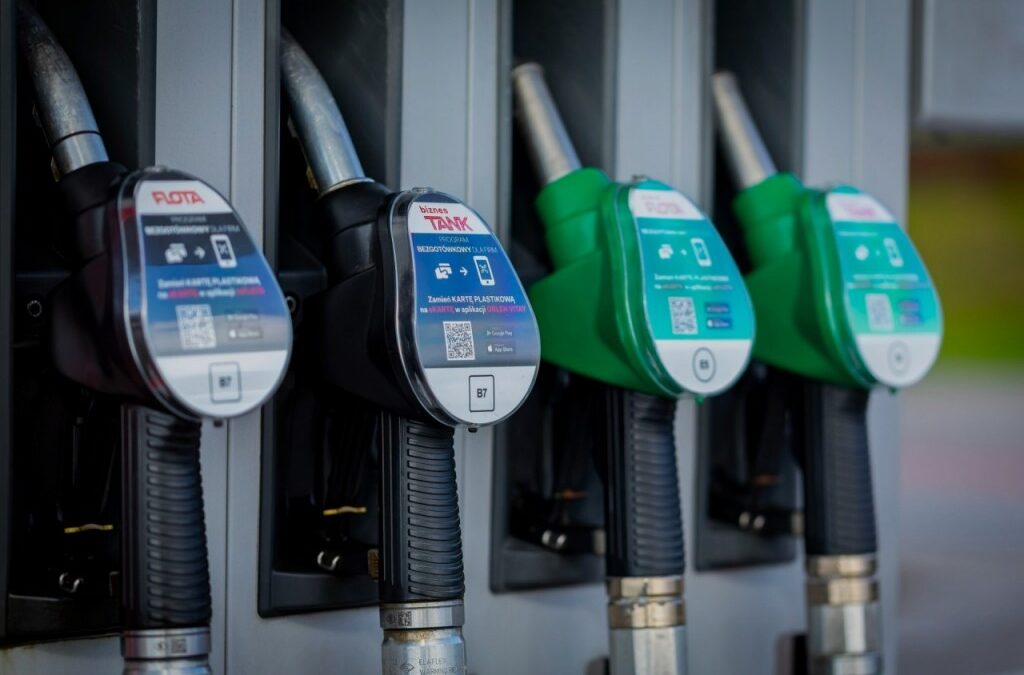
Poland’s government has announced a package of measures to curb rising fuel costs driven by the conflict in the Middle East. They include cutting VAT on fuel from 23% to 8%, reducing excise duty, and introducing a daily cap on fuel retail prices.
Prime Minister Donald Tusk said he hoped the measures would reduce retail fuel prices by around 1.2 zloty (€0.28) per litre and could be implemented before Easter.
The announcements come a day after retail diesel prices in Poland hit a record high, driven by the United States and Israel’s attacks on Iran and Tehran’s response to them, including effectively closing down the Strait of Hormuz, a shipping route for about 20% of global oil and liquefied natural gas supplies.
🇵🇱 Pakiet #CenyPaliwaNiżej to obniżona akcyza, obniżony VAT i maksymalna cena paliwa! pic.twitter.com/ys1GDEqFlv
— Kancelaria Premiera (@PremierRP) March 26, 2026
Diesel prices rose on Wednesday to an average of 8.69 zloty (€2.04) per litre, exceeding the previous record set in October 2022, amid the energy crisis triggered by Russia’s full-scale invasion of Ukraine, according to data from e-petrol, a monitoring service.
Prices for other fuels have also been rising and, to bring them back down, the government unveiled plans on Thursday to cut VAT on fuel to 8% from 23% and reduce excise duty by 0.29 zloty per litre for petrol and 0.28 zloty per litre for diesel, to the minimum level required by the European Union, Tusk said.
Finance minister Andrzej Domański said that the proposed VAT cut would cost the state budget around 900 million zloty a month, while reducing excise duties would result in a monthly loss of around 700 million zloty. But he added that the tax rates would be adjusted to changing market conditions.
However, after the government’s announcement, European Commission spokeswoman Louise Bogey told broadcaster RMF that EU law does not allow member states to lower VAT on motor fuels from the standard rate. She added that lowering excise duty is permitted.
Tusk also revealed that the government also plans to introduce a cap on fuel prices to avoid a repeat of past situations where, despite tax cuts, “the final prices at the petrol station for the customer not only failed to fall…but actually rose”.
The maximum price will be set each day by the energy minister based on the average wholesale price index and minimum operating costs. Further planned measures include a so-called windfall tax on oil companies’ extraordinary profits made as a result of surging global prices.
The opposition Law and Justice (PiS) party, which had previously tabled its own bill to reduce VAT, said that the government’s move came too late.
“It took Tusk almost three weeks to draft the bill on reducing fuel prices, which I had proposed on 9 March,” said Przemysław Czarnek, PiS’s candidate for prime minister in next year’s elections.
Tuskowi prawie 3 tygodnie zajęło
przepisanie ustawy w sprawie obniżenia cen paliw, którą zaproponowałem już 9 marca. Kierowcy w Polsce stracili przez jego zwłokę około 2 mld zł.Kto teraz zwróci Polakom te pieniądze? #TuskŁupiPolaków
— Przemysław Czarnek (@CzarnekP) March 26, 2026
Parliament will today start working on government bills to introduce the measures, said Włodzimierz Czarzasty, the speaker of the Sejm, the more powerful lower chamber.
He added that he expects votes in both the Sejm and the upper-house Senate to take place on Friday, after which the bills will reach the desk of opposition-aligned President Karol Nawrocki for final approval. A senior presidential aide, Paweł Szefernaker, said Nawrocki was “urgently awaiting the bill”.
Meanwhile, state energy giant Orlen has already begun cutting its wholesale petrol and diesel prices. However, this has not yet been reflected in prices at petrol stations.
Over the week until Wednesday, the average price of diesel jumped by 0.93 zloty, or around 12%, according to e-petrol. The lowest prices – 8.64 zloty per litre – were recorded in the eastern Podlasie and Lublin provinces, while Lower Silesia in southwestern Poland recorded the highest price of 8.76 zloty.
During a press conference on the government’s fuel price measures, the prime minister was asked about the growing trend of so-called fuel tourism, whereby drivers from Germany travel to Poland seeking cheaper fuel.
He said the government would monitor the situation and could take cues from Slovakia, where authorities have introduced higher fuel prices for drivers of foreign-registered vehicles. “I will examine this mechanism in detail to see if it is effective,” he said.
However, the European Commission has warned that such measures are “highly discriminatory and against EU law” as they “undermine the integrity of our single market”. It has promised to “take the appropriate legal action”.
Tusk added that Poland does not face the risk of fuel shortages, echoing assurances from pipeline operator PERN and gas transmission firm Gaz-System about diversified supplies and adequate reserves.
Large numbers of German drivers are crossing into Poland to buy cheaper fuel amid price rises stemming from the ongoing conflict in the Middle East.
That has led to reports of local shortages in some areas along the border https://t.co/Q5gyY0owq2
— Notes from Poland 🇵🇱 (@notesfrompoland) March 12, 2026
Notes from Poland is run by a small editorial team and published by an independent, non-profit foundation that is funded through donations from our readers. We cannot do what we do without your support.
Main image credit: Grupa Orlen

Olivier Sorgho is senior editor at Notes from Poland, covering politics, business and society. He previously worked for Reuters.