Keep our news free from ads and paywalls by making a donation to support our work!

Notes from Poland is run by a small editorial team and is published by an independent, non-profit foundation that is funded through donations from our readers. We cannot do what we do without your support.
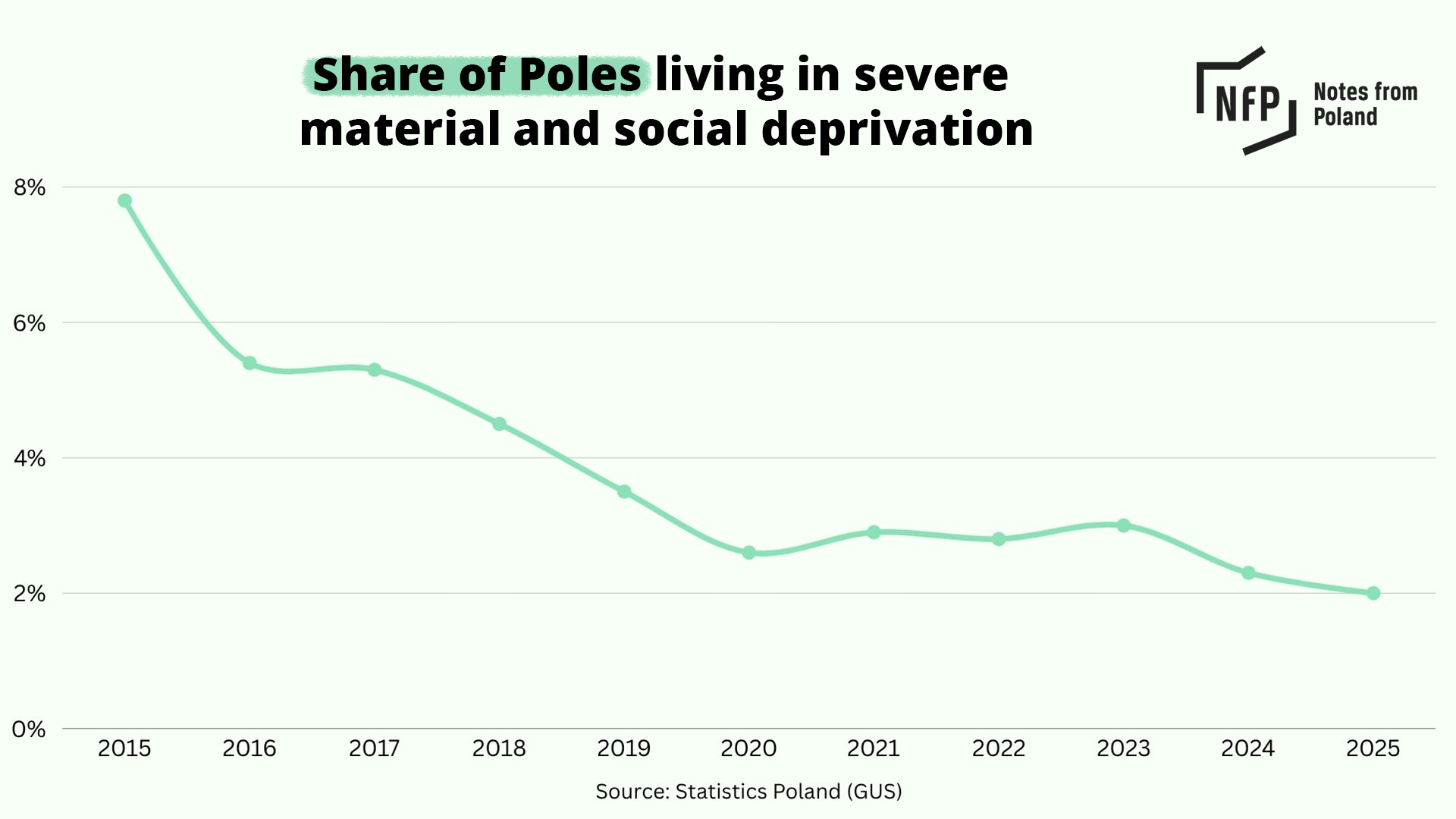
Only 2% of Poles were unable to meet the most basic of needs last year, the lowest figure on record, according to a new report Poland’s statistical office. The level of severe deprivation has fallen significantly in the last decade, although some other measures of poverty are less positive.
Statistics Poland’s (GUS) data showed a fall in the rate of deep material and social deprivation – defined as the proportion of people unable to meet at least seven of 13 basic needs – by 5.8 percentage points since 2015, when it stood at 7.8%.
Most of the decline took place between 2015 and 2020. The indicator rose slightly in 2021-2023 amid prolonged and severe inflation following the COVID-19 pandemic and the war in Ukraine, before again beginning to fall again in 2024.
The needs covered by the study include physiological requirements such as eating meat, fish or a vegetarian equivalent every other day and heating one’s home; financial capacity to pay bills on time and cover unexpected expenses; material needs such as replacing worn clothing; and social and leisure activities.
Only 0.8% of respondents did not own at least two pairs of properly fitting shoes, the lowest proportion for any need. At the other end of this scale was the ability to take a holiday, with 24.4% unable to afford a one-week annual break for all family members.
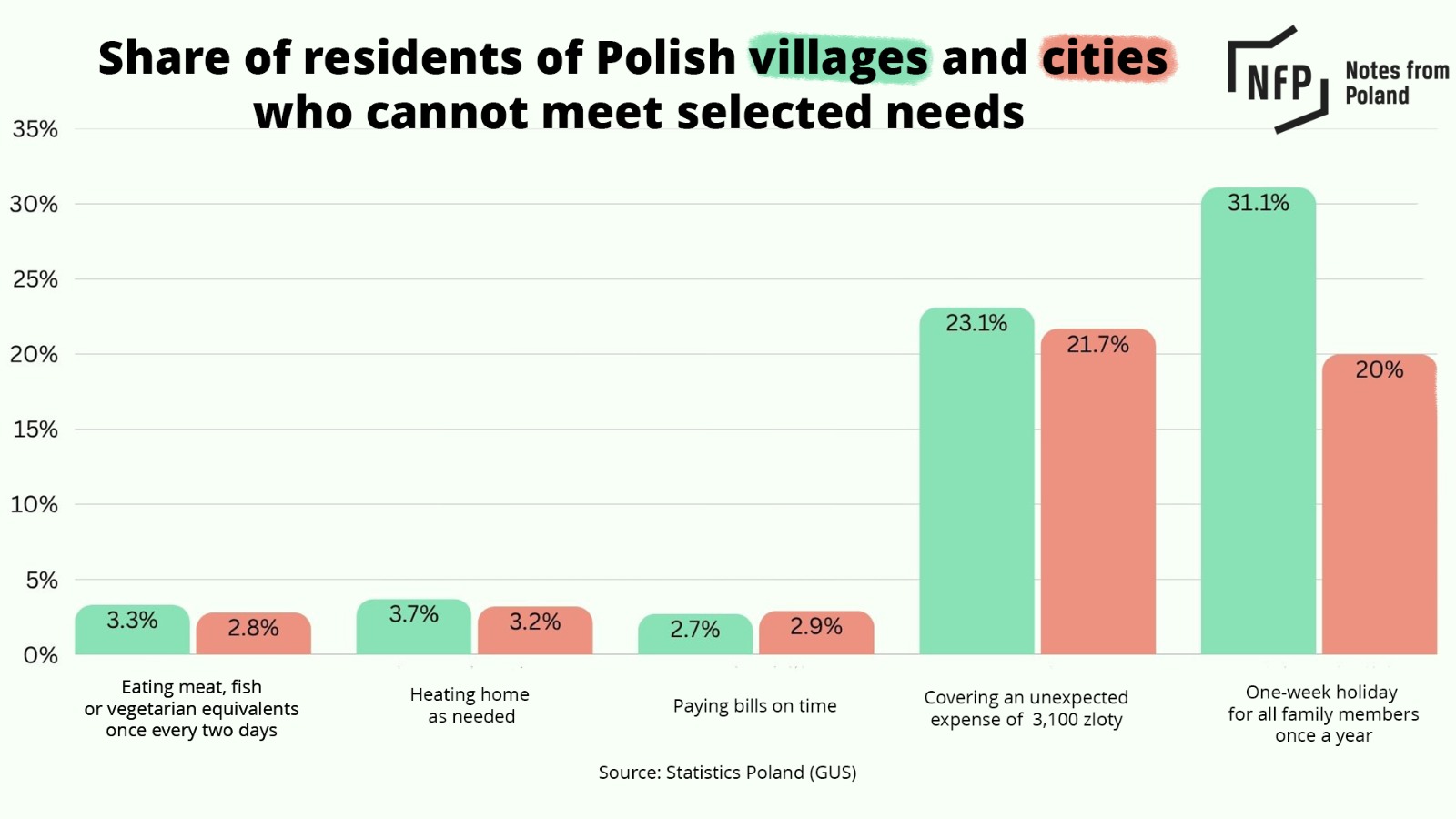
Some 22% said they could not cover an unexpected expense amounting to 60% of the national median disposable monthly income, which in 2025 was just under 3,100 zloty (€722).
However, both these figures were the lowest on record. The proportion of people unable to afford a week-long holiday has fallen from 44% in 2015, while those unable to meet unexpected expenses declined from 42.3%.
The study also highlighted differences based on the type of area people lived in. The lowest level of severe deprivation was in cities with more than 500,000 residents (0.7%) while the highest was in the smallest towns, of up to 20,000 residents (2.6%).
Villages that are part of larger urban agglomerations had a figure of 1.5%, while in villages in rural areas, the severe deprivation rate was 2.3%.
Similar proportions of urban and rural residents reported a difficulty meeting basic physiological needs and paying bills. However, almost a third (31.1%) of rural residents were unable to afford a holiday compared with 20% in urban areas. In cities with more than 500,000 residents, only 10.9% could not afford a week away.
GUS said that assessing people’s ability to meet material and sociocultural needs helps capture “the multidimensional nature of poverty, in which sections of society with limited financial resources may be subject to social marginalisation”.
However, other poverty measures, based on disposable income per household member, suggest a less favourable picture. The Polish branch of the European Anti-Poverty Network (EAPN) uses alternative GUS indicators, including relative and extreme poverty.
According to these measures, extreme poverty stood at 5.2% in 2024. This is defined as spending below a minimum subsistence level calculated by the Institute of Labour and Social Studies, a state research body. The rate was lower than in 2023, when it rose sharply to 6.6% of the population.
Meanwhile, the share of people living in relative poverty – defined as less than 50% of average household spending – rose to 13.3% in 2024 from 12.2% a year earlier.
“In a period of economic recovery and falling inflation, the rate of consumption growth of the poorer part of society is not keeping up with the rest of society, which increases the distance and the feeling of exclusion,” EPAN wrote in its most recent report, published last October.
The number of people living in extreme poverty in Poland rose to 2.5 million in 2023, equivalent to 6.6% of the population, which is the highest level in almost a decade.
Among children, the extreme poverty rate was even higher, at 7.6% https://t.co/SoiMGeS3gh
— Notes from Poland 🇵🇱 (@notesfrompoland) October 17, 2024
Notes from Poland is run by a small editorial team and published by an independent, non-profit foundation that is funded through donations from our readers. We cannot do what we do without your support.
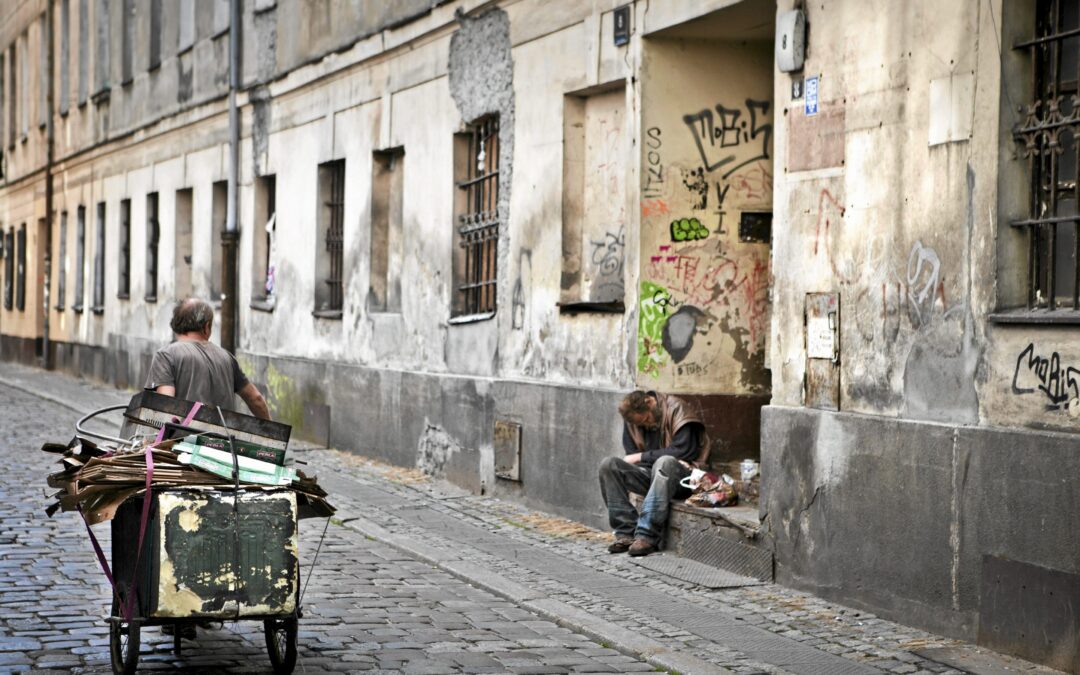
Main image credit: Lukasz Cynalewski / Agencja Wyborcza.pl

Alicja Ptak is deputy editor-in-chief of Notes from Poland and a multimedia journalist. She has written for Clean Energy Wire and The Times, and she hosts her own podcast, The Warsaw Wire, on Poland’s economy and energy sector. She previously worked for Reuters.