Keep our news free from ads and paywalls by making a donation to support our work!

Notes from Poland is run by a small editorial team and is published by an independent, non-profit foundation that is funded through donations from our readers. We cannot do what we do without your support.
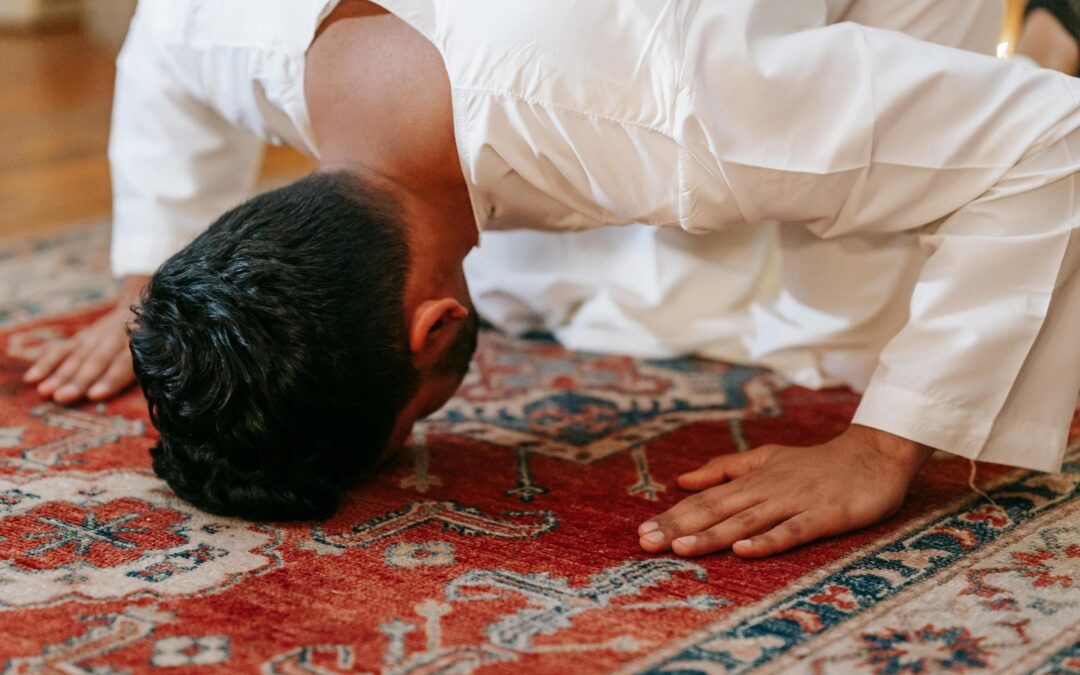
An Islamic group in Kraków, Poland’s second-largest city, is seeking to establish a new prayer and meeting centre to cater for the growing local Muslim community.
The idea has sparked opposition from some local residents, given that the new centre would be located in a residential apartment block. The issue has also become politicised, with Confederation (Konfederacja), a far-right group that sits in Poland’s parliament, organising a protest against the plans.
Plans for the new centre are being led by the Al-Fajr Foundation, a group that describes itself as “an Islamic and cultural foundation based in Kraków, established to serve, support, and empower the Muslim community in Kraków and across Poland”.
In an online fundraiser, Al-Fajr says that it has identified a 360-square-metre facility that it wants to use as a prayer space. It will also function as an educational hub teaching Qur’an studies, Arabic and “youth/women’s development”, as well as providing “community support” and “inclusive engagement”.
The foundation says the new centre is desperately needed as the two current locations used by Kraków’s Muslim community “are stretched to their limits”. It is seeking to raise 250,000 zloty (€59,000) to cover the costs of renovating the space and paying six months of rent. Almost 63,000 zloty has so far been donated.
Over the last decade, Poland has experienced unprecedented levels of immigration, including growing numbers of arrivals from Asia and the Middle East. In 2024, the fourth- and fifth-largest national groups granted residence permits in Poland were Indians and Turks.
The location of the planned new centre is in an apartment block on a residential housing estate, which has led to concern from some local residents that its development and operation could cause disruption.
However, the Gazeta Krakowska newspaper notes that, contrary to claims by some residents, media and far-right groups, the centre would not be a mosque. That means it would not, for example, have minarets and public calls to prayer five times a day.
In a statement to the newspaper, Al-Fajr said that they “understand that new initiatives may raise questions or concerns, especially when incomplete information is provided”. However, they also noted that, when they organised a meeting to discuss the plans with local residents, only two people attended.
Meanwhile, a spokesman for Kraków city hall, Jan Machowski, told Gazeta Krakowska that the address currently has a “residential and commercial function”, and that “if anyone would like to change the function of the premises, they must apply for a permit”. No such application has yet been received, he noted.
Mateusz Czapla, a city councillor and chairman of the local housing cooperative on the residential estate, likewise warned that “designating the premises for religious or educational purposes would not be consistent with provisions” governing the use of buildings in the area.
“The creation of such a centre could lead to changes in the functioning of the neighbourhood, such as increased traffic and a greater number of visitors,” he added. “For some residents, especially seniors, such changes may raise concerns about daily comfort and a subjective sense of safety.”
Images of large numbers of Muslims praying in Polish cities to mark the end of Ramadan have stirred controversy, with right-wing opposition politicians raising concern about the impact of mass immigration https://t.co/dptyGpfvaT
— Notes from Poland 🇵🇱 (@notesfrompoland) April 1, 2025
Such fears have been seized upon by right-wing political activists, in particular from Confederation, which is Poland’s largest far-right group, with 16 seats in the national parliament.
Last week, Confederation held a protest outside Kraków city hall under the title “NO to the mosque in Kraków”. It says that the planned facility “will not be an education centre; it will be a place of indoctrination”.
Confederation has called on the municipal authorities to take action against the plans and said that it has asked the Internal Security Agency (ABW) to “investigate possible links to terrorist organisations among those financing and managing the Al-Fajr Foundation”.
Confederation MP Krzysztof Mulawa called on Poles to “learn from the mistakes of western Europe”, where many cities are “witnessing a massive spread of Muslim culture” that often began with “a small place of prayer that expanded over time” until “there were entire neighbourhoods where the local community no longer has a say”.
Imigranci chcą budować nowy meczet w Krakowie. Dzieje się to po cichu, bez konsultacji z mieszkańcami. Fundacja Al-Fadżr zbiera pieniądze, wynajmuje lokal, a ludzie dowiadują się o wszystkim z internetu. Brak jest jakichkolwiek informacji od włodarzy miasta.
I właśnie tak… pic.twitter.com/pBbY9df4h7
— Krzysztof Mulawa (@krzysztofmulawa) February 19, 2026
Poland has one of Europe’s oldest Muslim communities, the Lipka Tatars, who have lived in the region around the present-day borders of Poland, Lithuania and Belarus since the 14th century. Their numbers are relatively small, however, at around 2,000.
Many more Muslims have arrived as immigrants. There are no precise data on how many now live in Poland, with Gazeta Wyborcza, a leading daily newspaper, noting that estimates range between 20,000 and 60,000, or around 0.05-0.15% of the country’s population.
In 2022, a new Hindu temple opened on the outskirts of Kraków – the first in the region and one of few in Poland. It aimed to serve a growing Hindu community as well as to spread knowledge about India’s cultural and spiritual heritage.
A Hindu temple has opened near Kraków in a ceremony attended by the local mayor and Indian ambassador.
The temple – the first in the area and one of few in Poland – will serve a growing Hindu community and promote India’s cultural and spiritual heritage https://t.co/rz8z7cecxZ
— Notes from Poland 🇵🇱 (@notesfrompoland) October 10, 2022
Notes from Poland is run by a small editorial team and published by an independent, non-profit foundation that is funded through donations from our readers. We cannot do what we do without your support.
Main image credit: Michael Burrows/Pexels

Daniel Tilles is editor-in-chief of Notes from Poland. He has written on Polish affairs for a wide range of publications, including Foreign Policy, POLITICO Europe, EUobserver and Dziennik Gazeta Prawna.