Keep our news free from ads and paywalls by making a donation to support our work!

Notes from Poland is run by a small editorial team and is published by an independent, non-profit foundation that is funded through donations from our readers. We cannot do what we do without your support.
Renewables now account for over half of installed power capacity in Poland, with the country’s climate minister calling it a “breakthrough moment”.
“For the first time in history, the share of renewable energy sources in the installed capacity in our country has exceeded 50%,” wrote Paulina Hennig-Kloska on social media, noting that the latest data show that it reached exactly 50.04% by the end of December 2025.
Total installed renewable capacity stood at 37,777 megawatts (MW) at the start of this year, up from 12,490 MW in 2020 – a threefold increase. The total installed electricity capacity from all sources, both conventional and renewable, stood at 75,496.3 MW.
Za nami przełomowy moment w rozwoju OZE w Polsce!
Pierwszy raz w historii udział odnawialnych źródeł energii w mocy zainstalowanej w naszym kraju przekroczył 50%. Na koniec grudnia 2025 roku to dokładnie 50,04%.
Ponadto, udział OZE w produkcji energii elektrycznej w Polsce… pic.twitter.com/xXONWgrri2
— Paulina Hennig-Kloska (@hennigkloska) February 17, 2026
However, while installed capacity shows the maximum theoretical output of power sources, it is not the same thing as actual generation. Production from renewables is particularly variable, given the extent to which wind and solar rely on weather conditions, unlike power plants fired by fossil fuels.
Hennig-Kloska noted that last year, Poland last year generated a record of almost 55,000 gigawatt hours (GWh) of energy from renewables, accounting for 31.4% of all electricity production in 2025.
According to figures from the Fraunhofer Society, a German research organisation that tracks energy generation data across Europe, Poland generated 29.4% of its electricity from renewable sources last year.
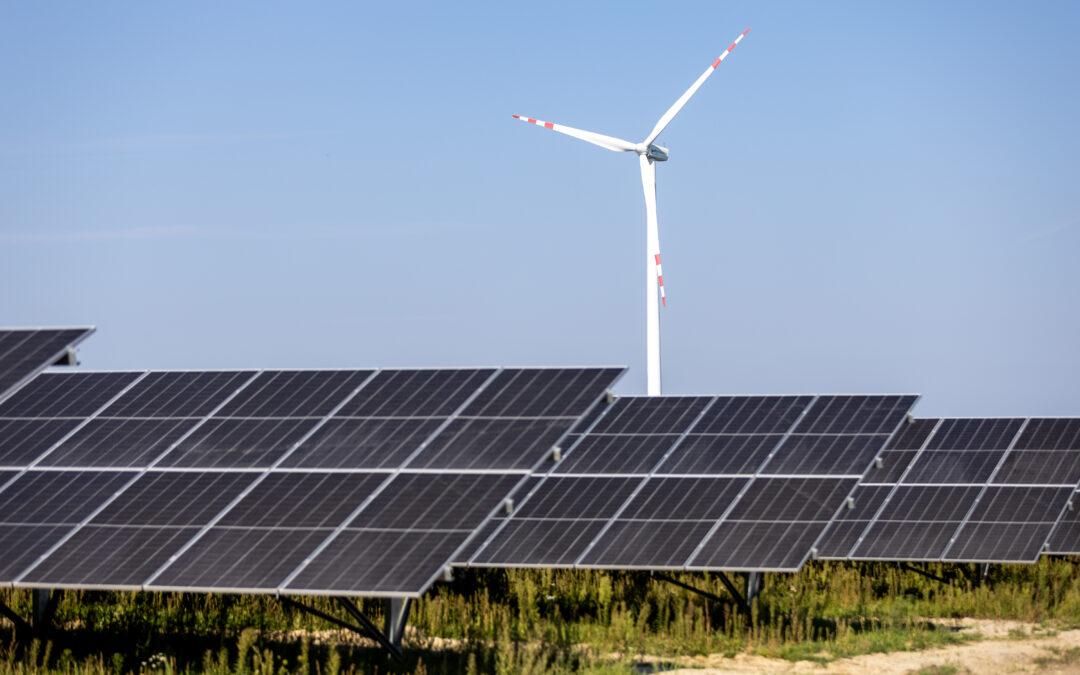
At the end of 2025, solar accounted for almost two-thirds of Poland’s installed renewable capacity at 24,808 MW (up from 3,960 MW in 2020), followed by wind at 10,550 MW (up from 6,402 MW in 2020).
The remainder came from sources including hydro, biogas and biomass, reports Rynek Energii, citing Energy Market Agency (ARE).
The rapid rise in solar has come thanks in part to government subsidies for photovoltaics. In 2022, Poland installed the third-highest amount of new solar power capacity in the EU and the amount of electricity provided by renewable so-called micro-installations – mainly solar panels – doubled.
Renewables generated 29.4% of Poland's electricity in 2025, almost exactly the same figure as in 2024, ending a period of strong growth since 2021.
Coal (52.2%) remained the dominant source, though its share declined.
For more, read our full report: https://t.co/XjD9hfhabo pic.twitter.com/WklP7dYL78
— Notes from Poland 🇵🇱 (@notesfrompoland) January 2, 2026
The growth of onshore wind power, however, has been constrained by stricter rules introduced under the former Law and Justice (PiS) government, limiting where turbines could be built.
However, this year will see the launch of Poland’s first offshore wind farm, Baltic Power, with a planned total capacity of 1,200 MW. It is set to be followed by a number of other similar projects off Poland’s coast.
Despite these investments, Poland still remains the most coal-dependent country in Europe. Coal accounted for just over half of its electricity generation last year, with around 14% from wind, 12% from solar and 2% from biomass.
Notes from Poland is run by a small editorial team and published by an independent, non-profit foundation that is funded through donations from our readers. We cannot do what we do without your support.
Main image: Gmina Margonin (under CC BY-SA 4.0)

Alicja Ptak is deputy editor-in-chief of Notes from Poland and a multimedia journalist. She has written for Clean Energy Wire and The Times, and she hosts her own podcast, The Warsaw Wire, on Poland’s economy and energy sector. She previously worked for Reuters.