Keep our news free from ads and paywalls by making a donation to support our work!

Notes from Poland is run by a small editorial team and is published by an independent, non-profit foundation that is funded through donations from our readers. We cannot do what we do without your support.
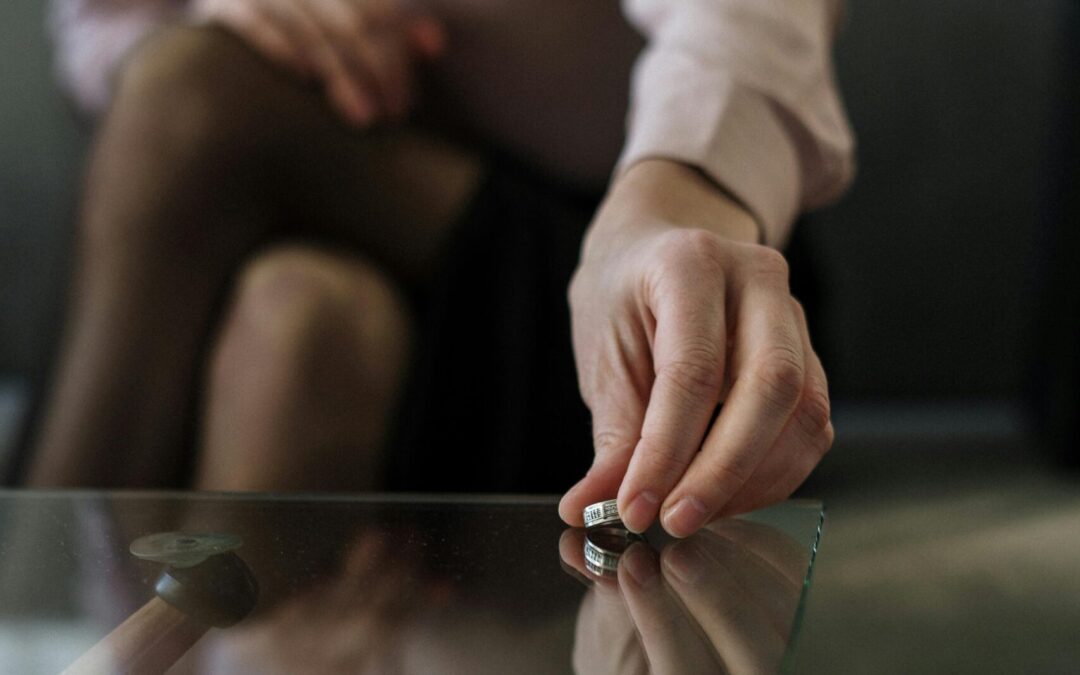
A court has ruled that a couple’s divorce did not legally take place because it was granted by a judge who had been illegitimately appointed due to the former Law and Justice (PiS) government’s judicial reforms.
The case, which has drawn comment from both the current justice minister and his PiS predecessor, has highlighted how the dispute over the rule of law in Poland can impact citizens’ everyday lives.
Orzekał tzw. neosędzia, więc nie ma rozwodu ➡ https://t.co/hbQ4VtTrzh pic.twitter.com/uxSXOZTef3
— Prawo.pl (@PrawoPLserwis) January 19, 2026
The ruling in question was issued by the district court in Giżycko, a small town in northeastern Poland, which rejected an application for the division of property after divorce, saying the divorce decree was invalid, reports legal news service Prawo.pl.
That was because the judge who granted the divorce was appointed to his position via the National Council of the Judiciary (KRS) after that body had been overhauled by PIS in a manner that placed it under greater political control and rendered it illegitimate, according to various rulings by Polish and EU courts.
The KRS, which is responsible for nominating judges, is at the heart of Poland’s rule-of-law dispute. In particular, the status of thousands of judges (often referred to as “neo-judges”) appointed after the KRS was reformed by PiS, and the rulings issued by them, has been called into question.
The current government, which replaced PiS in December 2023, has presented bills to restore the KRS’s legitimacy and invalidate most judicial appointments made after the KRS was overhauled by PiS. However, it has so far failed to implement those plans.
Commenting on the case in Giżycko, justice minister Waldemar Żurek said that it underscored the need for urgent reform of the justice system, noting that parliament would this week begin work on the two bills.
“The case in which a divorce judgement was deemed non-existent…reveals something deeply disturbing,” wrote Żurek on social media. “The crisis surrounding neo-judges is now infiltrating the most sensitive areas of citizens’ lives. Into family matters, property issues and the fundamental sense of legal security.”
The situation has “generated chaos in the courts, and led to situations where people do not know whether their judgements even exist”, he added. “That is why this problem must be resolved”.
Sprawa, w której wyrok rozwodowy został uznany za nieistniejący z powodu udziału neosędziego, pokazuje coś bardzo niepokojącego.
Kryzys związany z neosędziami wchodzi dziś w najwrażliwsze obszary życia obywateli. W sprawy rodzinne, majątkowe, w podstawowe poczucie bezpieczeństwa…
— Waldemar Żurek (@w_zurek) January 19, 2026
However, Zbigniew Ziobro, who served as justice minister under the former PiS government, blamed the current administration for the situation, saying that they had “brought about the real chaos and anarchy” by questioning judicial appointments.
He also accused them of hypocrisy, noting that they do not question rulings by “neo-judges” when it suits their interests. As an example, he pointed to a 2023 case in which Żurek won in court against a bank in a judgement issued by a judge appointed after the disputed reforms.
Ziobro was recently granted asylum by Hungary, where he fled rather than face charges in Poland for a variety of alleged crimes committed while he was justice minister. He argues that the case against him is an act of “political revenge” by the current government.
Żurek przez przypadek powiedział trochę prawdy. Mianowicie, że kryzys związany z podważaniem statusu sędziów dotyka najwrażliwszych obszarów życia obywateli. Jednak z właściwą sobie bezczelnością, w żywe oczy kłamie ukrywając przyczyny tego kryzysu. Bo wspierając kastę wywołali… https://t.co/32VgBg1juq
— Zbigniew Ziobro | SP (@ZiobroPL) January 19, 2026
According to Prawo.pl, judges say the case in Giżycko is far from the first such instance involving family matters such as divorce.
One unnamed Supreme Court judge said that there is already a line of jurisprudence in the city of Olsztyn under which family law decisions issued by “neo-judges” are treated as legally non-existent.
“Such rulings show that there is chaos at many levels in the Polish justice system,” said Katarzyna Wróbel-Zumbrzycka, a member of Iustitia, a Polish judges’ association that opposed PiS’s reforms. “It needs to be cleaned up, first and foremost for the people, so that such situations do not happen again.”
The justice ministry has presented a bill that would overhaul one of the institutions at the heart of Poland's rule-of-law crisis.
It wants to ensure that the body responsible for nominating judges is made independent of political control https://t.co/9Cilwx6e46
— Notes from Poland 🇵🇱 (@notesfrompoland) November 6, 2025
In 2019, Poland’s Supreme Court ruled that, due to PiS’s reforms, “the KRS is not an impartial and independent body” as it had been rendered “dependent on the executive authorities”. In 2022, the same court found the KRS to no longer be consistent with its role outlined in the constitution.
In 2021, the European Court of Human Rights likewise found the overhauled KRS was no longer independent from legislative or executive powers. The same year, Poland became the first country ever to be expelled from the European Network of Councils for the Judiciary.
Notes from Poland is run by a small editorial team and published by an independent, non-profit foundation that is funded through donations from our readers. We cannot do what we do without your support.
Main image credit: cottonbro studio/Pexels

Alicja Ptak is deputy editor-in-chief of Notes from Poland and a multimedia journalist. She has written for Clean Energy Wire and The Times, and she hosts her own podcast, The Warsaw Wire, on Poland’s economy and energy sector. She previously worked for Reuters.