Keep our news free from ads and paywalls by making a donation to support our work!

Notes from Poland is run by a small editorial team and is published by an independent, non-profit foundation that is funded through donations from our readers. We cannot do what we do without your support.
Many more municipalities in Poland will be allowed to charge a daily fee for tourists and other overnight visitors after a change to the law dropping environmental requirements for levying such charges.
Kraków, which received 8.7 million overnight tourists last year, had in particular been pushing for the change. However, Poland as a whole has seen a recent boom in visitor numbers, recording the EU’s second-fastest growth in the number of nights in tourist accommodation last year.
#Krakow #opłataturystyczna #ustawa 🚨🔥Z OSTATNIEJ CHWILI! 🔥🚨
📢 Prezydent RP podpisał nowelizację przepisów dotyczących podatków i opłat lokalnych, PIT oraz PCC.
🏨 Najważniejsze zmiany dla branży turystycznej dotyczą opłaty miejscowej i uzdrowiskowej.
🗓️ Od 2027 r. za jej… pic.twitter.com/9ATvENvNol
— Kraków (@krakow_pl) October 15, 2026
Until now, a “visitor’s fee” could be levied by municipalities with beneficial climatic features, “scenic qualities” and the capacity to accommodate people visiting to benefit from these attributes, as well as localities in areas with the status of a “spa protection area”. In practice, this largely applied to seaside and mountain resorts.
Kraków did charge a visitor’s fee between 2004 and 2015, but was subsequently unable to do so due to a toughening of environmental requirements. The city has long suffered from bad air pollution, though it has taken significant steps to tackle the issue.
Now, under new legislation proposed by the government earlier this year and signed into law by President Karol Nawrocki this week, the requirement for beneficial climatic features has been scrapped, meaning many more places will be able to charge the visitor’s fee.
From 1 January, municipalities with scenic qualities will be able to charge visitors up to 5 zloty (€1.14) for each night they stay in hotels, guesthouses and short-term rental accommodation for up to one month, a rise on the current maximum of 3.46 zloty.
Additionally, whereas previously only people visiting for the purposes of tourism had to pay, the fee now applies to all visits, including for work or health purposes, reports broadcaster TVN. People with significant disabilities, children with certified disabilities and their carers will be exempt from the fee.
In another change, fees will be collected directly by accommodation providers, who will be required to maintain detailed records, reports the Infor news service. Passing fees on in a timely manner will entitle providers to receive at least 10% of the money they collect.
Poland saw the EU's second-fastest growth in tourism in 2025, behind only the Mediterranean island state of Malta https://t.co/WVkRbHtU7o
— Notes from Poland 🇵🇱 (@notesfrompoland) January 19, 2026
In 2024, Kraków appealed to the government to be allowed to charge tourists a fee, noting that “overtourism leads to tensions and social discontent”, as the “local community suffers” and “residents increasingly feel like tourists in their own city”.
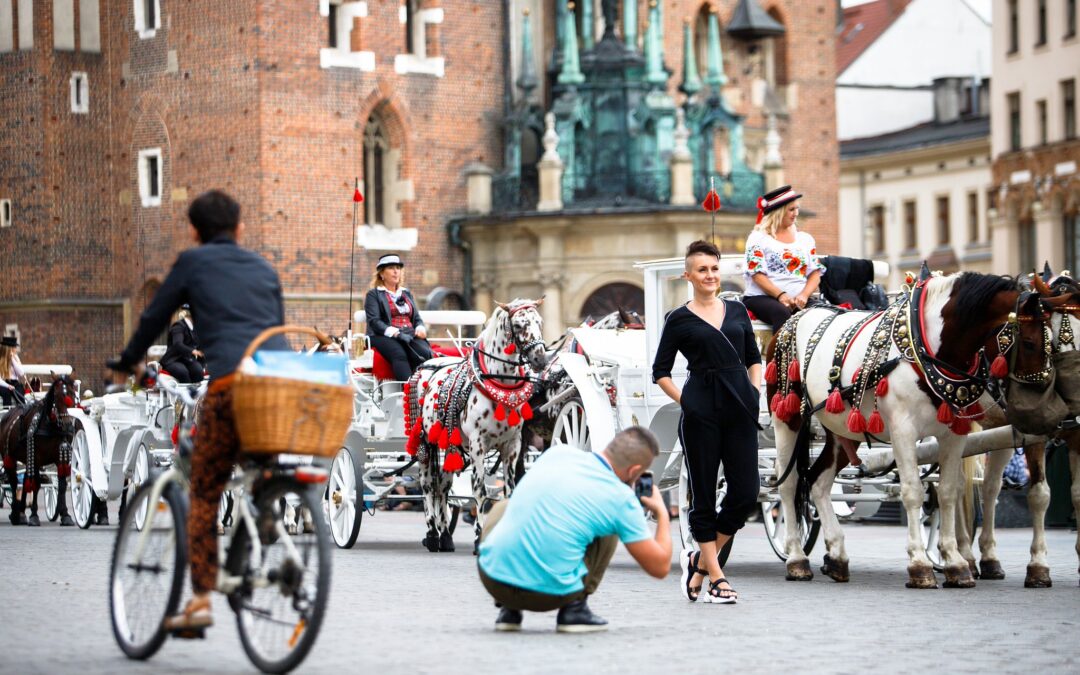
With its UNESCO-listed Old Town, Wawel royal castle, and former Jewish district of Kazimierz, Kraków is regularly named as one of Europe’s best tourist destinations. Last year, a record 16.25 million people visited the city, of whom 8.7 million stayed overnight.
While that is a boon to the local economy, it also often causes tensions with residents, who complain about noise and disruption. In 2024, the city created the new position of “night mayor”, whose role is to reconcile the needs of tourists, businesses and residents.
Poland’s government has approved legislation that would allow local communities to ban short-term rentals of the type offered through services such as Airbnb.
Such accommodation has boomed in recent years, often prompting a backlash from local residents https://t.co/8MRfRWTDxd
— Notes from Poland 🇵🇱 (@notesfrompoland) September 3, 2026
Following this week’s change to the law, Kraków city hall confirmed that it would now again be able to collect a visitor’s fee “if the statutory conditions are satisfied and the municipal council adopts an appropriate resolution”.
The city’s recently elected new mayor, Łukasz Gibała, who will be sworn in next week, said before Sunday’s election that he was in favour of a tourist tax of at least 20 zloty per night, four times the new maximum.
“In western European cities there are rates of that size and higher,” Gibała said, quoted by financial news service Money.pl. “Maintaining the city in the face of the influx of tourists is costly. In Kraków, private business owners profit from tourism, whilst the city and its residents foot the bill.”
Poland as a whole has also experienced a boom in tourism. Last year, the country recorded the European Union’s second-largest growth in the number of nights spent in tourist accommodation. Its increase of 7% was behind only the Mediterranean island state of Malta (9.9%).

Notes from Poland is run by a small editorial team and published by an independent, non-profit foundation that is funded through donations from our readers. We cannot do what we do without your support.
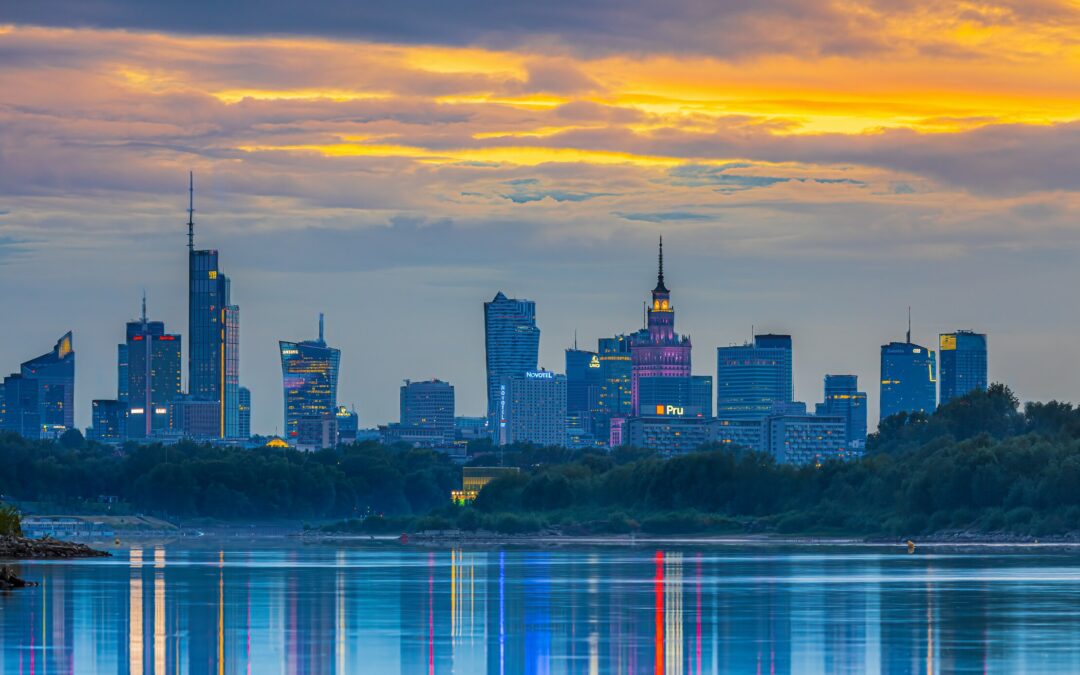
Main image credit: Mariusz Cieszewski / www.polska.pl
Ben Koschalka is a translator, lecturer, and senior editor at Notes from Poland. Originally from Britain, he has lived in Kraków since 2005.