Keep our news free from ads and paywalls by making a donation to support our work!

Notes from Poland is run by a small editorial team and is published by an independent, non-profit foundation that is funded through donations from our readers. We cannot do what we do without your support.
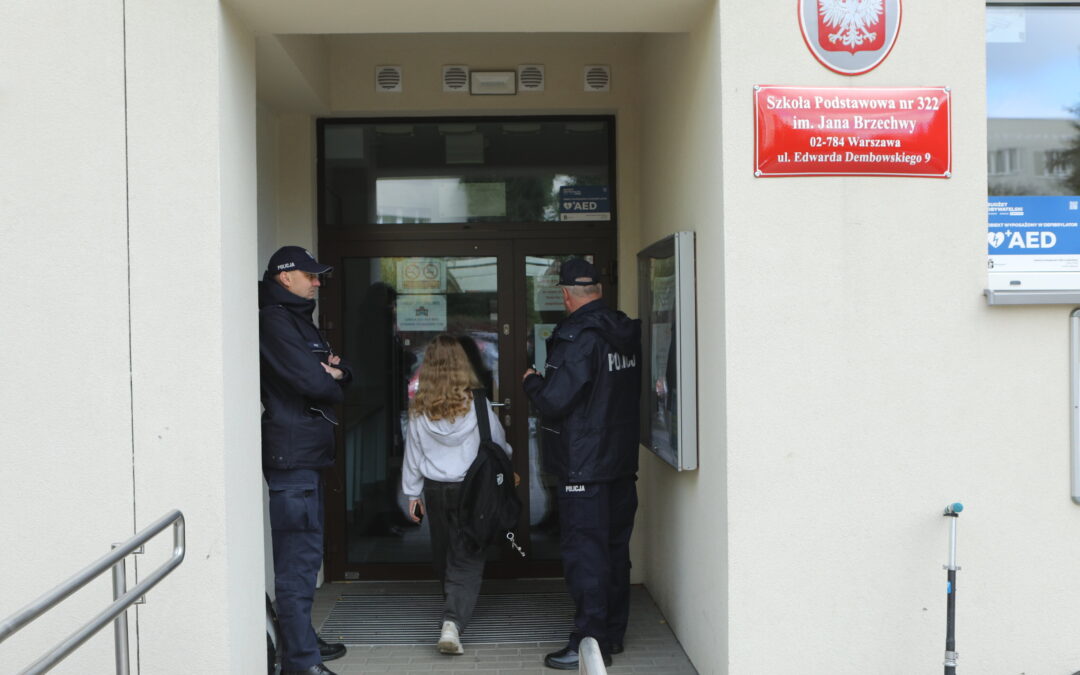
Following this week’s two knife attacks on schools in Poland, police have today carried out security checks on over 10,000 schools and detained at least 10 more people, many of them teenagers found to have made online threats or been in possession of weapons.
Meanwhile, many parents decided not to send their children to school today, as rumours swirled online that this week’s attacks were somehow coordinated and that further incidents were planned on Friday.
The issue has also sparked a political dispute, with the government criticising opposition-aligned President Karol Nawrocki for previously vetoing laws intended to improve children’s safety. The opposition in turn accuses the government of failing to protect schools properly.
🚨 Ponad 10 tysięcy skontrolowanych placówek i 10 osób zatrzymanych w całym kraju.
Bezpieczeństwo w szkołach priorytetem Policji ⬇️
Tragiczne zdarzenia, do których doszło w ciągu ostatnich dni na Mazowszu, wywołały w przestrzeni medialnej falę nieprawdziwych informacji,… pic.twitter.com/WVkYUdVO9C
— Polska Policja 🇵🇱 (@PolskaPolicja) October 9, 2026
On Thursday, a 39-year-old school caretaker was killed in an attack by a 15-year-old former pupil on a primary school. Prime Minister Donald Tusk later revealed that the assailant had been wearing a head-mounted camera intended to broadcast the attack.
That came a day after a 19-year-old student carried out a knife attack on another school, leaving eight people injured. Two other teens were also detained on suspicion of planning attacks in other locations.
In response, Tusk announced on Thursday that police would carry out regular checks on schools. However, on Friday, many parents in the Masovia province around Warsaw, where both of this week’s attacks took place, decided to keep their children at home. Some districts closed schools entirely.
One person has been killed in a knife attack on a primary school by a 15-year-old former pupil.
Yesterday, a knife attack by a 19-year-old at another school left eight people injured. The assailant also had a homemade explosive that failed to detonate https://t.co/xJAzhT6u3U
— Notes from Poland 🇵🇱 (@notesfrompoland) October 8, 2026
Concern was stoked by claims circulating on social media that this week’s school attacks were part of a coordinated action by a group of teenagers, who were planning further incidents on what they were calling “Bloody Friday”.
Two schools in the town of Legionowo, just north of Warsaw, were closed on Friday after local authorities said they received “unconfirmed information that they were on a list” relating to the alleged group.
Poland’s national police headquarters issued a statement on Friday morning saying that they were aware of the rumours but that “so far nothing indicates such an event is actually happening”. They urged people to remain calm, not share unverified information, and rely only on credible sources.
At the same time, police and local authorities stepped up security in schools. At 9 a.m. on Friday, the national police headquarters announced that checks had been conducted at over 10,000 schools around the country and that ten people had been detained.
Among those to be arrested was a 17-year-old in the town of Ełk, who had reportedly made online threats to attack other students, and a 13-year-old in Sochaczew who wrote in a chat that he would bring a machete to school. The boy later said it was a “silly joke”.
In Bartoszyce, a school principal saw that an 11-year-old student had posted a photo of a knife alongside a statement indicating a threat. Police detained the boy and found an “imitation knife” in his backpack.
In Ostrów Mazowiecka, police announced they had arrested a 15-year-old boy who had sent out images of himself in a Guy Fawkes-style mask, saying that he planned to take people’s lives. In Warsaw, police detained a 14-year-old who was found to be in possession of a concealed blade and 11 firecrackers.
🚨 Policjanci z Mokotowa niezwłocznie po otrzymaniu informacji o zagrożeniu bezpieczeństwa zatrzymali na terenie szkoły 14-latka, który posiadał nóż z ukrytym ostrzem. Nastolatek miał przy sobie także 11 petard hukowych.
W sprawie prowadzone są dalsze czynności. Dokumenty… pic.twitter.com/lbQrqe2pgl
— Policja Warszawa (@Policja_KSP) October 9, 2026
The situation has also taken on a political dimension. On Thursday, Tusk criticised Nawrocki for earlier this year vetoing a government bill intended to improve online safety by blocking harmful content. The president had argued that the measures were an “Orwellian” threat to free speech.
In a hastily called vote in the lower-house Sejm on Thursday evening, Tusk’s ruling coalition passed a new version of the bill that will now be sent to the upper-house Senate. Once it receives final parliamentary approval, the legislation will return to Nawrocki for his signature or veto.
Meanwhile, education minister Barbara Nowacka also noted that Nawrocki had vetoed a bill introducing new rights and responsibilities for school pupils, including greater powers to confiscate dangerous items.
💬 Premier @donaldtusk ⤵️
Mieliśmy jedną z najmocniejszych propozycji zmiany prawa w Europie, która miała chronić w internecie przede wszystkim dzieci i młodzież. pic.twitter.com/dyxY6prGzB
— Kancelaria Premiera (@PremierRP) October 8, 2026
In response, presidential spokesman Rafał Leśkiewicz criticised those who were “exploiting this issue for political purposes”, saying that “a political argument is the last thing we need right now”.
Meanwhile, Jarosław Kaczyński, leader of Law and Justice (PiS), the largest opposition party, accused the government of focusing on “political warfare” instead of ensuring security in schools.
“There is no coordination or top-down directives on what to do, where it is safe, and where there is risk or threat,” he wrote on social media, calling the situation “chaos”.

Notes from Poland is run by a small editorial team and published by an independent, non-profit foundation that is funded through donations from our readers. We cannot do what we do without your support.
Main image credit: Michal Borowczyk / Agencja Wyborcza.pl

Daniel Tilles is editor-in-chief of Notes from Poland. He has written on Polish affairs for a wide range of publications, including Foreign Policy, POLITICO Europe, EUobserver and Dziennik Gazeta Prawna.