Keep our news free from ads and paywalls by making a donation to support our work!

Notes from Poland is run by a small editorial team and is published by an independent, non-profit foundation that is funded through donations from our readers. We cannot do what we do without your support.
One person has been killed in a knife attack on a primary school carried out today by a 15-year-old former pupil. It comes just a day after another knife attack by a 19-year-old on a different school in Poland, which left eight people injured. The assailant was also carrying a homemade explosive device that failed to detonate.
Meanwhile, police also announced today the arrest of a 17-year-old who had reportedly threatened to attack a school and was found to be in possession of knives.
The developments have caused shock in Poland, a country where such violent incidents are normally rare. “We are seeing a radicalisation of young people,” warns the education minister, who has called for tougher controls on online content.
W rękach Policji jest już 15-latek, który około godziny 9 wszedł do szkoły w miejscowości Leszczydół-Nowiny, w powiecie wyszkowskim i ostrym narzędziem ranił 3 pracowników placówki. Wśród rannych jest dyrektor, który ujął 15-latka. Policja była na miejscu już po kilku minutach od… pic.twitter.com/EV1RPP7LA5
— Policja Mazowsze (@PolicjaMazowsze) October 8, 2026
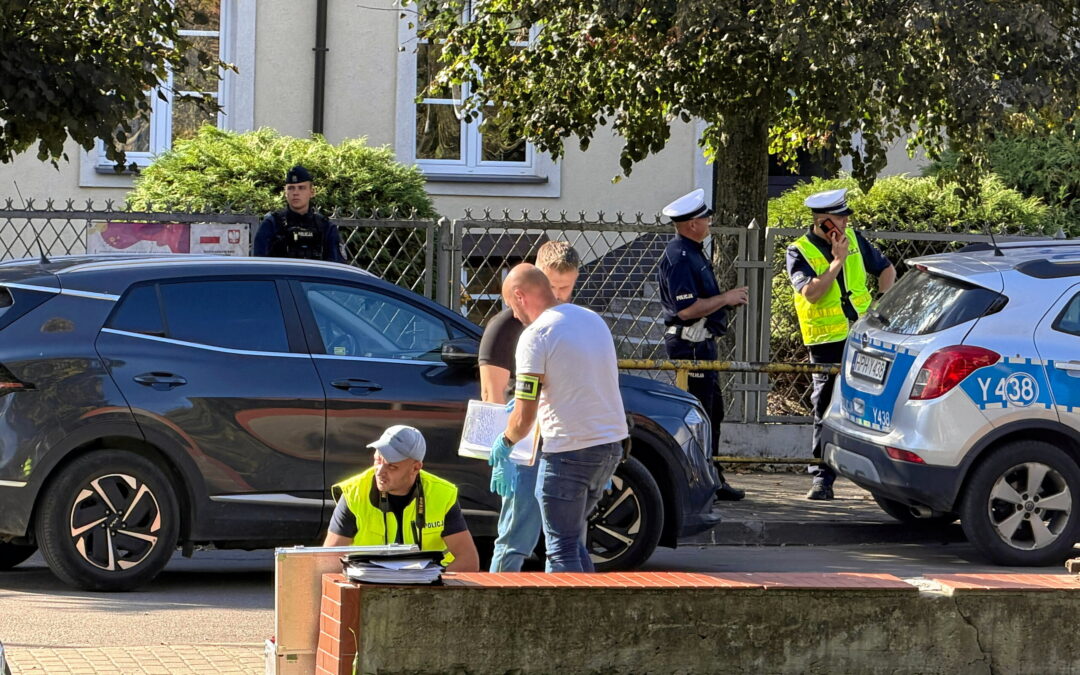
The latest attack took place in a primary school in the village of Leszczydół-Nowiny, around 60 km (37 miles) northeast of Warsaw, on Thursday morning.
A 15-year-old former pupil of the school entered the facility and stabbed three members of staff, including the principal, who managed to subdue him. One of the victims, a 37-year-old female caretaker, died from her injuries. The other victim, a teacher, was hospitalised.
The attacker was detained and will appear before a family court, reports the Gazeta Wyborcza daily.
The incident comes just a day after another similar tragedy only 50 km away, in the town of Ostrołęka. On Wednesday morning, a 19-year-old attacked a vocational high school, leaving four students, two teachers and two bystanders injured before being captured.
The assailant, who has been named only as Jakub Z. under Polish privacy law, is a student at the school. On Wednesday evening, national prosecutor Dariusz Korneluk told broadcaster TVN that the attacker had a homemade explosive in his backpack “that almost detonated”.
“The backpack was already in the computer room and, only due to the responsible actions of the teacher and the students, was it thrown out of the window” after smoke had begun to billow out of it, he said.
Justice minister Waldemar Żurek pledged that “prosecutors will ensure that the perpetrator answers for every blow inflicted and faces the legal consequences…There is no tolerance for violence in Polish schools”.
Policjanci z Ostrołęki w pobliżu plaży miejskiej zatrzymali 19-letniego mężczyznę podejrzewanego o zaatakowanie ostrym narzędziem osób w pobliżu i na terenie szkoły w Ostrołęce. Ze wstępnych informacji wynika, że mogło dojść do zranienia 7 osób. Policjanci na miejscu wykonują… pic.twitter.com/cRzqMs36rD
— Policja Mazowsze (@PolicjaMazowsze) October 7, 2026
On Thursday morning, around the same time as the attack in Leszczydół-Nowiny was unfolding, interior minister Marcin Kierwiński announced that a 17-year-old boy had been detained by police after threatening to attack another school.
The suspect, who resides in the same Masovia province where Wednesday and Thursday’s attacks took place, “was found with two knives”, said Kierwiński, quoted by news website Interia.
His internet history also showed that “he was looking for information on how to carry out this type of bloody act”, added the minister. The potential incident was prevented after fellow pupils reported to teachers that the suspect announced he wanted to “do something bad at school”.
Last week, a 13-year-old was detained by police after telling a fellow online gamer that he was planning an attack on his school in the village of Książki, north-central Poland. He reportedly confessed to having killed cats and said that he wanted to attack random people with a cleaver in the school halls.
Dzięki przytomnej reakcji uczniów, nauczyciela oraz błyskawicznej akcji policjantów z Sierpca powstrzymano 17-latka, który zapowiadał, że „zrobi coś złego w szkole”. Policjanci zatrzymali nastolatka i zabezpieczyli należące do niego noże, a w jego telefonie natrafiono na historię… pic.twitter.com/oUkwKbHmNr
— Policja Mazowsze (@PolicjaMazowsze) October 8, 2026
The Polish authorities have recently warned of growing concern over radical ideas spreading among young people. Last month, the security services detained three teenagers accused of being part of online groups promoting neo-Nazism and violence. One was charged with planning an attack on a school and a mosque.
Last year, a 19-year-old student was detained after it was determined he was planning an Islamic State-inspired attack on a Christmas market. In August, he was indicted to stand trial. In February, an 18-year-old was indicted over claims he planned to attack a school, also inspired by the Islamic State.
Speaking on Wednesday, after the Ostrołęka incident but before today’s events, education minister Barbara Nowak warned that “we are seeing a radicalisation of young people”, reports the Onet news website. She called for “much greater control over what happens on the internet”.
Earlier this year, Poland introduced a new law banning online content depicting illegal acts or other forms of abusive and degrading behaviour. The government is also working on measures to block children from social media and has banned the use of smartphones in schools.

Notes from Poland is run by a small editorial team and published by an independent, non-profit foundation that is funded through donations from our readers. We cannot do what we do without your support.
Main image credit: Dariusz Borowicz / Agencja Wyborcza.pl
Daniel Tilles is editor-in-chief of Notes from Poland. He has written on Polish affairs for a wide range of publications, including Foreign Policy, POLITICO Europe, EUobserver and Dziennik Gazeta Prawna.