Keep our news free from ads and paywalls by making a donation to support our work!

Notes from Poland is run by a small editorial team and is published by an independent, non-profit foundation that is funded through donations from our readers. We cannot do what we do without your support.
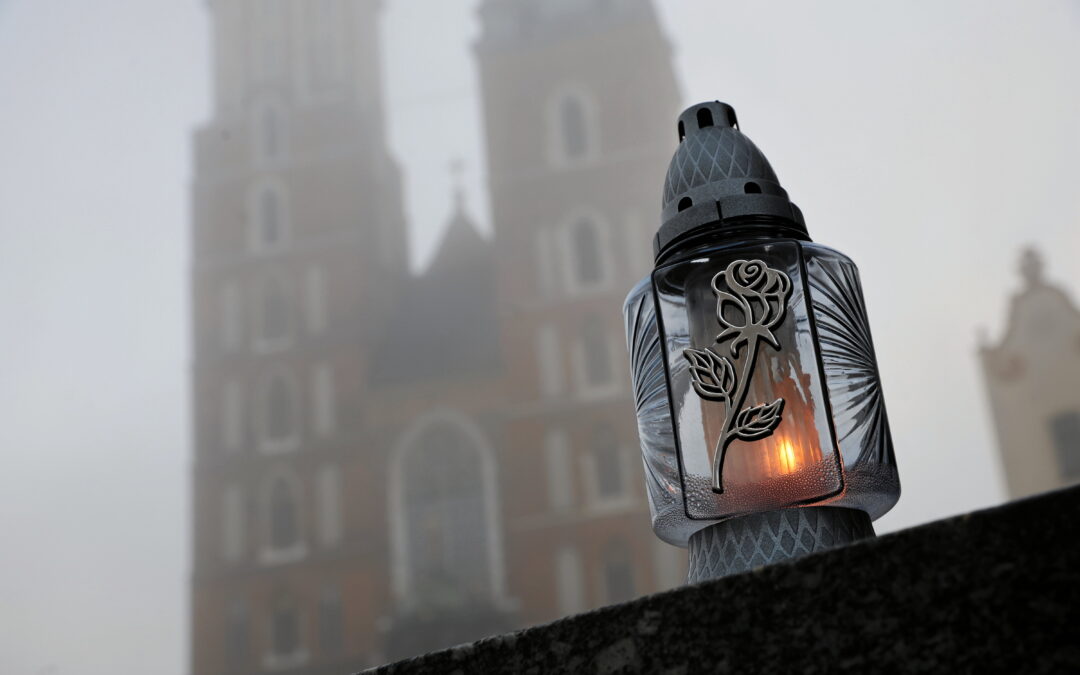
The historic St Mary’s Basilica in Kraków has hosted a holy mass for Michał Oksiński, the man who carried out the recent attack in the city and later died of injuries sustained in a shootout with police.
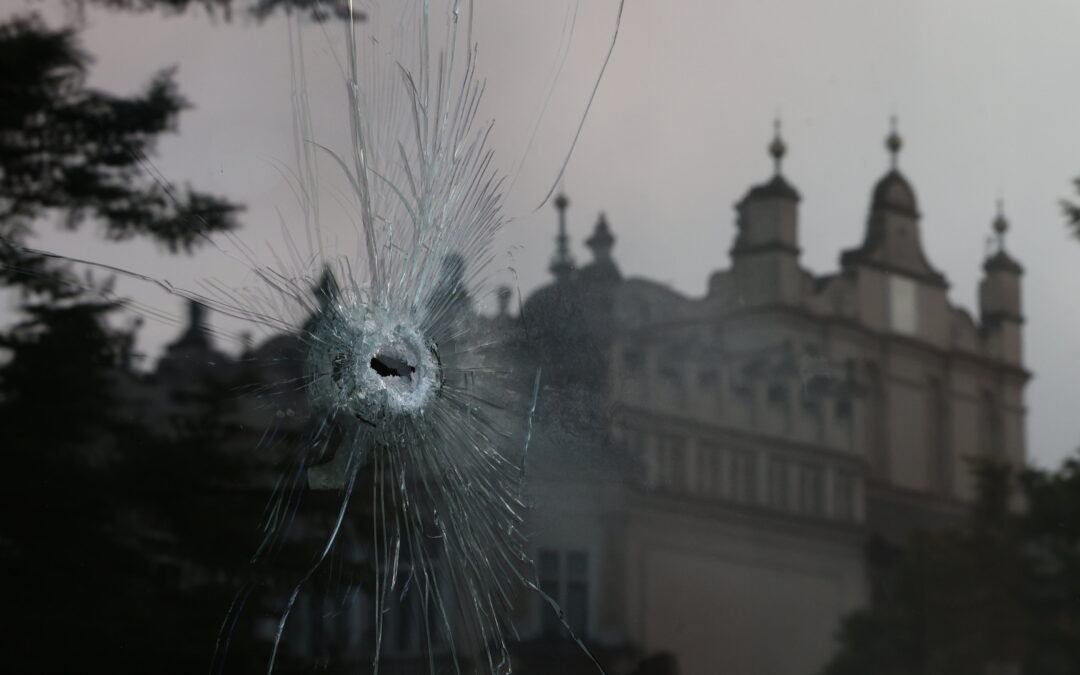
The six people who died in the attack and more than a dozen who were injured were shot by Oskiński on the square where the church stands, some of them just a few metres from its doors.
St Mary’s Basilica says that the mass is “an expression of the Christian faith in God’s mercy” and “in no way indicates justification for the crime”.
On the afternoon of 7 November, Oksiński launched his attack on Kraków’s famous market square, which was packed with locals and tourists. He shot at random from his car while driving through the square and surrounding streets before police managed to bring his rampage to an end.
Later that same day, the dead bodies of Oksiński’s parents and sister were found in his home. They had each been shot in the head while sleeping. Two days after the attack, Oskiński himself died in hospital.
On Sunday, Łukasz Wantuch, a former city councillor, shared a photograph of an announcement that there would be “a holy mass for the late Michał Oksiński and the deceased members of his family” at the Roman Catholic St Mary’s Basilica on Monday morning.
The church, built in the 14th century, is one of the most famous in Poland and dominates the skyline in Kraków’s historic, UNESCO-listed city centre. It stands on one corner of the market square, just a few steps from where some of Oksiński’s victims were shot.
“I won’t hide the fact that I find this somewhat shocking,” wrote Wantuch. He noted that the announcement referred to the “blessed memory” (świętej pamięci) of Oksiński. However, that phrase is standard usage in Polish to refer to someone who has died (the equivalent ot the English “late”).
“But perhaps that is what faith is about: praying even for a murderer,” added Wantuch. Among the more than 1,000 comments under his Facebook post, many agreed with that sentiment.
“The whole of Christianity is based on forgiving the unforgivable,” wrote one. “I don’t think anyone needs God’s mercy more [than Oksiński],” said another.
However, some others were critical of the fact that the mass was being held in that particular church among the dozens in Kraków. “It is the height of impudence that they’ll celebrate mass for him in the very church he murdered in front of,” wrote one commenter.
Later on Sunday, St Mary’s Basilica issued a statement, signed by parish administrator Father Mariusz Słonina, saying that the holy mass “is a private initiative of one of the priests, not of St Mary’s Parish”.
However, Słonina added that “praying for the deceased is an expression of the Christian faith in God’s mercy” and “in no way indicates justification for the crime, a lessening of the perpetrator’s responsibility, or a trivialisation of the suffering of the victims”.
Local news service KR24 reported that uniformed police officers were posted outside the church for today’s mass while plainclothes officers were inside, with one of them right next to the altar.
Three priests were present, including Słonina, who presided over the mass. Only around a dozen faithful were in attendance, with KR24 suggesting that many did not even seem aware for whom mass was being held.
Separate private funeral ceremonies will take place for Oksiński, his parents and sister, who lived in the town of Ostrowiec Świętokrzyski, about 160 km from Krakow. On Sunday, their family issued a statement asking the media to “respect the privacy, dignity and mourning of our family and loved ones”.
Meanwhile, police and prosecutors continue to investigate the possible motive behind Oksiński’s attack, which they are treating as a terrorist offence. Last week, the justice minister said that there were “very strong traces of right-wing extremism” in the perpetrator’s online activity.
Two police officers, Jakub Kulik and Artur Morański, who were seriously injured in the shootout that debilitated Okisński, have been recovering in hospital after undergoing emergency surgery.
Notes from Poland is run by a small editorial team and published by an independent, non-profit foundation that is funded through donations from our readers. We cannot do what we do without your support.
Main image credit: Jakub Wlodek / Agencja Wyborcza.pl

Daniel Tilles is editor-in-chief of Notes from Poland. He has written on Polish affairs for a wide range of publications, including Foreign Policy, POLITICO Europe, EUobserver and Dziennik Gazeta Prawna.