Keep our news free from ads and paywalls by making a donation to support our work!

Notes from Poland is run by a small editorial team and is published by an independent, non-profit foundation that is funded through donations from our readers. We cannot do what we do without your support.
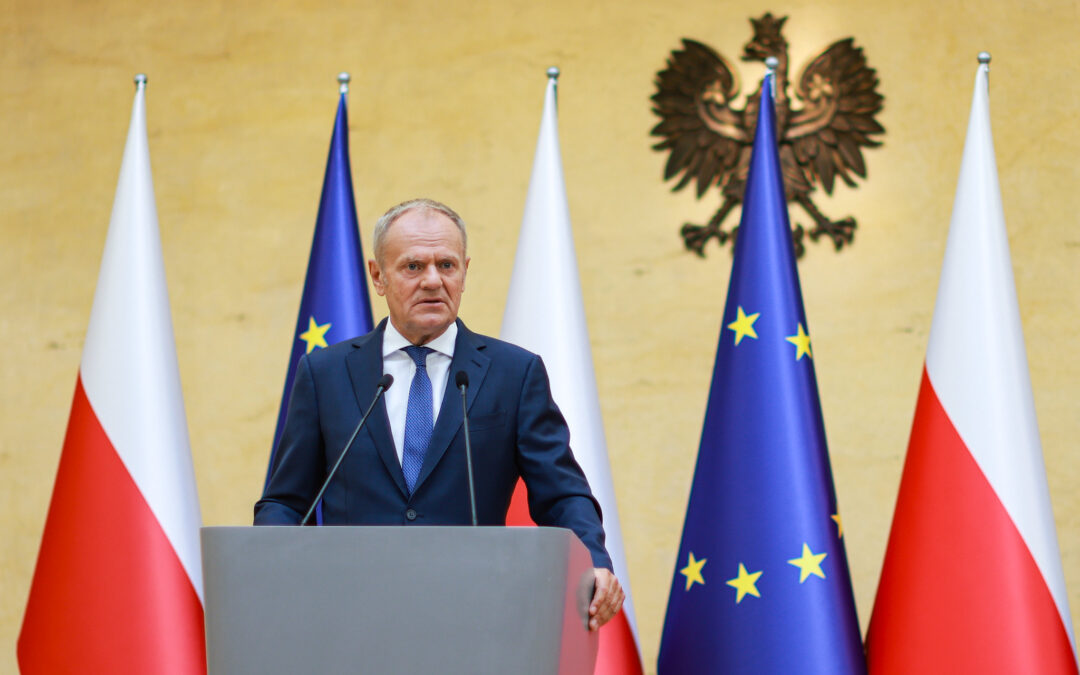
Poland’s security services have held an urgent meeting after receiving “credible” information indicating a “high probability” of an assassination attempt against Prime Minister Donald Tusk and defence minister Władysław Kosiniak-Kamysz.
At the time of writing, no details have been released regarding where and how the alleged attacks were expected to take place, who might be behind them, nor what the source of the information was.
W związku z informacją, która wpłynęła do @PolskaPolicja i dotyczy możliwego zamachu na premiera @donaldtusk oraz wicepremiera, ministra obrony narodowej @KosiniakKamysz, minister koordynator służb specjalnych @TomaszSiemoniak oraz minister spraw wewnętrznych i administracji…
— Jacek Dobrzyński (@JacekDobrzynski) October 11, 2026
On Sunday morning, Jacek Dobrzyński, the spokesman for the security services, first announced that the police had received “information…regarding a possible assassination attempt” on Tusk and Kosiniak-Kamysz, who, as well as serving as defence minister, is also a deputy prime minister.
Dobrzyński revealed that the Internal Security Agency (ABW), police and State Protection Service (SOP), which provides security for high-ranking officials, would meet to discuss the potential threat.
Speaking after that meeting, interior ministry spokeswoman Karolina Gałecka confirmed that the threat had first been identified by SOP, which passed the information on to the police.
“We are taking this matter extremely seriously,” added Dobrzyński, speaking alongside her. He criticised “pseudo-experts” in the media who had expressed doubt about the announcement of a possible assassination attempt.
“We’re talking about threats directed at the most important people in the country,” he added. “This information is so serious and credible that we’ve decided to share it with you now…We are talking about a high probability that these threats will be carried out.”
Dobrzyński did not divulge any details about the nature of the attack nor where the warnings had come from, but said that he would be able to provide further information once the police and security services had carried out further investigation.
"Sprawę traktujemy śmiertelnie poważnie. Mówimy o dużym prawdopodobieństwie spełnienia tych gróźb"
Rzecznik prasowy ministra koordynatora służb specjalnych o możliwym zamachu na premiera i szefa MON. pic.twitter.com/2xoWrZJT2w
— tvp.info 🇵🇱 (@tvp_info) October 11, 2026
Government spokesman Adam Szłapka, speaking to broadcaster TVN, acknowledged that the authorities constantly receive a “cascade of indications” regarding potential threats. However, “this signal was more disturbing than previous” ones, he added.
Szłapka also indicated that one element of the warning had come via email, but added that “it was not just an email” that had raised concern. Like Dobrzyński, he said that further information would be released in due course.
Gazeta Wyborcza, a leading daily, reports that an unnamed “official close to the prime minister” had said that the threat came from “right-wing extremists” and that the perpetrators were Poles.
Another source within the intelligence services told the newspaper that the threat was treated more seriously than others because it contained information about addresses linked to Tusk and Kosiniak-Kamysz.
Poland has charged a 17-year-old with planning neo-Nazi terrorist attacks on targets including a mosque and a school.
Two other Polish teenagers who were part of the same online community promoting neo-Nazism and violence have also been detained https://t.co/86AnIHWFe8
— Notes from Poland 🇵🇱 (@notesfrompoland) September 22, 2026
Last month, police detained a 56-year-old man in the city of Przemyśl after he posted a video on social media threatening Tusk. Earlier in September, a 52-year-old man in the town of Oława was likewise arrested for making criminal threats against the prime minister online.
Also in September, the security services detained three teenagers who were accused of being part of online groups promoting neo-Nazism and violence. One of them was additionally charged with planning terrorist attacks on targets including a mosque and a school.
This week has also seen Poland facing an unprecedented security challenge after three knife attacks took place on schools, leaving one person dead and many injured.
In response, the police have since Friday carried out checks at over 64,000 locations, including many schools, and detained over 100 people, most of them teenagers found to have made threats or been in possession of weapons.

Notes from Poland is run by a small editorial team and published by an independent, non-profit foundation that is funded through donations from our readers. We cannot do what we do without your support.
Main image credit: KPRM/Flickr (under CC BY-NC-ND 4.0)

Daniel Tilles is editor-in-chief of Notes from Poland. He has written on Polish affairs for a wide range of publications, including Foreign Policy, POLITICO Europe, EUobserver and Dziennik Gazeta Prawna.