Keep our news free from ads and paywalls by making a donation to support our work!

Notes from Poland is run by a small editorial team and is published by an independent, non-profit foundation that is funded through donations from our readers. We cannot do what we do without your support.
Poland has cautiously welcomed an announcement by Ukrainian President Volodymyr Zelensky of a five-point plan intended to alleviate the diplomatic crisis triggered by his earlier decision to name a military unit after the Ukrainian Insurgent Army (UPA), which led massacres of Poles during World War Two.
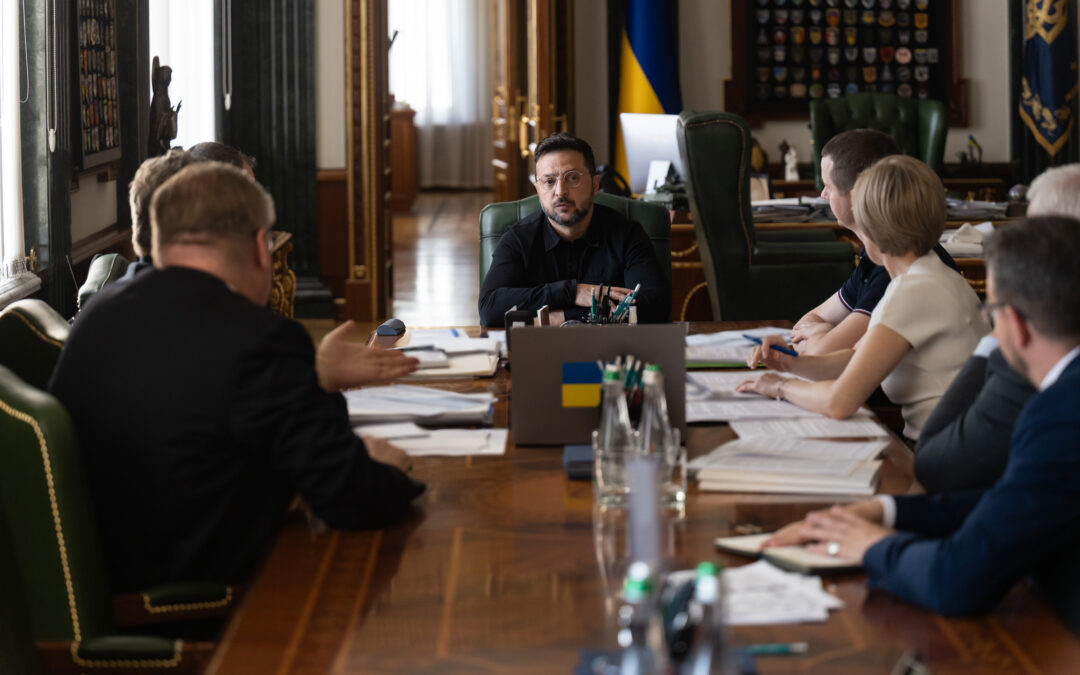
In a statement on Friday evening, Zelensky announced that, following a meeting on Kyiv’s policy towards Poland, “the priorities are clear: all of us in Europe need good-neighbourly, equal, and mutually beneficial relations built on respect”.
He reiterated Ukraine’s gratitude for Poland’s “significant support” since Russia’s full-scale invasion and announced that his administration had “agreed on several key steps” in response to the current tensions.
I held a meeting on our policy toward Poland. The priorities are clear: all of us in Europe need good-neighborly, equal, and mutually beneficial relations built on respect. Poland provided significant support to Ukraine after the start of Russia's full-scale invasion, and we are… pic.twitter.com/5dNFQYqi1n
— Volodymyr Zelenskyy / Володимир Зеленський (@ZelenskyyUa) July 17, 2026
“First, there will be decisions on the diplomatic track,” said Zelensky, though without indicating what this would mean in practice. “Second, all archives of the Security Service of Ukraine and the Foreign Intelligence Service of Ukraine concerning the tragic events in Volyn during the 20th century will be opened.”
The latter is a reference to the historical issues that are at the heart of the dispute. The historical region of Volhynia, which is now mostly in Ukraine, was part of Poland in the interwar period.
There, and in some neighbouring areas, the UPA, a nationalist partisan formation, led massacres of around 100,000 Polish civilians, mostly women and children, during World War Two, when the region was under Nazi-German occupation.
Poland recognises those massacres as a genocide. Ukraine vehemently rejects that label, and also points to anti-Ukrainian measures in the region by the interwar Polish state as well as massacres of Ukrainians by Polish groups during the war.
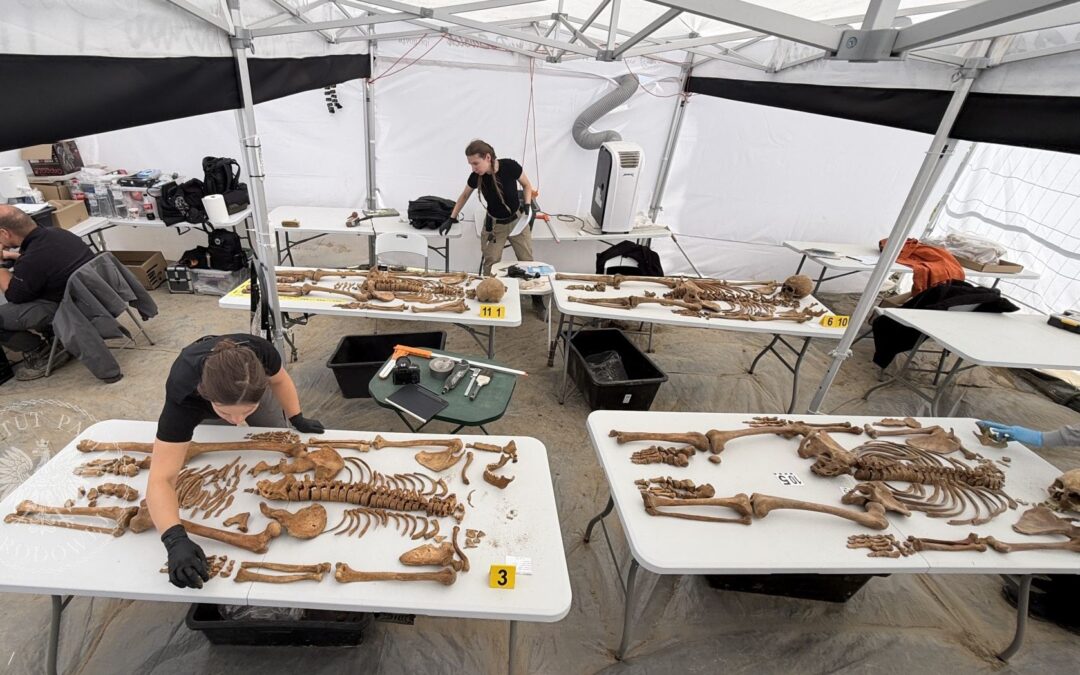
As his third pledge, Zelensky announced that there would be “decisions to grant a substantial number of permits for search and exhumation work”.
From 2017 to 2025, Ukraine prohibited searches for and exhumations of Polish massacre victims on its territory, where it is believed that tens of thousands remain buried in unmarked mass graves.
In a diplomatic breakthrough, such work was allowed to resume last year. However, Ukraine has so far only approved a small number of requests for searches and exhumations, prompting some complaints from Poland.
Poland has for the first time used DNA testing to identify the remains of Poles massacred by Ukrainian nationalists in WWII.
“After more than 80 years, families are receiving the answer they have awaited for generations,” says the culture minister https://t.co/c1gM3kQ83s
— Notes from Poland 🇵🇱 (@notesfrompoland) July 14, 2026
As a fourth point, Zelensky said that his team had “discussed possible formats for expanding dialogue between the societies of Ukraine and Poland”, though again without providing details as to what this would involve.
Finally, he said that he had agreed with the head of the Ukrainian Institute of National Remembrance (UINP), Oleksandr Alfyorov, to expand the institute’s capabilities and funding, so that it can “properly represent Ukraine’s interests”.
Alfyorov caused anger in Poland earlier this year when he said that the Volhynia massacres are viewed in Ukraine as “just a local historical episode” and suggested they did not constitute a genocide. That prompted a rebuke from Poland’s own Institute of National Remembrance (IPN).
Poland's state historical institute has criticised remarks by the head of its Ukrainian counterpart about massacres of Poles by Ukrainians in WWII.
He said they are regarded in Ukraine as a "local episode" and suggested they do not constitute a genocide https://t.co/MAi6RhpRDL
— Notes from Poland 🇵🇱 (@notesfrompoland) February 11, 2026
In response to Zelensky’s announcement, Polish Prime Minister Donald Tusk said that he “accepted the words and decisions with satisfaction and hope”. He reiterated that Poland is “ready for a serious and friendly dialogue on the matters that unite us and those that divide”.
However, Władysław Kosiniak-Kamysz, a deputy prime minister, emphasised that it was important now for “the announcements regarding the opening of archives, exhumations and dialogue to turn into concrete actions”.
“Today, Poland and Ukraine have a common enemy: Russia,” added Kosiniak-Kamysz. “That is where the threat lies. Sowing discord between our nations serves the interests of the Kremlin.”
Z satysfakcją i nadzieją przyjmuję słowa i decyzje @ZelenskyyUa, dotyczące relacji między naszymi państwami, które muszą być oparte na wzajemnym szacunku i prawdzie. Jesteśmy gotowi do poważnego i przyjaznego dialogu w sprawach, które nas łączą i tych, które nas dziś dzielą.
— Donald Tusk (@donaldtusk) July 17, 2026
Meanwhile, a senior aide to Polish President Karol Nawrocki – who deepened the crisis by last month stripping Zelensky of Poland’s highest honour – also cautiously welcomed Zelensky’s announcement.
“Facing the historical truth is the only way to build further relationships,” Bartosz Grodecki, the head of Nawrocki’s National Security Bureau (BBN), told the Polish Press Agency (PAP).
“The Ukrainian president’s decision to open the entire archives of the Security Service of Ukraine and the Foreign Intelligence Service of Ukraine concerning the events in Volhynia, as well as additional permits for search and exhumation work, is a step in this direction,” he added.
Long-simmering tensions between Poland and Ukraine over WWII massacres have finally boiled over, prompting a diplomatic crisis.@danieltilles1 looks at how we got here and what it may mean for the two countries and Europe more broadly https://t.co/a8tiYJJHRr
— Notes from Poland 🇵🇱 (@notesfrompoland) June 22, 2026
Notes from Poland is run by a small editorial team and published by an independent, non-profit foundation that is funded through donations from our readers. We cannot do what we do without your support.
Main image credit: Volodymyr Zelensky/X

Daniel Tilles is editor-in-chief of Notes from Poland. He has written on Polish affairs for a wide range of publications, including Foreign Policy, POLITICO Europe, EUobserver and Dziennik Gazeta Prawna.