Keep our news free from ads and paywalls by making a donation to support our work!

Notes from Poland is run by a small editorial team and is published by an independent, non-profit foundation that is funded through donations from our readers. We cannot do what we do without your support.
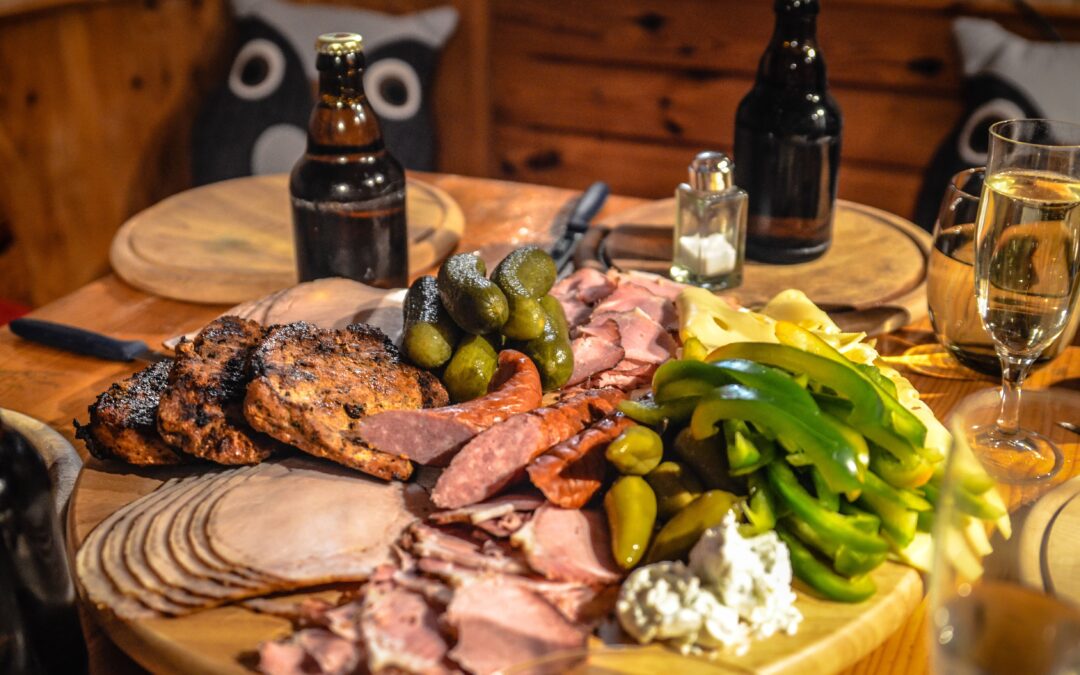
Poles are eating more meat but drinking less alcohol, continuing a long-term trend, the latest data from Statistics Poland (GUS), a state agency, show.
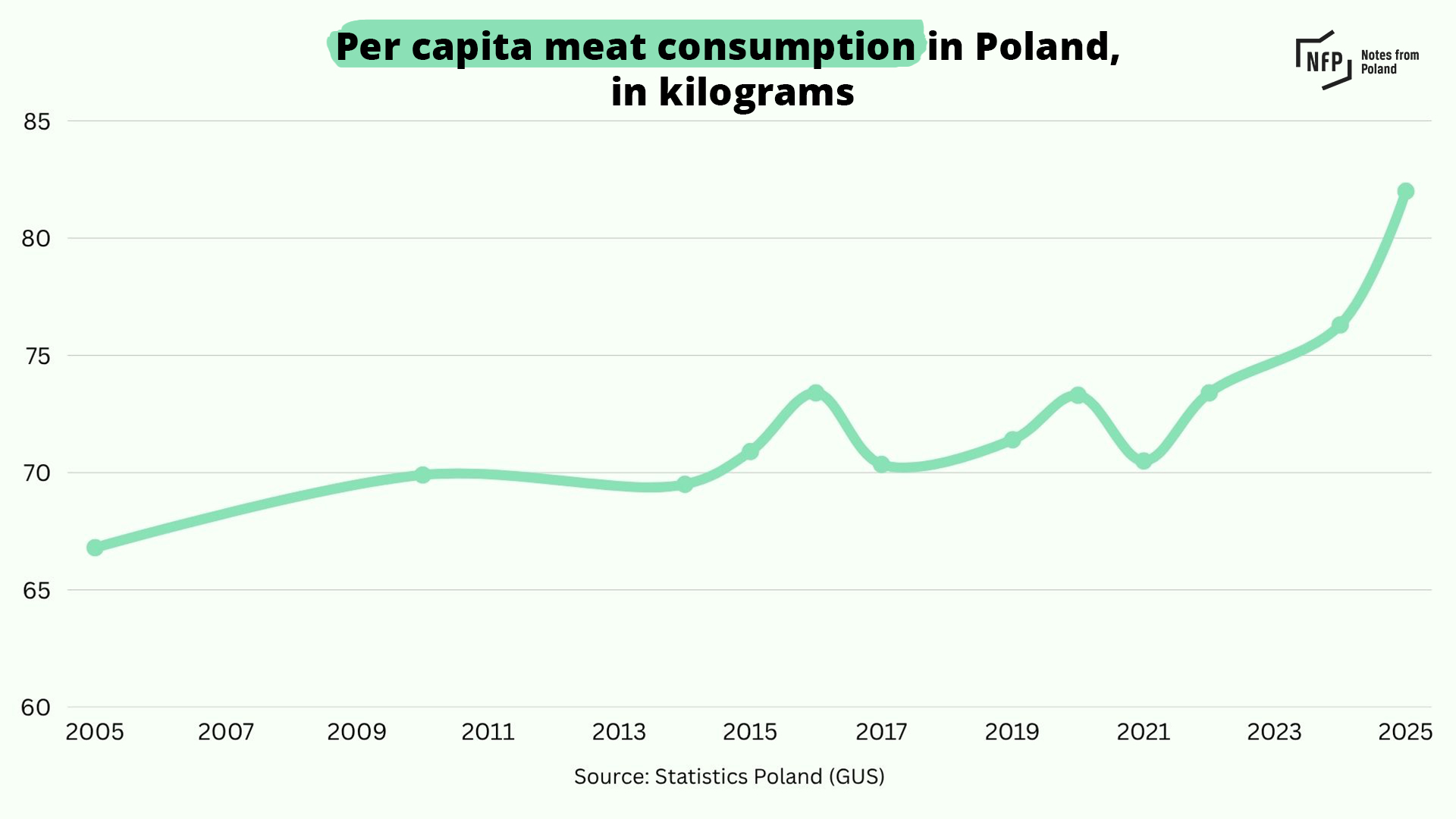
The average person in Poland ate 82 kilograms of meat in 2025, which was 7.5% more than a year earlier. It also marks an increase of 15.7% since 2015 and 22.7% since 2005. Likewise, consumption of eggs rose 8.5% in 2025 to an average of 218 per person.
The increases have come amid rapidly rising incomes, which make such products more affordable. A separate GUS study earlier this year showed that the proportion of Poles who cannot afford to eat meat at least every other day fell from 8.2% in 2015 to 3% in 2025.
By contrast, vegetable consumption has changed little, with the average Pole eating 108 kg in 2025, compared with 107 kg a year earlier and 110 kg in 2005.
However, consumption of potatoes, a starchy staple of the Polish diet presented by GUS separately from other vegetables, has fallen sharply over the longer term, despite a slight increase last year. The average Pole ate 96.5 kg of potatoes in 2025, down 23.4% since 2005.
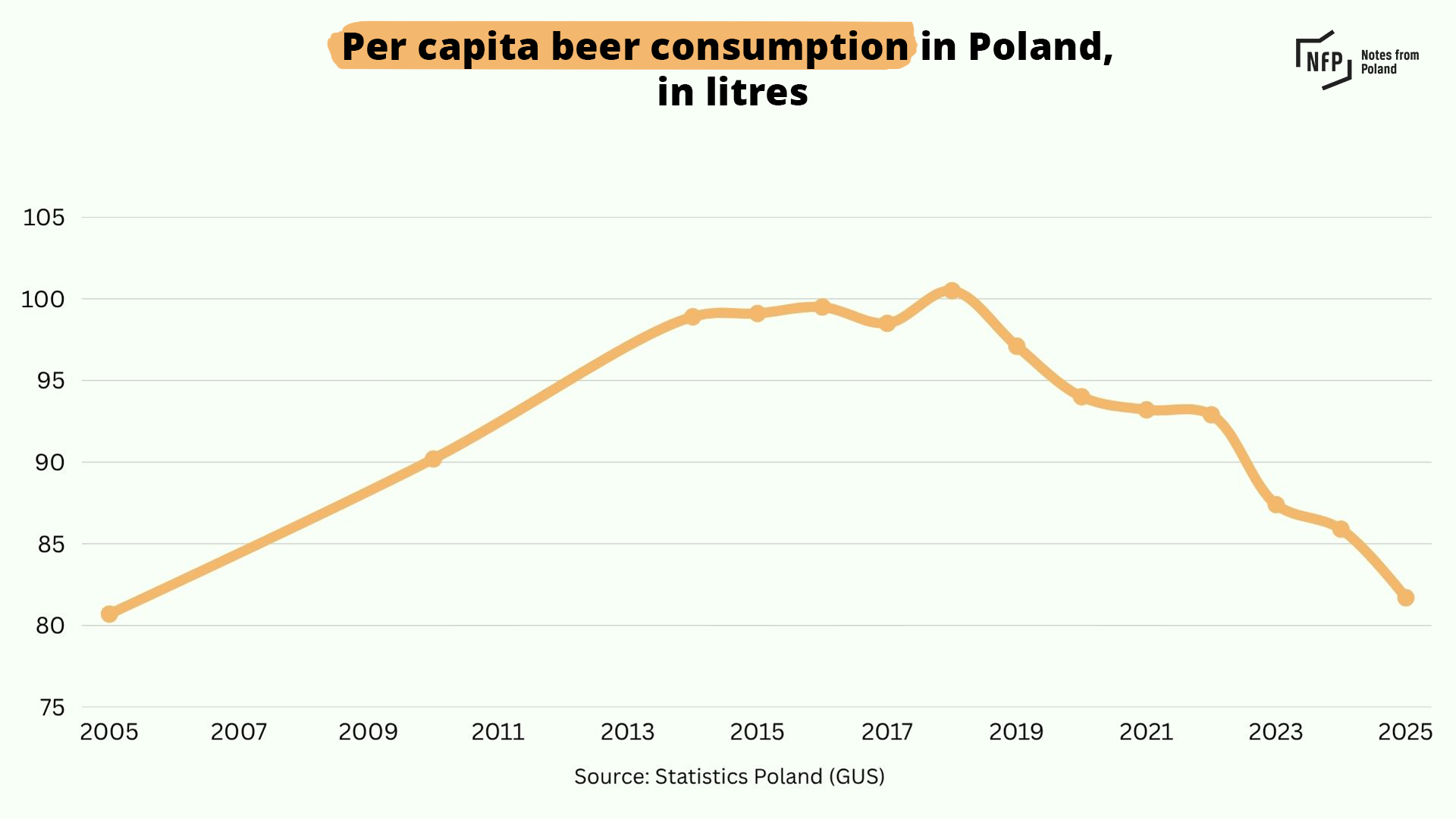
Meanwhile, alcohol consumption last year continued its recent decline. In 2025, the average Pole drank 81.7 litres of beer, down 4.9% from the previous year and 18.7% from the peak of 100.5 litres per person in 2018.
Likewise, consumption of spirits and liqueurs fell 5.9% year-on-year in 2025 to 3.2 litres per person. That was 13.5% down from a peak of 3.7 litres in 2019. In 2025, the amount of wine drunk per person, at 4.9 litres, fell even more, by 9.3% year-on-year.
However, alcohol consumption is still higher than it was two decades ago, with the average Pole drinking 28% more spirits and 1.2% more beer in 2025 than in 2005.
A 2023 study by ProVeg, an NGO, conducted in partnership with the University of Copenhagen and Ghent University, found that Poles were the most carnivorous among ten European countries surveyed.
Three quarters of Poles (74%) said they ate meat frequently, compared to an average of 62% across all countries. Italians and Spaniards (both 69%) were the next biggest meat eaters, while Germans (45%), Austrians (48%) and the Dutch (53%) were the least likely to eat meat frequently.
Meanwhile, 7% of people in Poland said they were either vegan (2%), meaning consuming no animal products at all, or vegetarian (5%), meaning they do not eat meat or fish. That was just below the European average of 8%.
In terms of what kinds of meat are favoured by Poles, GUS’s most recent such breakdown, from 2017, showed that pork was most popular, with the average Pole consuming 39.8 kg that year, followed by poultry (26.kg) and beef (2.3 kg).
Poland's first company to produce cultured meat – which is grown in a lab from animal cells without the need to raise and kill livestock – has received a state grant to support its work.
LabFarm this year presented a prototype of its chicken meatball https://t.co/pezABciGU6
— Notes from Poland 🇵🇱 (@notesfrompoland) August 7, 2024
Earlier this year, Poland’s current government, a coalition ranging from left to centre right, announced new rules intended to improve the quality and variety of school meals, including offering less meat.
From the start of the new school year, which began today, school canteens are expected to serve meat no more than twice a week, offer fish at least once per week, and offer a plant-based option at every meal.
They should also limit fried food to no more than twice a week, use seasonal and locally sourced products, and include fruit and vegetables with meals.
However, an attempt by the government to further raise taxes on alcoholic, sugary and sweet drinks was vetoed by opposition-aligned President Karol Nawrocki last December.
Schools in Poland will have to serve healthier and more varied food under new government rules, including offering plant-based options at each meal and serving meat only twice a week https://t.co/TUQ8OGZyb2
— Notes from Poland 🇵🇱 (@notesfrompoland) February 20, 2026
Notes from Poland is run by a small editorial team and published by an independent, non-profit foundation that is funded through donations from our readers. We cannot do what we do without your support.

Alicja Ptak is deputy editor-in-chief of Notes from Poland and a multimedia journalist. She has written for Clean Energy Wire and The Times, and she hosts her own podcast, The Warsaw Wire, on Poland’s economy and energy sector. She previously worked for Reuters.